Posts Tagged ‘freelance journalism’
Trying to cobble together a sustainable freelance writing career
I have been somewhat busier recently. After I came back from Nepal, I was fortunate enough to be commissioned for several stories. This helped with my sanity, sense of self-worth, and, yes, my precarious finances.
I was commissioned by a couple of local magazines, both of which are English language, but companies that call Beijing home. One of those commissions was about Nepal which I was gladdened by as I was not actually expecting too much from that sojourn (it was paid for by a mysteriously well-funded monk). Otherwise that trip was an experiment in micro-reporting and micro-publishing.
There have been a few other commissions also, as well as a project to teach journalism for a corporate client, to their employees, which should be interesting. I have always liked the idea of being more involved with pedagogy and the idea of improving as an educator and teacher greatly appeals — I will have the opportunity to design the classes and deliver them.
As a freelancer, it’s only really now that it became searingly clear to me that in order to succeed, this is what it will have to come down to. Scrabbling, searching, hustling. Cobbling together a variety of income sources and maximizing the skills that I have, marketing and utilizing the full extent of what I have to offer.
But enough talk about business, enough talk about finances and money. It only corrupts free-thinking and well-being. But I do have an inkling that if one figures out how to make freelance work for themselves, then surely freedom awaits. Along with misery and joy. (One cannot have one without the other, after all).
Summer is in its full-blown heat now although the sense of summer of course is still in its infancy. There have been times recently where I have felt the tremendous weight of loneliness and isolation. Freelancing can be like this. And jadedness can result. But I had a great week last week which helpfully expunged that.
Finding story ideas: Tip #1
As a freelance journalist, your entire existence is dependent on coming up with story ideas.
Some of the stories that I find most interesting to report and write about are trend stories — pieces on new social and cultural phenomena.
Once is a freak; twice is a coincidence; three times is a trend
It’s often about noticing the patterns that might be lurking in the environment (are more people wearing funny hats? Why?), or in your social circles.
For example, I noticed that among my Chinese female friends in Beijing, who are in their 20s and tend to be well educated, with high salaries, several seemed to be working as secretaries for their (male) bosses. I wondered whether they were happy with this, if they wanted positions with more executive opportunity, or whether they were in fact happy with their lot. I sent off a pitch outlining why I wanted to explore this. It was rejected (the editor explained that they had already done a lot on the glass ceiling in China), but it was a worthwhile exercise.
The point is, if you happen to notice something, then that noticement (yes, “noticement”), could be spotting a wider trend.
From my reading and from noticing an increasing interest among friends, I successfully pitched a piece about how Chinese people are increasingly becoming Buddhist again. It’s that kind of cultural phenomena I find fascinating. (The piece is here, if you’re interested).
A lot of pitch-able story ideas are about these new changes. It’s interesting, kind of newsy, and importantly helps to capture the zeitgeist.
For the freelance journalist, it almost doesn’t matter if the trend or culture is actually changing. You need only ask the question: is it changing? Then you’re 50% toward a story idea.
A freelancer’s journey in payment: my first 5 paid-for articles

The idea for this blog post comes from reader Sam Shan who asked via email about how, when you’re starting out, you first start asking for payment and how to negotiate this aspect of getting paid for your writing. I replied with my advice. A background blog post about my beginning days and my first five published articles for which I got paid I thought would be a good structure in which I could detail my thoughts and struggles of negotiating payment. As well as the stuff I did for free that were beneficial in other ways. Before anything though I will say this, always, always, at least try to get paid for your writing, the sooner the better really. And thanks to Sam for this post’s topic!
How I learned to love reporting (and life) again while in Burma

At Inle lake, March 3rd. A great strawberry shake can be found up the road from Remember Inn.
I’ve been in Burma now for 12 days and I am writing this post from Rangoon, the country’s commercial capital and largest city, and my end destination.
I traveled from Mandalay, where I touched down from China, then I went via slow boat to Bagan, a place filled with hundreds of pagodas dotted along a picturesque landscape, before heading to Inle lake to meet an interviewee.
I am hoping to meet two journalists living here in Rangoon who are around my age. Joshua Carroll, a British freelancer, and Catherine Trautwein, an American who writes for The Myanmar Times.
Along the way I have enjoyed the sunshine and warmth of the climate and the people. It is an immense relief to be away from Beijing, away from the cramped conditions of mind and body that was the prison of overly WiFi’d Beijing.
Here I’ve been able to relax, and to practice slow journalism. Sitting at temples, cafés and restaurants, waiting for a local to come talk to me or just observing what’s around and in front of me. Picking up kernels of story ideas or pouncing when one comes along, changing schedules on the fly.
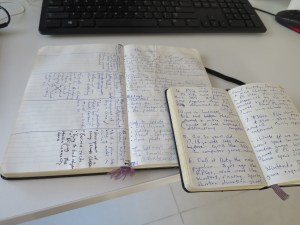
Being on the road without the distractions of Internet and social media (Internet is quite patchy in Burma) has meant I’ve been writing more in longhand, a welcome change of pace.
I might head to Vietnam after but I have not yet made up my mind. All this travel and the money spent on it I hope to recoup by selling the stories I am picking up along the way, but it is risky as I am not certain they will sell.
But the momentum of travel, the sensation of discovery, new people and new places brings you alive, shaking off the chill of a dark winter. It has been a great tonic.
A Writer’s Journey: The Adventures of a Roaming Journalist in Asia – by Brent Crane

Brent Crane (pictured) is an American journalist who traveled through China and Myanmar for six months. Along the way he published stories with the Daily Telegraph, Aljazeera, Roads & Kingdoms, The Diplomat and VICE, among others. He also shot for the BBC. He can be found tweeting @bcamcrane and his blog is thecongeechronicles.tumblr.com. This is his guest post for the site.
I landed in Beijing on June 16th, 2014, in the early afternoon on a one-way ticket from Boston. I had just turned 24. China was not new to me. I’d been before in 2011 when I had studied in Kunming and also before that in 2010 for the Shanghai World Expo. But this was my first time in the nation’s capital and I thought it’s very grey here.
I stayed with a friend from a study abroad program at the Beijing University of Science and Technology. When she and others asked what I was doing in China I’d get shy and mumble, “freelance journalism”, and felt like a five year old saying, “I want to be an astronaut”.
I wasn’t confident because I really didn’t know what a freelance journalist was or if I could even be one and I usually stumbled when I tried to explain anything. I’d come to China off a whim and depending on who I was talking to they’d either be impressed or think I was an idiot.
Now, seven months later I can answer people with more assuredness. I have written and shot for the Diplomat, the Daily Telegraph, VICE, Al-Jazeera and the BBC, among others. In the name of “journalism”, I have been smuggled into rebel-held territory in Myanmar from China, toured refugee camps, reported on one of the year’s largest and most daring democracy movements, sampled hairy stinky tofu and tracked down a Hunanese peasant who claimed that a tea brewed from animal feces had cured her cancer. I sampled that too.
Freelance Journalism: Adventure & Travel (Getting to Know Asia)

I’d like to do more of this. But without the cameras. A notebook will do.
Hello. By the time you read this I should have already arrived in Beijing, after flying from England which is where I have spent the past 27 days. Time to get back to the Big Beige.
January is a busy month for me, with a couple of commissions, and most urgently the planning of a trip to Myanmar. I’ve talked about it in previous posts but finally it should be on the cards. I have a story related to it that I’ve been developing for a while now. But the biggest reason I want to go there is simply to look around and make it less unwelcoming: to get to know it.
Myanmar (formerly known as Burma) was once a British colony and is the second largest country, after Indonesia, in southeast Asia. That fact alone, its bigness, is beguiling.
It is a Buddhist country, nominally now a democracy after decades of military imposed rule, filled with unspoilt landscapes, and yet riven with hate crimes and ethnic conflict, as well as drug barons, mines and smugglers. A perfect recipe then for a journalist.
This year I intend to go out more from my Beijing hub. I want to have bases spread throughout Asia. Once you’re familiar, once you’ve mapped out and made a place previously unknown known, it’s so much easier to grasp the geography of traveling.
It’s part of why I like this idea of freelance foreign correspondence: the adventure. I’d gotten complacent, too comfortable and sequestered in Beijing. It was seeing a fellow freelance having so much fun that spurred me. He has been journeying around China and Myanmar traveling and writing and getting published. Goddamit! I want some of that! Some of that momentum and adrenaline and the wild experiences. Brent Crane, I salute you!
I hope to ask him to write a guest piece about how he did it, how he traveled and wrote at the same time. Did he first travel somewhere and then look around for stories or did his successful pitches determine his itinerary? Hopefully he will oblige and teach us, because I haven’t actually done it yet and it would be good to know.
VIDEO: A year in the life of a freelance journalist abroad
In early 2014, I decided to buy a new camera. With it I started to take short videos that captured how life unfolded. I would record at dinners, while I was commuting, when I’d travel and so on. It wasn’t every day, but over a year I’d collected enough footage to make a short film about my life as a freelance journalist.
The video shows what Beijing is like, my horribly cramped former living quarters, what I get up to on my off-hours, and includes footage from my North Korea reporting trip and other travels. I hope to make more videos for my YouTube channel this year, so please consider subscribing.
This blog is a guide on becoming a roving freelancer, as well as a chronicle of my journey. The above video, I hope, fills in some of the blanks: a visual record. A written round-up of 2014 can be found here: Freelancing in Beijing: One Year On.
The video was shot on a Canon S120 and edited in Windows Movie Maker. These are the tools I currently have, and I intend to make the most of them. For more on this, see these posts: 6 journalism resolutions for the new year, and getting into video storytelling: using a cheap compact camera.
Part two: freelance journalists on their first ever (paid) commissions
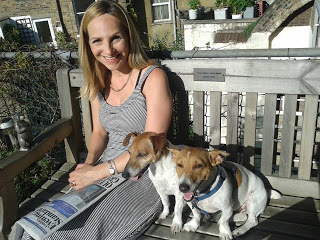
Kate Burt is a freelance writer and editor for publications including the Independent (“where I’ve also been a commissioning editor – so I know the other side!”), and the Guardian. She also blogs at yourhomeislovely.com.
Publication: Melody Maker (RIP)
Fee: About £30 as I recall!
What were you doing at the time?
I was a staff writer on a teen magazine, my first proper journalism job. Then I met the editor of Melody Maker [a now defunct music publication] on the bus to work, which I took every day, and he kept on at me to write some freelance reviews for the mag as we’d always chat about music on the bus. It became a regular thing and started me on the road to full-time freelancing.
How did you get the commission?
My first commission following a pitch – rather than bus chat – was for the Guardian Guide. I had pitched dozens of ideas to them for months and been rejected over and over but it was my dream to write for them at the time. I learnt that I needed to give them something no one else would – so I offered an interview with the then obscure Derren Brown whose first late-night C4 TV show was called Mind Control or something.
I got the PR to provisionally agree that I could interview Derren if the Guardian said yes so I could put that in the pitch, which is important (what if they say no after you’ve pitched?). I outlined an idea that I would try out six of his mind control tricks on various strangers and write about how it worked. No staff writer had the time for that, it was quite quirky and funny and introduced a new talent that fitted the Guide’s entertainment remit. Getting the word “new” into a pitch, I learned, is key, as is being game to get out there and understanding what is a good fit for the publication.
Make your idea unique to you
Part one: freelance journalists on their first ever (paid) commissions
Brent Crane is an American journalist who moved to Asia in 2014. He has since traveled around China and Myanmar, scoring bylines in the Daily Telegraph, Vice, Aljazeera, and Roads & Kingdoms, among others. He can be found tweeting @bcamcrane and his blog is thecongeechronicles.tumblr.com
I first got paid for writing in a place where writers typically never get paid: an internship. I spent last winter in Washington DC writing for an international affairs journal called the American Interest. My main gig was producing short 200-400 word news analysis posts for their online blog. At the end of my time there I wrote my first-ever feature story and that is what I got paid for ($200).
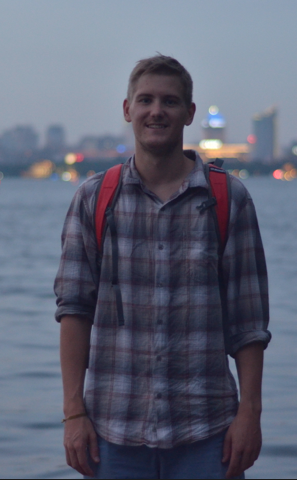
Photo courtesy of Brent Crane.
My chosen topic was the unprecedented dangers of freelance reporting from the Syrian civil war and how this related to the sea change that was taking place in the world of journalism in general. I’d been turned on to the idea from a book that I found in the AI office, a memoir by freelance photojournalist Paul Conroy called “Under the Wire”.
It took me forever to narrow the subject down from “the problems faced by freelance war reporters” to “the problem faced by freelance war reporters in Syria and why this matters for journalism as a whole”; but I had a lot of help from the editors at AI.
Pitching is something you can only get better at with practice, but that experience did teach me to never stop asking myself “Yeah but why should anyone care?” when formulating a story idea. A topic being interesting is not enough. It must be newsy in some way if an editor is going to bite.
My 1500-word feature went through numerous edits. It was a major learning experience for me.
To research it I spoke with eight highly accomplished freelancers, most of whom had reported from Syria. Being able to pick their brains about how they operated as freelancers was invaluable to me as an aspiring journalist. And also they made for great first-time interviewees, having all been in my shoes at some point. Talking with them humanized the field.
Before that, a freelance journalist in my mind was a kind of mysterious character and freelancing was more of a theoretical career choice than a realistic one. Actually meeting some lone wolf writers I had a kind of lightbulb moment: If these people can do it, so can I. That was a huge confidence booster for me and a major push for me to take the leap.
And for the first time in my life I’d actually made an actual sum of money writing. Holding that check for $200 in my hands I thought anything was possible.
One Year Anniversary: theluhai.com
On September 22nd, 2013, I published this site’s first blog post. It set out the themes and aims; an introduction to a chronicle of my time spent trying to be a freelance correspondent. Since then the site has pulled in a steadily growing audience – last month hitting a milestone of over a thousand views.
Here is the first ever post: Welcome: mission statement
And here are the following two: What happened last time I tried to be a freelance foreign correspondent and 6 things I learnt about the freelance journalism market while I was in China.
Thanks to those who read and follow the blog. And big thanks to those who have taken the time to personally email me, and in a couple of cases, to even seek me out when they were in Beijing. It means an immeasurable amount.


 Lu-Hai Liang