Finding story ideas: Tip #1
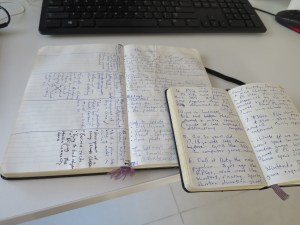
As a freelance journalist, your entire existence is dependent on coming up with story ideas.
Some of the stories that I find most interesting to report and write about are trend stories — pieces on new social and cultural phenomena.
Once is a freak; twice is a coincidence; three times is a trend
It’s often about noticing the patterns that might be lurking in the environment (are more people wearing funny hats? Why?), or in your social circles.
For example, I noticed that among my Chinese female friends in Beijing, who are in their 20s and tend to be well educated, with high salaries, several seemed to be working as secretaries for their (male) bosses. I wondered whether they were happy with this, if they wanted positions with more executive opportunity, or whether they were in fact happy with their lot. I sent off a pitch outlining why I wanted to explore this. It was rejected (the editor explained that they had already done a lot on the glass ceiling in China), but it was a worthwhile exercise.
The point is, if you happen to notice something, then that noticement (yes, “noticement”), could be spotting a wider trend.
From my reading and from noticing an increasing interest among friends, I successfully pitched a piece about how Chinese people are increasingly becoming Buddhist again. It’s that kind of cultural phenomena I find fascinating. (The piece is here, if you’re interested).
A lot of pitch-able story ideas are about these new changes. It’s interesting, kind of newsy, and importantly helps to capture the zeitgeist.
For the freelance journalist, it almost doesn’t matter if the trend or culture is actually changing. You need only ask the question: is it changing? Then you’re 50% toward a story idea.
How I became a novelist in Beijing — by Carly J. Hallman

Carly J. Hallman has a degree in English Writing & Rhetoric from St. Edward’s University in Austin, Texas. She lives in Beijing, China. Year of the Goose is her first novel.
Later this year, through some mysterious cocktail of luck, hard work, and sheer determination, my first novel will be published in the U.S. ‘Year of the Goose’ is a dark comedy about the Bashful Goose Snack Company, China’s most successful fictional corporation. The novel weaves together tales of a deadly fat camp, a psychopathic heiress, a hair extension tycoon, a Tibetan monk reincarnated as a talking turtle, some witches, and an anthropomorphic diary-penning goose, among others.
I dreamed up the original idea for the novel back in America, sparked by a short story I wrote while still a student (about the aforementioned fat camp). I’d traveled and lived in China before, and, hailing from a boring small town in Texas, found it to be a treasure trove of inspiration — China is a place where things are happening, present continuous tense.
After I graduated I lived in Los Angeles for a while, where I worked as a glorified babysitter, sent out endless “real job” applications and resumes, and struggled to find my way out of a bad relationship. At twenty-four I gave up and got out, and moved back in with my parents. Depressed, disillusioned, directionless. The only thing I knew I wanted — needed — to do was to write that novel.
How To Make A Name For Yourself pt 4: Defining Your Own Path
As a guiding principle life shrinks and life expands in direct proportion to your willingness to assume risk.
Casey Neistat, filmmaker
There is a huge difference between making it within a system, and making it on your own terms.
Jostling along the path of freelance journalism, I’ve increasingly found that the clutch of bylines I’ve accumulated count for very little. All it means is that when I pitch or when I get emails out of the blue, from editors, I just have that little more cache.
It affords me more freedom; the ability to take up stories that really interest me. And take punts on travel.
But you will never make it.
Not as a freelance journalist.
But you may do as a bonafide writer. Or some other high-powered creative.
So how do you break out of the tiny little achievements that you get as a freelancer? By focusing less on the litany of tasks that require urgent deadlines, and focusing more on the slow long-term creative projects that once produced and completed will be of higher value.
Why?
Because that kind of work is hard. And harder to replicate.
That is how your define your own path.
This is a continuing series exploring the strategies of success of journalists and writers. Part one in the series can be found here – and here is the previous entry.
Top 5 mobile phones for journalists
Most productive

The stylus helps to frame the Note 4 as a productivity tool
Samsung Galaxy Note 4
The Note 4 has a large screen, a top-of-the-line processor to handle multitasking, a very capable camera, and, best of all, a multifunctional stylus with features journalists may find very handy.
The phone has two-day battery life and there is the option of expandable storage with a MicroSD card slot.
The larger screen, which is one of the sharpest and most vivid on the market, is an important feature. Web browsing, having multiple windows open (which the phone allows you to move around and resize), and typing out emails or memos, are all made easier when there’s extra screen space. The downside to this is the phone really has to be handled with two hands in use. But few other phones has the ability to act as a very portable computer as the Note 4 does.
The perfect story: do all journalists want to become novelists?
I’ve written one “perfect” story in my life. It’s a bold claim but it’s ironic because the story in question is a Japanese fable about Perfection. I wrote it when I was 15 years old. Before the story materialized I had spent the previous two weeks or so thinking about it late at night while I was in bed. Slowly the rough outline or arc of the story took shape and I kind of vaguely knew how it might turn. But here’s the thing: I didn’t actually know what the story was or what the story would be. But over the two weeks it was what I thought about during the day and before I fell asleep.
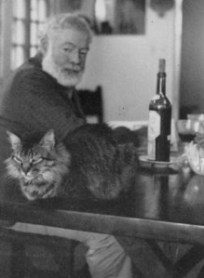
Ernest Hemingway and a small tiger. He started his career as a journalist.
Then one afternoon at school, while I was in some form of detention, I decided to write the story, for an English assignment. I was in the library with a few other miscreants. And I just started writing – in longhand, with a blue Biro on lined paper. And what came out was 99% perfect. The story was rounded, full, and did what the story set out to do. My English teacher read it out in class and I distinctly remember the enraptured silence as the story gripped my fellow pupils, and the applause once it ended – the applause! And she showed it to the other English teachers who also praised the story.
But before you tire of this anecdote, here’s the point: I have never, in the 11 years since, been able to reproduce anything approaching the same level of effortless flow, the ease with which that story seemed to shape itself, the logic and momentum, the plot and the ending all taking shape as the Biro made its way across the page. As if brain, arm and pen were one single entity all directed toward the inevitable creation of that story.
The secret anxiety of being a freelancer
I am not the world’s most prolific freelance journalist. I tend to report and write fairly slowly. I don’t pitch all that often and I’m not insanely busy with assignments. These are all great faults that I need to improve. And yet even with this somewhat leisurely state of affairs I find myself feeling stressed, anxious and under pressure.
This boils down to one thing and something perhaps unique to the freelance trade. And that’s you always feel like you should be doing more.
I find myself constantly worrying about story ideas, about the fact I haven’t written enough pitches, or that I haven’t pitched enough, or about new ideas. In bed, at cafes, at diners, my mind is abuzz with activity, always whirring, constantly active. A lot of the time it’s cycling through trivial, arcane bits of matter, pop cultural references and connections, things people said and the songs that are for some reason stuck.
And yet this constant activity is conducive to making the sorts of connections and curiosity that can be a freelance journalist’s source of power: that ability to generate story ideas that people have not yet identified previously.
But it can be tough on your sanity to be living with such an always-on state of mind. I know other, better, more experienced, more meticulous freelancers will be more organized and have routines that best manages their workflow. I guess I still need to fumble and reach toward that ideal.
April. It’s a transitional month. It’s still fairly cold at night here and the days are sometimes warm enough for a light jumper. But it’s windy and everyone is expecting real warmth to arrive. I feel April should be the month you spend, if you’re a freelance, on those tasks, some of which may be leftover from the previous year, that are important but not urgent.
Any creative will have those ‘just-started’ or ‘half-finished-but-haven’t-looked-at-it-for-months’ projects that they know are important. Even if it’s just something they want to produce, create, get out into the world, they know it’s important to finish such projects because the value of these things can be great.
I’ve been working on an essay (nonfiction memoir) for a while now and I have no idea if it’s even halfway complete, but I know that once it is complete it may be worth more than those urgent journalism pieces. Why? Because it’ll capture something important for me personally, and for others it may be a piece of writing that leaves a more memorable and longer lasting impression than a news report. But I hope the anxiety of living, working, doesn’t leave me bereft.
After Burma, now I’m broke
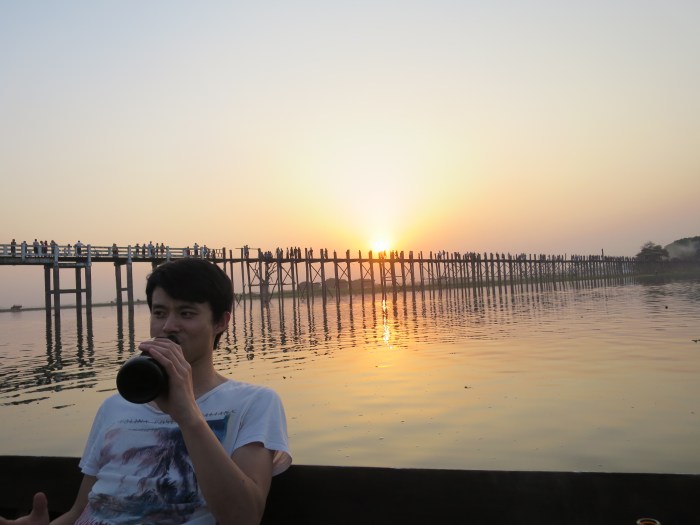
I spent quite a lot of money traveling to and from Burma. This is largely because I dropped big sums buying plane tickets to and from Burma. It is not likely I will make all that spent cash back from the stories gathered from the trip. Ho. Hum.
I had a fantastic, eye-opening time over there. And I met a wonderful array of people: travelers from China and Taiwan. Locals. Interviewees. Journalists.
Now I have very little money. I had to ask my landlady to give me an extension for paying the rent. I have the equivalent of about £30 in my Chinese bank account. And in my UK bank account, which I consider my “savings” account, I have something in the region of -£500. Yes, that’s right – minus. Thank god for bank overdrafts.
The effect of this has mostly been that I’ve curbed the frequency that I eat out or drink beers. I do not really buy a lot of things in Beijing…clothes, shoes, gadgets. I don’t feel any great compulsion to buy things. But I do spend a lot on eating. And I don’t even really think about it. It’s just one of those things. In Beijing, eating out and eating tasty things is kind of unconscious.
I cannot say I feel a great deal of anxiety. Oh and I quit that script editing job I had at the Chinese TV company. I was barely working for them part-time and I thought it was time to part ways. So I am just freelancing right now. And also applying for some jobs.
I do have money coming in from the published stories so I think I will be okay. It’s mostly making rent that I worry about but that also should be okay once payment for those stories start accumulating. It is an annoyance not having a local source of income. But that also should be okay as I’ve been networking and feeling around for opportunities. One of the great lessons you learn living abroad is how to hustle, feel and adapt, flex and initiate. Resourcefulness.
I have managed to sell, or rather get commissioned for a couple of Burma stories, but it’s not been the easiest but I will persevere on that front. It is a struggle and there’s no use in pretending otherwise. The trip will be a loss-maker. But I did say, before I went, in my earlier blog post, that it was part of my plan to get to know southeast Asia better.
Being “broke” is a curious thing. Obviously I can still afford to feed myself. Rent money may be harder to acquire but it’s not like that time I was living in a tiny hovel eating sweet potatoes for lunch and dinner for a week while I was waiting for a payment to hit the bank (and what a beautiful recurring anecdote that has become).
There is no moral to be extracted from this. No lesson to be drawn – apart from maybe buy cheaper plane tickets next time. I have little money, making the choices I have fewer. And yet I am content and satisfied. And I feel free. Somewhat. Okay, maybe there is a summary of sorts. And that is…when you come across limitations like having less money, that can be – oddly, ironically – freeing.
A freelancer’s journey in payment: my first 5 paid-for articles

The idea for this blog post comes from reader Sam Shan who asked via email about how, when you’re starting out, you first start asking for payment and how to negotiate this aspect of getting paid for your writing. I replied with my advice. A background blog post about my beginning days and my first five published articles for which I got paid I thought would be a good structure in which I could detail my thoughts and struggles of negotiating payment. As well as the stuff I did for free that were beneficial in other ways. Before anything though I will say this, always, always, at least try to get paid for your writing, the sooner the better really. And thanks to Sam for this post’s topic!
Living freely

“Living freely is one of the most difficult things you can do”
I freelance because I like the freedom that it affords. But I do it because that’s what I do – I’m not really capable of much else currently. And it’s only the visible aspect of a larger idea that motivates how I choose to move through life, the decisions I try to make, and the values I hold.
For me, freedom is the idea that’s become most important. And there was a clear moment when I realized that to live not according to that idea was simply, staggeringly ludicrous.
Life is about trying to enjoy it. Once you adopt this aspect, it all becomes pretty clear. Why do a miserable job? Why work in something that only makes you miserable? Enjoyment and misery has to be framed correctly however. You may not “enjoy” it all the time but satisfaction can arise from accomplishment. It means more about thinking critically about the choices you make, and why you make them. If it brings so few rewards and you do not, categorically do not enjoy it then why continue doing it?
To live freely is one of the most difficult things in the world.
You can live according to your own whims, your own ideas, your own momentum. You can choose how you live your life. We forget this. We forget this all the time. Every single day. Every single hour. Because we’ve set up our societies to do so. The clock forces you to compartmentalize your time into the most productive packets, segments of time that you can squeeze more into. Because capitalist systems require you to work more, make more money. To buy more stuff. To buy more stuff. It’s so blindingly obvious. But why do any of this? Why? Who is forcing you to? Why not live according to the things that you yourself deem important, rather than the things “society” has deemed important.
Why not enjoy things just as what they are, rather than by what they represent?
You have to slow down. You have to enjoy it more. You have to be in the moment more. Because if you aren’t, you’re just moving faster towards the end. Enjoying what you see right in front of you right this second, see it for what it really is. It is just that thing, nothing else, nothing more. If you don’t see it that clearly then time and mind will speed up into forever, and you will lose it, lose your claim over Now, that should be yours to seize. And it’s lost and time just speeds along, hurrying you towards oblivion.
Unless you stop and see, hear, feel the now that is your life. The incredible joy that is being.
You can choose how you live your life.


 Lu-Hai Liang