Being a journalist and being rich has little to no connection

I’ve been pondering something. The connection or correlation between how prestigious a publication is and how much that publication pays. When I first had the idea for this blog post, I had an alternate title:
“The Correlation Between a Publication’s Prestige and How Much It Pays”.
Journalists often develop an understanding of where publications stand in the hierarchy of prestige. That hierarchy may have individual quirks, dependent on your beat, but there will be some commonly held tacit acknowledgements.
That, for example, The New York Times is right up there, significantly above USA Today — even though USA Today has a higher circulation — and that “The Gray Lady”, on an international level at least, probably sits above The Wall Street Journal in terms of byline prestige.
Magazines such as The New Yorker, Vanity Fair, Vogue and Esquire are many writers’ dream destinations in which to be published. They form the Royalty.
Next come the venerable Dukes of Journalism: The Guardian, Washington Post, New York Times, The Times (of London). Adjacent to these are The International Names of Standing — The BBC, CNN.com, Al Jazeera, The Economist, Time.
And there are now digital titans who, like Knight errants, have a glamour of their own: VICE; BuzzFeed, disrupting things.
And yet, often, when I tell people about some of the publications I’ve been published in, they expect an amount of money I should have been paid commensurate to that publication’s prestige.
When I tell them the amount that I am actually paid, they are shocked.
And appalled.
So why do it?
The wild places: fear and travel in China
![mmexport1438084470614[1]](https://theluhai.com/wp-content/uploads/2015/07/mmexport14380844706141.jpg?w=411&h=308)
Inner Mongolia
I have not really traveled in China. The kind of travel where I’d leave my “home” of Beijing, jump on a train and end up somewhere. And then I’d need to figure out where my next stop would be.
That, to me, is travel.
You might not see places that are listed on the “Top 10 Amazing Landscapes You Have To See Before You Die“, but in its place are irrevocable insights and experiences.
It is also the hardest logistically, emotionally and physically. But that is why it is the most rewarding.
What most of us do is buy a plane ticket, head to a large city, and go to a booked hotel, or stay with a friend. That’s something we’ve all done, and we call it travel. But how often do we travel in the manner of not knowing our destination?
A big part of my reluctance to travel in China is the uncertainty, laziness and fear that traps me in safe, secure routine. It’s a box I need to forcibly break out of.
China is huge. Xinjiang, Tibet, Inner Mongolia, and Qinghai are, in descending order, its four most massive provinces, each a world in themselves.
I want to see them. But of course, life might get in the way…
The summer wanes — Wednesday, 26th August, in Beijing
I’ve been busy these past weeks. I finished up my teaching job. I was hired to teach journalism and writing to Chinese employees of a multinational company. Designing the course was a full-time consideration, and delivering it was a lesson in teaching effectiveness.
I enjoyed the challenge though. And the fee from the project will help me to travel the remainder of this year.
I’ve decided to abandon my rented accommodation in Beijing. I would have had to shell out for three months’ rent money at the end of September (a lot of rents are paid in this way here), meaning the money I earned from the teaching would have simply evaporated, all for the privilege of residing in Beijing for another three months.
Instead I will take that money and travel. I have destinations in mind. One option is to make my way around the country and check in with various friends. I am also hoping to go to Taiwan, a place I first visited in 2009 and which I enjoyed. I will continue freelancing as I move. And opportunities to do so are not unencouraging.
Another milestone occurred recently too (the first is the journalism teaching which I had not done before), and that is I got my first ever lead story for a national newspaper, their website showing a story I’d written up top.
Apologies for the crowing, but in a year that’s had some troubled times for me, I think I’ll take a celebratory moment. These kind of milestones are what journalists live for.
It’s still hot, but I can feel the summer’s wane. The days now are just slightly less sultry than before. Not that I can complain, the weather now is great: blue skies and sunny; as the government issued orders to close surrounding factories, all for a parade to come the beginning of September.
Money is still very tight, as I await a whole bunch of freelancing money to come in. Bottlenecks such as these are something a freelancer has to do their best to eliminate.
But all in all, it’s a fairly satisfying end to an otherwise mediocre summer. But I’m taking the long view.
Burmese Days
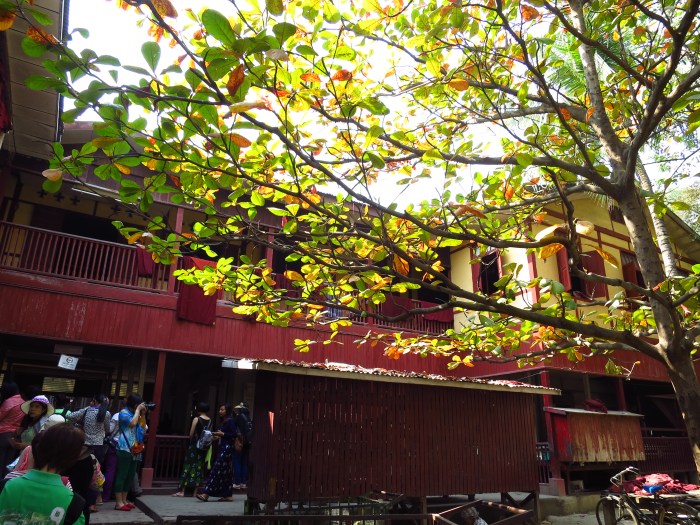
I hadn’t done much reading or planning before I went to Burma. I had a very rough idea of where I’d travel to, but nothing was laid out — these days I don’t even book accommodation. For some reason I thought I’d take a month for Burma, which is far too long. I spent 18 days there in the end.
It was February when I went, a cold and damp month in Beijing. I left the city at night, on my way to the airport, sleet falling on my face, two days after Chinese new year. I remember that I was feeling a little down, for wintry reasons.
Trepidation was accompanying me. The country was an unknown, a chasm only to be filled in by retrospect.
Pitchable outlets #2: The Independent
This a series examining publications and their accessibility to freelancers. Use the pitchable outlets tag to follow this series as it continues.

Status: medium-high / 1st tier
Reach: The Independent is a respected name in journalism. Launched in 1986 alongside a brilliant advertising campaign, the young Independent was a major fresh voice in British journalism. But with shrinking circulation over the years and financial difficulties, it is now a very lean operation drawing the majority of its print readership from London.
But it has some major names on its books; heavyweights such as Robert Fisk and John Pilger. And its website and social media presence is much improved. People still look to The Indy, as it’s colloquially known, and its innovative editorial stances, such as the bold cartoon splash for the Charlie Hebdo attacks, draw much praise. It remains a vital part of British journalism, although its international coverage is hampered by a small budget.
Accessibility: I have mainly pitched to the features desk and international desk, as a freelancer, at The Indy. I have been published in The Independent on Sunday (The Sindy) and the tabloid version of the paper The i.
There’s no real need to pitch separately to these three papers, as the staff for this national newspaper numbers around 140. The email format for The Indy is the initial of the first name dot last name @ independent dot co dot uk — ie j.smith@independent.co.uk.
Ease: The main problem with getting published in The Indy are the small budgets they have. Freelancers will have a harder time as the newspaper fills its pages with the coverage it needs, and will not be so interested in topics that bigger publications such as The Guardian cover. That said, there are definite opportunities for freelancers to get an Indy byline if you have a unique story or angle.
Payment: The last time I was published in The Indy was this month — 4th July 2015 — in the newspaper and online. I received what they said was their standard rate, which is 15p a word. This is not a very good rate.
A Quick Trip South: a newspaper reporter in Cambodia takes a weekend break — by Brent Crane
I wanted to get out of the city last weekend so I went down to Kampot, an old colonial town near the coast and the Vietnamese border. I left Saturday morning and would be meeting friends from work who had arrived there the day before. I took a Sorya tour bus that left at 8:15 AM for $7. It was to be a four hour drive. The seats were spacious and well-cushioned, with a generous air-con and Khmer music was played only intermittently and at a fair volume.
I was anxious to get out of Phnom Penh. It is an odd thing for me to be gainfully employed in an Asian country or to put it another way, to be immobile in one. Had this been China a year ago I would have seen the whole south coast by now. As it is, I’ve barely been able to explore Phnom Penh.
The other day, in preparation for future travel, I bought a fold-out map at a bookstore. When I open it up and gloss over the names they make me hotfooted: Battambang, Ratanakiri, Kratie, Sihanoukville, the Cardamon Mountains—how exotic, how alluring! But for now, they remain destinations for weekend jaunts and precious vacation days.
On the road to Kampot I took in the scenes and tried to make sense of them. In Phnom Penh I could learn a lot but a huge part of the Kingdom remained outside city limits. Being in a capital city is often more useful in showing you what a country isn’t than what it is. It is most always a haven for the elite, the middle class and, certainly it is true in Phnom Penh, the expats. The true face of the country is in the boonies. In Cambodia, eighty percent of its nearly fifteen million people are farmers. They live in stilted huts and look to the cycle of the rains like an investment banker watches the stock market. Life has changed little there. Mother Nature still rules supreme and superstition is prevalent. In China they would call it “backwards”. It is a place of witchcraft and magic, where authorities might accuse a man of trying to murder his neighbors with a bewitched plant; where victims might respond to an unjust land-grab by cursing the thieves. Some aspects of the modern world have trickled in, like cellphones and TVs, but they tend to be absorbed into the belief system rather then change it, being presented as offerings to dead ancestors or becoming possessed by spirits.
Being in a capital city is often more useful in showing you what a country isn’t than what it is
Is this goodbye Beijing?
Beijing and its endless streets and expanse of concrete desert, where it can take a lot of effort to arrange social affairs.
It’s coming up to three years since I arrived in Beijing — three years in which I’ve made friends and lost friends, through the simple drift of life.
In this time I’ve been broke numerous times, have had to scrape and meander. I’ve had starry nights and schemes come to fruition, and moments seldom preconceived.
But what am I doing now? Am I moving forward — is misery just going through the motions?
You might not understand the dilemma and that is fine. I shall put it plainly.
I could never have realized just how hard it is to succeed as a writer.
I could never have imagined what a crossroads sometimes life can be.
I do not want to work to earn money so I can pay the rent, so I can buy more things I do not need.
My instinct tells me I should move out of Beijing and head to some other places in China and stay with friends. Read, write, sleep. Convalesce.
Try to write more — that’s more important than anything. And yet why torture myself? I could do a job that’s enjoyable and worthwhile, and write on the side.
Many writers have had multiple lives. I feel like I should have those lives, because in the end it will make me better and more varied.
There’s no one telling you what your next move should be. There’s no path to follow or predetermined step. Always thus.
Money is and will always be an issue. When you’re younger you think –you’re sure of it in fact– that at some stage you will be wealthy and have enough money to do the things you want to do. But at some stage, it becomes clear that those riches might not become reality.
But that’s fine?
I should go somewhere awhile and figure things out.
Writing what you want to write vs. writing what editors want you to write
Some years ago, when I was in my last year of university, there was a house party. At this party I got talking to a French girl, who was eloquent and charming. I reached a point where I got talking about journalism, my ambitions, who I’d already written for, and all the fine journalism pieces I’d written — the kind of things you might say when trying to impress a French girl.
She listened with interest but after I had finished my spiel, she looked at me and without a pause said simply: “But what do you write for yourself?”
This memory and those words have stayed with me ever since.
Pitchable outlets #1: The Guardian
This is the first in a series examining publications and their accessibility to freelancers. If I have written for said publication then I will draw from my own experience. If I haven’t I will find other freelancers and ask them. Click on the Pitchable Outlets tag to follow this series as it continues.

Status: high / 1st tier
Reach: The Guardian is one of the most respected news organizations in the world. Its headquarters are in King’s Cross, London, and it has offices in the US and Australia as it seeks to transform itself into a “global newspaper”. It vies with The New York Times for the world’s second most popular English-language newspaper website (The Mail Online is the most popular).
Accessibility: For a freelancer, The Guardian is actually relatively accessible. Yes, you have a lot of competition, which is why some of the bylines I’ve gained have been in smaller sections such as the online-only Careers blog. I mostly write “around the sides” for The Guardian, although I plan to pitch more to the “World” section.
To reach or find an editor at The Guardian isn’t too difficult. If you pitch an idea to an editor, make sure you have the right section editor. For example, you might Google “guardian comment is free editor”. And then you’ll find some names. Twitter is your friend too. You only need the name as The Guardian follows a standard email format: firstname.lastname@theguardian.com.
Ease: I usually get a response from whichever editor I have pitched to, and they are kind and fair responses. Never expect an in-depth email about why they might not use your pitch. Editor emails tend to be on the terse side. The Guardian is a big name so there’s a lot of competition, and editors only have a limited budget for freelancers. So don’t take it personally, persevere.
Pay: The best rate I’ve received from The Guardian was actually for my first ever article for them, back in 2010. The published article was 311 words and I received £151.41, which works out to about 49p per word. This is a pretty good rate.
My most recent article for them came in May 2014. It was for the Careers Blog, so I doubt it appeared in the newspaper, just online only. The article was 649 words and I received £248.54, which works out to about 38p per word, which is still decent.


 Lu-Hai Liang