Posts Tagged ‘freelancing’
Trying to cobble together a sustainable freelance writing career
I have been somewhat busier recently. After I came back from Nepal, I was fortunate enough to be commissioned for several stories. This helped with my sanity, sense of self-worth, and, yes, my precarious finances.
I was commissioned by a couple of local magazines, both of which are English language, but companies that call Beijing home. One of those commissions was about Nepal which I was gladdened by as I was not actually expecting too much from that sojourn (it was paid for by a mysteriously well-funded monk). Otherwise that trip was an experiment in micro-reporting and micro-publishing.
There have been a few other commissions also, as well as a project to teach journalism for a corporate client, to their employees, which should be interesting. I have always liked the idea of being more involved with pedagogy and the idea of improving as an educator and teacher greatly appeals — I will have the opportunity to design the classes and deliver them.
As a freelancer, it’s only really now that it became searingly clear to me that in order to succeed, this is what it will have to come down to. Scrabbling, searching, hustling. Cobbling together a variety of income sources and maximizing the skills that I have, marketing and utilizing the full extent of what I have to offer.
But enough talk about business, enough talk about finances and money. It only corrupts free-thinking and well-being. But I do have an inkling that if one figures out how to make freelance work for themselves, then surely freedom awaits. Along with misery and joy. (One cannot have one without the other, after all).
Summer is in its full-blown heat now although the sense of summer of course is still in its infancy. There have been times recently where I have felt the tremendous weight of loneliness and isolation. Freelancing can be like this. And jadedness can result. But I had a great week last week which helpfully expunged that.
After Burma, now I’m broke
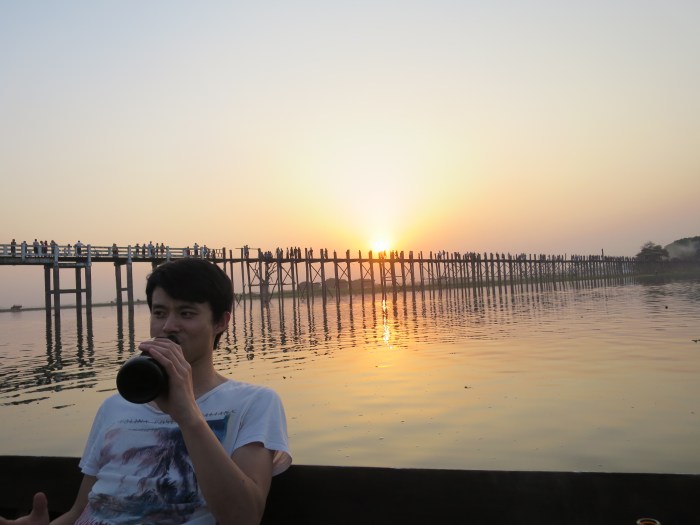
I spent quite a lot of money traveling to and from Burma. This is largely because I dropped big sums buying plane tickets to and from Burma. It is not likely I will make all that spent cash back from the stories gathered from the trip. Ho. Hum.
I had a fantastic, eye-opening time over there. And I met a wonderful array of people: travelers from China and Taiwan. Locals. Interviewees. Journalists.
Now I have very little money. I had to ask my landlady to give me an extension for paying the rent. I have the equivalent of about £30 in my Chinese bank account. And in my UK bank account, which I consider my “savings” account, I have something in the region of -£500. Yes, that’s right – minus. Thank god for bank overdrafts.
The effect of this has mostly been that I’ve curbed the frequency that I eat out or drink beers. I do not really buy a lot of things in Beijing…clothes, shoes, gadgets. I don’t feel any great compulsion to buy things. But I do spend a lot on eating. And I don’t even really think about it. It’s just one of those things. In Beijing, eating out and eating tasty things is kind of unconscious.
I cannot say I feel a great deal of anxiety. Oh and I quit that script editing job I had at the Chinese TV company. I was barely working for them part-time and I thought it was time to part ways. So I am just freelancing right now. And also applying for some jobs.
I do have money coming in from the published stories so I think I will be okay. It’s mostly making rent that I worry about but that also should be okay once payment for those stories start accumulating. It is an annoyance not having a local source of income. But that also should be okay as I’ve been networking and feeling around for opportunities. One of the great lessons you learn living abroad is how to hustle, feel and adapt, flex and initiate. Resourcefulness.
I have managed to sell, or rather get commissioned for a couple of Burma stories, but it’s not been the easiest but I will persevere on that front. It is a struggle and there’s no use in pretending otherwise. The trip will be a loss-maker. But I did say, before I went, in my earlier blog post, that it was part of my plan to get to know southeast Asia better.
Being “broke” is a curious thing. Obviously I can still afford to feed myself. Rent money may be harder to acquire but it’s not like that time I was living in a tiny hovel eating sweet potatoes for lunch and dinner for a week while I was waiting for a payment to hit the bank (and what a beautiful recurring anecdote that has become).
There is no moral to be extracted from this. No lesson to be drawn – apart from maybe buy cheaper plane tickets next time. I have little money, making the choices I have fewer. And yet I am content and satisfied. And I feel free. Somewhat. Okay, maybe there is a summary of sorts. And that is…when you come across limitations like having less money, that can be – oddly, ironically – freeing.
A freelancer’s journey in payment: my first 5 paid-for articles

The idea for this blog post comes from reader Sam Shan who asked via email about how, when you’re starting out, you first start asking for payment and how to negotiate this aspect of getting paid for your writing. I replied with my advice. A background blog post about my beginning days and my first five published articles for which I got paid I thought would be a good structure in which I could detail my thoughts and struggles of negotiating payment. As well as the stuff I did for free that were beneficial in other ways. Before anything though I will say this, always, always, at least try to get paid for your writing, the sooner the better really. And thanks to Sam for this post’s topic!
Part one: freelance journalists on their first ever (paid) commissions
Brent Crane is an American journalist who moved to Asia in 2014. He has since traveled around China and Myanmar, scoring bylines in the Daily Telegraph, Vice, Aljazeera, and Roads & Kingdoms, among others. He can be found tweeting @bcamcrane and his blog is thecongeechronicles.tumblr.com
I first got paid for writing in a place where writers typically never get paid: an internship. I spent last winter in Washington DC writing for an international affairs journal called the American Interest. My main gig was producing short 200-400 word news analysis posts for their online blog. At the end of my time there I wrote my first-ever feature story and that is what I got paid for ($200).
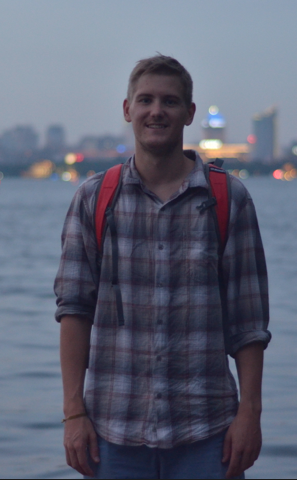
Photo courtesy of Brent Crane.
My chosen topic was the unprecedented dangers of freelance reporting from the Syrian civil war and how this related to the sea change that was taking place in the world of journalism in general. I’d been turned on to the idea from a book that I found in the AI office, a memoir by freelance photojournalist Paul Conroy called “Under the Wire”.
It took me forever to narrow the subject down from “the problems faced by freelance war reporters” to “the problem faced by freelance war reporters in Syria and why this matters for journalism as a whole”; but I had a lot of help from the editors at AI.
Pitching is something you can only get better at with practice, but that experience did teach me to never stop asking myself “Yeah but why should anyone care?” when formulating a story idea. A topic being interesting is not enough. It must be newsy in some way if an editor is going to bite.
My 1500-word feature went through numerous edits. It was a major learning experience for me.
To research it I spoke with eight highly accomplished freelancers, most of whom had reported from Syria. Being able to pick their brains about how they operated as freelancers was invaluable to me as an aspiring journalist. And also they made for great first-time interviewees, having all been in my shoes at some point. Talking with them humanized the field.
Before that, a freelance journalist in my mind was a kind of mysterious character and freelancing was more of a theoretical career choice than a realistic one. Actually meeting some lone wolf writers I had a kind of lightbulb moment: If these people can do it, so can I. That was a huge confidence booster for me and a major push for me to take the leap.
And for the first time in my life I’d actually made an actual sum of money writing. Holding that check for $200 in my hands I thought anything was possible.
What should a freelance journalist do in the summer?
My productivity lately has nosedived. Temperatures in Beijing meanwhile peaked – last week it hit 41 Celsius. Summer in general is a difficult time for me. I find it harder to concentrate on work.
It feels perverse to be indoors hunched over staring at a computer screen when people are doing summery things. Hormones also go through the roof (or is that just me?) and the mind drifts toward an addled state fixated on hedonism, idleness and pleasures.
I’ve got a couple of commissioned pieces on the go. My day job (at the TV company) has been more demanding of late, requiring more energy but really that’s an excuse. Another disruption is that I’ve been homeless for about three weeks now. I’ve been staying (and overstaying) on friends’ couches around Beijing, after me and other tenants were kicked out of our rooms by the landlord. Landlords have far too much power.
I finally found a new place I was happy with but can’t move in until June 11th, so tonight I will be sleeping on a couch at my workplace. I’m writing this post now at my office’s desk at 11pm Beijing time.
So what should a freelancer do during this season? I’d like to know what other freelancers do, so please do leave a comment. I guess many cannot really afford to take much time off if their livelihood depend on the income, and they don’t live in a cheaper location such as China. Summer is often a dry period for news and contracted freelancers for newspapers often take time off.
I guess summer is a time for reading, relaxing, doing what humans like to do, traveling, swimming, eating, drinking, lounging, sexing, snorkeling in sapphire waters on a James Bond beach, taking time off and making memories that when the cold and drab colours of winter come back will offer some reserve of sun.
Soon I’ll be reunited with my half Japanese, half Ukrainian Canadian girlfriend in Thailand for 10 days. It’s going to be awesome. In the meantime I will work on two 5000-word essays on the freelancing life in Beijing and my Chinese political heritage for two editors that might one day be powerful champions. I will try to write but I guess I will mostly read. And that is just as important.

The Great Wall Music Festival, May, 2013. It was fun.
Smog’s lesson in reselling freelance stories
That time I spent every week going to London to practice pitching
One reason you shouldn’t study a journalism degree is to learn how to freelance. J-school is woeful at teaching the mechanics, processes and techniques of successful freelance journalism. A much better way of learning is to buy a couple of books on it, practice what they teach and start doing it. Freelancing workshops can be pricey but worthwhile.
In the second year of my journalism degree I spent a couple days every week, for 12 weeks, attending another journalism course in London (which is three hours away from my university).
On this course, at the start of every class, we were asked to pitch ideas for magazine stories. To begin with our ideas were plagiaristic, rudimentary and not much different than the headlines we’d noted on the various news websites we checked.
Over the duration of the program however, as the weeks wore on, and we became used to the habit of pitching and coming up with ideas for stories our skills noticeably improved. The slant of our headlines steadily grew more sophisticated, our angles more acute, our ideas more original.
Who knows what quantifiable difference it made to our progression but I do believe that that weekly exercise irrevocably strengthened mine and my cohort’s ability to think up story ideas and to think in such a way that allowed us to be creative in a strict form – that of the story pitch.

In the classroom in London. For more on my time on this course, you can read this: http://wannabehacks.co.uk/2011/07/13/lu-hai-liang-catch-22-review-the-social-enterprise-journalism-placement/
That time my journalism tutor said something profound about freelancing
Back at university, we were given a couple of lessons in freelancing, which were superficial and lackluster, but one thing a tutor said stuck with me.
“The trick”, he would say, on more than one occasion, “is not to sell 17 ideas to one publication. The trick is to sell one idea 17 times”.
It has taken me some time to fully understand what that meant, and just how you do that.
Along the way I listened to an editor talk about a friend who was brilliant at selling off different parts of an interview to different publications: “He’d interview Nick Cohen and he’d ask him some questions about being Jewish and sell that to The Jewish Chronicle; he’d ask him about the war [Iraq] and sell that to a political magazine”, and so on…
The point
What is missing in these lessons is how to repackage and resell an existing idea. It is what one freelance I heard refer to as ‘re-nosing’.
The fact is you cannot re-pitch the exact same idea again – you have to adapt it, change it up, modify, refocus the angle, sell in in a different format…there are lots of ways you can mine existing ideas or articles you’ve written to make more business.
In my experience, what I’ve done on Beijing’s air pollution problem – described sometimes as ‘smog’ – is a clear example. It all started as an article about how Asia can be a job opportunity for graduates. One of the sources for that story became a profile feature for a business magazine. I adapted the angle so that it became a news feature when the smog got bad again…and so on. Below are the headlines and stand-firsts of the different stories which hopefully demonstrates what I mean more clearly:
Does Asia hold the answer to your graduate career hunt? [link]
Doing business in China: Lu-Hai Liang speaks to the founder of a successful Beijing-based startup about what it’s like running a company there [link]
The expats offering a breath of fresh air in polluted Beijing [link]
Related –
Why is China such fertile ground for young, ambitious Brits? Young British people are choosing to emigrate to China, armed with strategies for chasing success. Why? [link]
The other Jamie on a food mission: Meet the chef teaching people in the East to love Western food [link]
Flying the flag for the best of British in China: A young English woman who forged a successful career in China after moving there as a teenage is now promoting British brands to wealthy shoppers in Beijing [link]
Money: or rather the lack of it when you’re trying to freelance
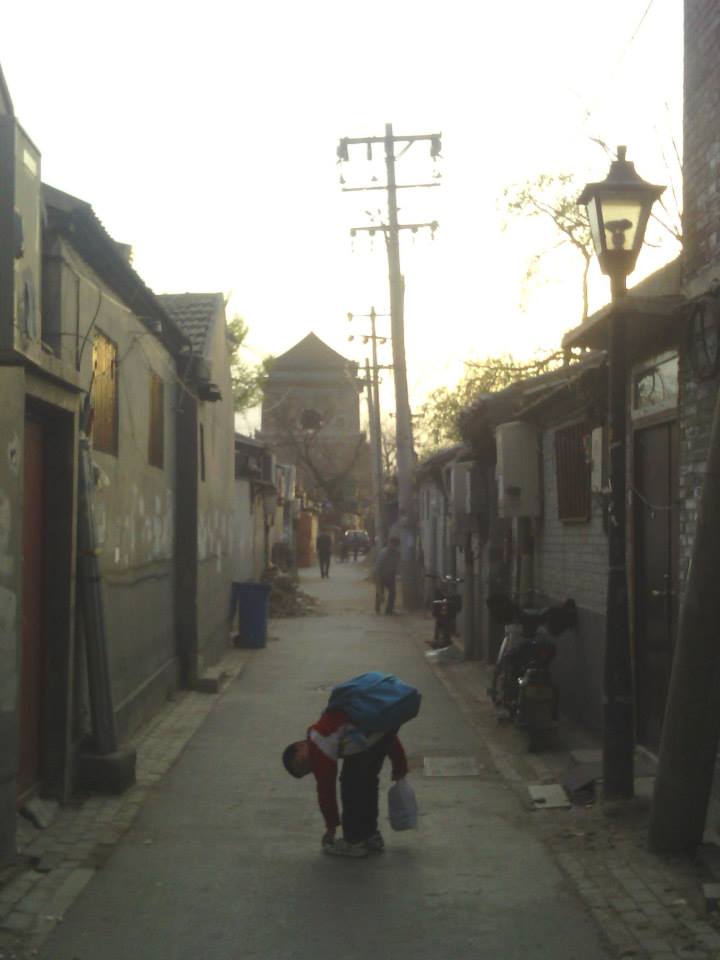
A Beijing hutong (alleyway). Copyright: Lu-Hai Liang.
Until very recently I did not have a regular income and though 2013 was marked by great experiences (some of the best ever in fact), it was not one that saw me in great wealth. I won’t go over the details but there were periods where I had to subsist on the cheapest foods and debt seemed unending.
Poverty. Not many of us actually know it and know it well, and I would not be one to claim expertise. But a couple of things I saw recently helped to reaffirm my position toward the accumulation of cash. The first was a quote I saw in Tom Bissell’s book Magic Hours. In an essay about writing and writers he quotes author Natalie Goldberg: “I feel very rich when I have time to write and very poor when I get a regular paycheck and no time to work at my real work”.
The second thing was a video of an interview with a musician who said: “If I have enough to pay rent, buy groceries then that’s cool – I can just concentrate on my music”.
Being ‘poor’ is relative. We live in an age of bounteous opportunity. Being so-called poor provides a clear set of options. How? Well, it frees you to concentrate on what most matters.
A month ago I published a post on WannabeHacks.co.uk, a website for aspiring journalists. There I set out the argument that in order to freelance, especially in the early stages of your career, one of the best things you can do is go and live in an emerging economy country.
In writing this blog, I have already made contacts with fellow freelancers who are doing what I am doing: taking a risk, moving to somewhere exciting where things are rapidly changing and kickstarting their journalism career. Someone I know (met via this blog) decided to relocate to Istanbul and has already been commissioned multiple times for a major magazine.
But it can be difficult, especially financially. It helps to have some money saved up. But one of the best things about living in a country like China or Turkey or Malaysia or Mexico is that although economies are growing things are still relatively cheap. In China I eat out almost everyday and party hard. If I were freelancing in London, I’d probably already be dead. Due to starvation and exposure (’cause I couldn’t afford a roof over my head).
Kate Hodal (Guardian) sold most of her possessions to finance a move to south-east Asia and was so hard-up on so many occasions that she almost went home. But she persevered and now has the envy-inducing job of being South-east Asia correspondent, meaning she gets paid to fly to places like Vietnam, Indonesia and the Philippines from her base in Thailand. Jonathan Kaiman (also Guardian) had to survive on a low-paid internship and a visa that forced him to take a bus full of Mongolian tradesman to Mongolia every month for almost a year, but he got bylines in the New York Times, LA Times, Foreign Policy and is now one of the most talented China correspondents around. Alec Ash, a Brit and correspondent for The Los Angeles Review of Books, wrote for four years for free on his blog about China from his home in Beijing. Now he’s living it up on an advance for a book he’s been signed to write.
Having the ability to purchase that new phone or buy that bag makes people happier. But it doesn’t, not really. You have to switch your mindset around to focus on what’s really going to drive you forward. Those shoes or that expensive meal might seem important but the enjoyment is absolutely inessential. You cannot, must not, think short-term material goals at this stage. What is important and infinitely more satisfying is recognition, appreciation of your work; the attainment of value.
To want more and more stuff is unerringly shallow. Invest in yourself. Buy what you need to hone your craft, no more. Spend on experiences…but spend wisely.
Being rich is meaningless if it doesn’t make you better at what you do.
4 ways to instantly improve your pitching – freelance journalism

- Think Visual
If you can write a pitch where the editor can ‘see’ the story, see the characters and the setting, then you’re immediately inside the editor’s mind, a good place to be. Just a couple of good sentences that can bring a character or some aspect of the pitch to life. Be vivid and show details that can make an editor stop and think. These words from Guy Davenport were influential to me not just for journalism but for writing in general:
Harry Levin, at Harvard, taught me a lot, especially about iconography, how to read images in a text—that literature is as pictorial as painting or sculpture. [Source: Paris Review]
- Think visual, visual, visual
Sorry to hammer home this point but it’s one of the quickest and easiest ways to improve pitches. I like to play with font colours, use bold where necessary, inject relevant photos inside the email, and hyperlink anything that might need clarification. You can use these formatting tools to emphasize points or themes. Just don’t go crazy, your central idea should always be the focus but a bit of extra effort will help your email stand out.
- Is it a complete story?
Don’t pitch topics or subjects, pitch stories. Pitch ideas that are wrapped in a story. What’s the difference between a story and an idea? To quote Richard Morgan, a complete story is one with “interesting characters in an interesting situation that changes over time in an interesting environment”. The story can also demonstrate a principle or universal theme adding depth and meaning, forming a ‘take-away’ feeling or message for the reader.
- Have an outline
You should have an outline of what the story will look like, who you’ll interview, the basic structure of the piece, and the estimated final word count. It pays to imagine for the editor what the content of the article will be and how it’ll develop paragraph by paragraph.
Show you have the expertise by quickly sketching which named people you’ll interview and who they are. It’s also good sometimes to offer options in your treatment of the story: a more intimate interviewee-based feature, or an omniscient analysis with multiple characters? Editors like surety so demonstrate you have a clear understanding of what the story will be and how it will progress.
How I Got My First Ever Paid Freelance Gig
It had all started with a burning desire. The time was 2009/10, the setting mostly my university dormitory. It was the first year of my journalism degree and I had one hot desire to be published in a national newspaper.
And in late spring, in the dog months of the academic year, when students were beginning to laze around dorms and on campus, settling into dreamy thoughts in the warming days when finally the effort was rewarded, culminating in a byline freshly and eternally emblazoned on a piece of paper that had been printed by The Guardian.
I went about it quite systematically I guess, looking back. At first it all started with asking questions. You’re watching TV with your flatmates and something is mentioned on the news or in a sitcom. “Huh, I wonder why that is?” or “yeah that’s interesting, but I wonder if X is also like that?”
One time I was thinking about Robin Hood, because the film starring Russell Crowe was due to be released. I thought to myself “hmmmmm…I wonder if there are real-life Robin Hoods?” IDEA!
At the time I was also reading books like ‘Feature Writing: A Practical Introduction‘ and ‘Good Writing for Journalists‘ which I either bought or loaned out from the uni library, and paying particular attention to the sections about pitching. They mentioned that you should always pitch to the relevant editor, the editor who’s responsible for that section ie music or film or business etc. It advised that having a name and addressing your email to that name was vital. I proceeded to ignore some of that advice.
I checked online and on Wikipedia and found that there were indeed several cases of real-life Robin Hoods.
I found the phone number for The Guardian’s switchboard and asked them to direct me to the ‘music and film desk’. They did so and I found myself speaking to an editor. I proceeded to pitch over the phone (not really something you should do often). I explained to them that I had this article and that it would be good to coincide with the release of the new film.
The editor explained that they had already planned some content around that movie. After this failure, I proceeded to blanket email the desks of most of the national newspapers with my article. Here was the email I sent:
Hi there, to coincide with the release of the film Robin Hood, I have written a 600 word article on real-life Robin Hoods.
The article is structured in a list system, with each figure as a headline and subsequent info. They range from modern to historical times.
The article could go in the paper, or in the online edition.My name is Lu-Hai Liang and I have published in local papers and student media. I am a Journalism BA at Bournemouth University.
Thanks for your time, please get back to me if you are interested.
Suffice to say, my first ever pitch was a no-go. But I continued to walk the road between asking questions and then turning those questions into saleable pitches. It’s not completely natural to think in this way. It requires, like many skills in life, commitment, patience, and most importantly, practice.
It took me a few pitches more before I struck lucky. And I was very fortunate – sometimes it can take 10, 20 pitches before you land your first. In fact, it took me a long while before I got a byline in a national again – more on that later.
This is the pitch which led me to my first ever paid freelance article:
Dear Ms. Wooley,
Would the Guardian be interested in a short article about the difficulty of Chinese exams, specifically the gaokao, the chinese university entrance exam, which chinese teenagers have just taken. The exams are the only thing considered by universities, so no interviews or recommendations, and ‘questions’ on the exams include obtuse prompts such as: “Looking at the stars with your feet on the ground”.
Many thanks, Lu-Hai Liang
Notice the difference between this pitch and the previous one. I am addressing a named editor. I’m offering interesting, tantalizing details about the article. There are many flaws too. First of all, I’d already written most of the article – not something a regular professional freelance should do (we just can’t afford to). There’s a very noticeable looseness in the sentences, like as if a breathless, eager young journalism student had written them. One line sentences, not multiple sub-clause sentences, are the name of the game in pitches. But there’s a certain charm to the pitch I suppose.
Here is the editor’s response:
Dear Lu-Hai Liang
This sounds quite fascinating. Can you send me any cuttings of your work?
Alice
Very terse. Editors are terse people. Busy folk, they are. Below is my response:
Dear Ms. Woolley,
I’m a Journalism student at Bournemouth University. I have written by-lined articles for my local newspaper, The Hastings Observer – including a news report, film review and band interview. I’m going home tomorrow where my copy of the newspaper is, so I can’t scan them for you until tomorrow.I’ve written up the article for your consideration. For a journalism student, by-lines are, of course, much needed. Any edits or further information needed, please let me know.
I have also written for my student magazine. My online portfolio can be found here: http://buzz.bournemouth.ac.uk/?author=299
Many thanks, Lu-Hai
p.s. I will scan the cuttings and the magazine article for you tomorrow, if your interested.
And then her response, which was one of the sweetest, finest emails I’ve ever received:
Lu-Hai
I really like your article!
I will need to edit it a bit but I would like to use it in Education Guardian asap. Too late for next Tuesday’s issue but hopefully the one after.
No need to scan your cuttings as I am happy with what you have done.
Do you have a mobile number for any queries?
Best, Alice
The 400-or-so-word piece was published by The Guardian, both online and in the newspaper. My fee was £151. I was deliriously happy.
It took me 2 years before I was published by The Guardian again (online and unpaid), so don’t think it’s so easy to break into but it’s much much more accessible than people realize.
***
If you’re serious about freelancing I am sure you have the wherewithal to Google how to do it, read the right books and practice. But here is the single most important piece of advice and inspiration that I’ve come across (which unfortunately cannot find the source):
“You know as editors we always want pitches, actually I’m surprised sometimes I don’t get more”.
And here is an uncommonly good guide to pitching: http://www.theatlantic.com/business/archive/2013/08/how-not-to-pitch/279193/
The Greatest Article about Freelance Journalism Ever Written
The author of the article is a guy who has won awards – who freelanced a front page splash for the New York Daily News. A guy who wrote crazy opening sentences about ‘boobies and gay Jews’ in the New York Times.
Someone who freelanced for seven years. And then got a job at Gawker.com and quit after the first day. Who once got paid $100 a word but who other times is so poor their dinner is a soup made from vitamin pills. Who once wrote entire features on a first-generation iPhone for almost a year, because they couldn’t afford to replace a broken laptop. Without further ado, here it is:
Seven Years as a Freelance Writer, or, How To Make Vitamin Soup.
It is a piece of writing that inspires me every time I read it. And it makes the thrill of chasing a story, of pursuing bylines and writing, the very act of writing, seem like the most rock’n’roll fucking thing you can do. Richard Morgan, I salute you!


 Lu-Hai Liang