Posts Tagged ‘China’
Is this goodbye Beijing?
Beijing and its endless streets and expanse of concrete desert, where it can take a lot of effort to arrange social affairs.
It’s coming up to three years since I arrived in Beijing — three years in which I’ve made friends and lost friends, through the simple drift of life.
In this time I’ve been broke numerous times, have had to scrape and meander. I’ve had starry nights and schemes come to fruition, and moments seldom preconceived.
But what am I doing now? Am I moving forward — is misery just going through the motions?
You might not understand the dilemma and that is fine. I shall put it plainly.
I could never have realized just how hard it is to succeed as a writer.
I could never have imagined what a crossroads sometimes life can be.
I do not want to work to earn money so I can pay the rent, so I can buy more things I do not need.
My instinct tells me I should move out of Beijing and head to some other places in China and stay with friends. Read, write, sleep. Convalesce.
Try to write more — that’s more important than anything. And yet why torture myself? I could do a job that’s enjoyable and worthwhile, and write on the side.
Many writers have had multiple lives. I feel like I should have those lives, because in the end it will make me better and more varied.
There’s no one telling you what your next move should be. There’s no path to follow or predetermined step. Always thus.
Money is and will always be an issue. When you’re younger you think –you’re sure of it in fact– that at some stage you will be wealthy and have enough money to do the things you want to do. But at some stage, it becomes clear that those riches might not become reality.
But that’s fine?
I should go somewhere awhile and figure things out.
How I became a novelist in Beijing — by Carly J. Hallman

Carly J. Hallman has a degree in English Writing & Rhetoric from St. Edward’s University in Austin, Texas. She lives in Beijing, China. Year of the Goose is her first novel.
Later this year, through some mysterious cocktail of luck, hard work, and sheer determination, my first novel will be published in the U.S. ‘Year of the Goose’ is a dark comedy about the Bashful Goose Snack Company, China’s most successful fictional corporation. The novel weaves together tales of a deadly fat camp, a psychopathic heiress, a hair extension tycoon, a Tibetan monk reincarnated as a talking turtle, some witches, and an anthropomorphic diary-penning goose, among others.
I dreamed up the original idea for the novel back in America, sparked by a short story I wrote while still a student (about the aforementioned fat camp). I’d traveled and lived in China before, and, hailing from a boring small town in Texas, found it to be a treasure trove of inspiration — China is a place where things are happening, present continuous tense.
After I graduated I lived in Los Angeles for a while, where I worked as a glorified babysitter, sent out endless “real job” applications and resumes, and struggled to find my way out of a bad relationship. At twenty-four I gave up and got out, and moved back in with my parents. Depressed, disillusioned, directionless. The only thing I knew I wanted — needed — to do was to write that novel.
A Writer’s Journey: The Adventures of a Roaming Journalist in Asia – by Brent Crane

Brent Crane (pictured) is an American journalist who traveled through China and Myanmar for six months. Along the way he published stories with the Daily Telegraph, Aljazeera, Roads & Kingdoms, The Diplomat and VICE, among others. He also shot for the BBC. He can be found tweeting @bcamcrane and his blog is thecongeechronicles.tumblr.com. This is his guest post for the site.
I landed in Beijing on June 16th, 2014, in the early afternoon on a one-way ticket from Boston. I had just turned 24. China was not new to me. I’d been before in 2011 when I had studied in Kunming and also before that in 2010 for the Shanghai World Expo. But this was my first time in the nation’s capital and I thought it’s very grey here.
I stayed with a friend from a study abroad program at the Beijing University of Science and Technology. When she and others asked what I was doing in China I’d get shy and mumble, “freelance journalism”, and felt like a five year old saying, “I want to be an astronaut”.
I wasn’t confident because I really didn’t know what a freelance journalist was or if I could even be one and I usually stumbled when I tried to explain anything. I’d come to China off a whim and depending on who I was talking to they’d either be impressed or think I was an idiot.
Now, seven months later I can answer people with more assuredness. I have written and shot for the Diplomat, the Daily Telegraph, VICE, Al-Jazeera and the BBC, among others. In the name of “journalism”, I have been smuggled into rebel-held territory in Myanmar from China, toured refugee camps, reported on one of the year’s largest and most daring democracy movements, sampled hairy stinky tofu and tracked down a Hunanese peasant who claimed that a tea brewed from animal feces had cured her cancer. I sampled that too.
Published pieces about being in China: 2012-present

Me and some friends
Here is a list of articles that I have had published about my time in China. The following collection of articles are specifically about life and the experiences I’ve had in China, rather than journalism about China itself. This post will be updated whenever something new is out.
Fast track to love? Hunting for a date on Beijing’s subway
This is a lighthearted piece about the time I took on a bet to see if I could get a date while riding Beijing’s crowded subway system within a week. A piece of whimsy that was fun to write but hard to pull off.
An ode to Chinese greasy spoons
This is quite tightly written and quite a personal piece too. About the first fragile months after I’d moved to Beijing, my ambition as a young journalist, and growing up in the city through the habit of eating out.
Travel and Videogames: Missing Play in Beijing
I’ve been a gamer for a long time but since moving to Beijing I’ve mostly not been able to. This essay explores the incredibly strong desire I had to play and how much I missed playing my console. It’s also about travel, reality and the desire for adventure.
The weekend of February 13th: getting ready for Myanmar

I booked a flight to Myanmar on Friday. It’s a one-way ticket. My situation here in Beijing has changed a little. I am now part-time at the Chinese TV company where I’ve been working for over a year. The salary I draw from them is now low enough for me to consider jumping ship, to other jobs, or even to cut loose, though I still consider Beijing my base.
It’s been very cold, although the days now are warming swiftly. The first part of the year in Beijing is always tough. The feeling is one of getting through the depressing days – and difficult for a freelancer I feel. Although commissions have been forthcoming, the motivation to complete them is low. Simply because the sun-deprived body and the comfort-seeking mind dreams of future summery days and craving small satisfactions in the meantime. A bonus of maintaining this blog however is that I can look back to blog posts from the same time last year and see that I felt the same mixture of misery and ennui, and that I eventually got over it.
I bought a TV. I also bought a one-way ticket to Myanmar. How are these two things connected? They aren’t so much as they point to different paths. The TV (which I use to play my Playstation 3) points to my increasing reliance on Beijing and its related comforts: friends, familiar bars and routines. The ticket out is exciting, quite scary and a path to very many unknowns. I am intending, once I arrive, to journey south, eventually reaching the former capital Yangon, although I do want to explore the coastline also. I might even head to Vietnam after. I have not too much money. I am in fact hedging on future freelance payments derived from the stories collected from my travels, to fund present and future life.
Why did I move to Beijing?

I moved to Beijing basically on a whim. If you have read previous blog posts, you may know that originally I had decided to move to Beijing in the autumn of 2012, after finishing university, and that, upon arriving, I knew exactly four people in the city, had no job and no concrete plans. That narrative is already established.
If you ask many of the students, the expats, the foreigners who have come to China, why, for all purposes, did they happen to choose China – So why China?” is the conversational fallback – they will often mumble out something.
They might mention the economic miracle, how it’s good to get to know China and Chinese and the culture, how employers might find it useful or at least you’ll stand out from the crowd. They might mention interest in learning the language, or an affection for Asian culture more generally. Or they might have come because they heard about others doing it, and it’s a good place to teach English to earn a bit of money.
A lot of people in Beijing, the migrants, the foreigners, don’t really know why they are here. Two and a bit years after arriving I feel now is a good time to identify why exactly I decided to come here, for myself, to work it out.
The reasons why of course reflects vast forces of which we’re barely aware. The confluence of economic, political and social factors far too large to comprehend on a macro level. It’s one of the tasks a journalist and writer should have in fact, trying to untangle this web of influence, to make clear the strands that tie people, politics and the decisions of every day, together.
The reason why I came here is obviously bound to that. China is big and large, important and vital. It made sense journalistically, and trying to make sense of it all presents great opportunities for the freelance journalist. But this is not why I came to Beijing. It is and it is not. Just like you may choose a job or a partner based on a checklist of reasons (because it offers better promotional offers; because she has a good family background), it does not really speak to the truth, the gut instinct of why you chose to do what you did.
I think the bigger part of me chose to move to Beijing because for the need of adventure, for experience, and for a narrative greater than that offered by the humdrum exactitude of the everyday. You may find such a reason laughable in its innocent sincerity, but such romantic ideals, I guess, are the ideals in which I find most fascination.
In Elif Batuman’s book The Possessed, she talks about a theory of the novel based on Miguel Cervantes’ classic novel of adventure Don Quixote: “The novel form is about the protagonist’s struggle to transform his arbitrary, fragmented, given experience into a narrative as meaningful as his favourite books”.
Likewise, I find great empathy with the sentiment expressed by a reviewer writing in the New York Times about Jack Kerouac: “He trusted, finally, in his own energy, but it was an energy produced from the finest sources: great books, adventurous friends, high moral purpose and wide experience”.
That is what I live for. And when I set out, at 23, to go far away, to a new city, I guess a part of me instinctively knew it was the right decision to make, despite the subsequent misery of the first three months after arrival and some of the later moments of being here.
Why did I move to Beijing? Because anything else would’ve been easy. And the quest never is.
Blog posts from last January, 2014:
3 month update: freelancing in Beijing
Great journalists and great journalism: how to make a name for yourself pt. 2
VIDEO: A year in the life of a freelance journalist abroad
In early 2014, I decided to buy a new camera. With it I started to take short videos that captured how life unfolded. I would record at dinners, while I was commuting, when I’d travel and so on. It wasn’t every day, but over a year I’d collected enough footage to make a short film about my life as a freelance journalist.
The video shows what Beijing is like, my horribly cramped former living quarters, what I get up to on my off-hours, and includes footage from my North Korea reporting trip and other travels. I hope to make more videos for my YouTube channel this year, so please consider subscribing.
This blog is a guide on becoming a roving freelancer, as well as a chronicle of my journey. The above video, I hope, fills in some of the blanks: a visual record. A written round-up of 2014 can be found here: Freelancing in Beijing: One Year On.
The video was shot on a Canon S120 and edited in Windows Movie Maker. These are the tools I currently have, and I intend to make the most of them. For more on this, see these posts: 6 journalism resolutions for the new year, and getting into video storytelling: using a cheap compact camera.
Part one: freelance journalists on their first ever (paid) commissions
Brent Crane is an American journalist who moved to Asia in 2014. He has since traveled around China and Myanmar, scoring bylines in the Daily Telegraph, Vice, Aljazeera, and Roads & Kingdoms, among others. He can be found tweeting @bcamcrane and his blog is thecongeechronicles.tumblr.com
I first got paid for writing in a place where writers typically never get paid: an internship. I spent last winter in Washington DC writing for an international affairs journal called the American Interest. My main gig was producing short 200-400 word news analysis posts for their online blog. At the end of my time there I wrote my first-ever feature story and that is what I got paid for ($200).
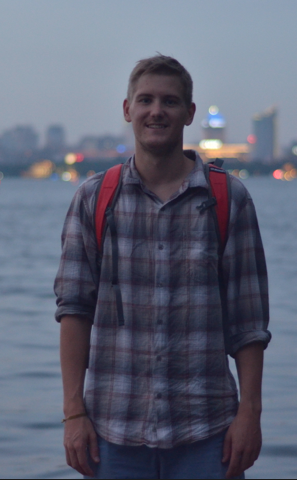
Photo courtesy of Brent Crane.
My chosen topic was the unprecedented dangers of freelance reporting from the Syrian civil war and how this related to the sea change that was taking place in the world of journalism in general. I’d been turned on to the idea from a book that I found in the AI office, a memoir by freelance photojournalist Paul Conroy called “Under the Wire”.
It took me forever to narrow the subject down from “the problems faced by freelance war reporters” to “the problem faced by freelance war reporters in Syria and why this matters for journalism as a whole”; but I had a lot of help from the editors at AI.
Pitching is something you can only get better at with practice, but that experience did teach me to never stop asking myself “Yeah but why should anyone care?” when formulating a story idea. A topic being interesting is not enough. It must be newsy in some way if an editor is going to bite.
My 1500-word feature went through numerous edits. It was a major learning experience for me.
To research it I spoke with eight highly accomplished freelancers, most of whom had reported from Syria. Being able to pick their brains about how they operated as freelancers was invaluable to me as an aspiring journalist. And also they made for great first-time interviewees, having all been in my shoes at some point. Talking with them humanized the field.
Before that, a freelance journalist in my mind was a kind of mysterious character and freelancing was more of a theoretical career choice than a realistic one. Actually meeting some lone wolf writers I had a kind of lightbulb moment: If these people can do it, so can I. That was a huge confidence booster for me and a major push for me to take the leap.
And for the first time in my life I’d actually made an actual sum of money writing. Holding that check for $200 in my hands I thought anything was possible.
Freelancing in Beijing: One Year On
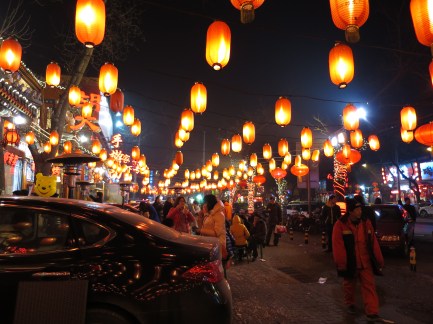
So I’ve been in Beijing for a year. Okay, it’s a little longer than a year: I arrived in Beijing 11th October, 2013.
Next month, I’m heading home (Hastings, England) for Christmas. I’ll be there for almost a month. It’ll be good to detoxify in England for a little while. Beijing is full of pollution…
So I’ve been here for over a year. What has happened? Originally, as I wrote in my first post while back in the city, I wanted to improve my Chinese to near-fluency (failed that one); get a decent paying job (that happened but may change in the very near future); travel more, write more.
I did travel more. But I did not write as much as I wanted to or should have done. That was the failure of this year. Second to that was not actively learning Chinese.
I made a group of friends. I lost a few who drifted away. I moved through a relationship (the loveliest I’ve had). I went up in the world by moving in to a nicer apartment. I gained some great new bylines. I lost freelancing momentum. I lost some enthusiasm. I regained some bad habits. I’ve felt professionally and personally stagnant. And I look to the future with the brightest ambitions but tempered with anxiety and doubt.
I cannot see the future. I think I know where I want to go, but the path to it is so unclear. I am 25. Young to those who’ve already experienced it, older to those still beating a fresh path. It does seem a little like a crossroads, although this could be just “end of the year” talk.
But the optimism remains.
How to summarize a year? I freelanced for Aljazeera, selling the pitch after the reporting trip which was risky but it worked out. I had CNN cancel a story on me but I managed to publish it elsewhere (unpaid but it got me in with some new editors). I wrote more and more for a section of a UK newspaper whose pay rates went up midway through the year.
I wrote for a video games publication I respect and it gladdened me as I want to break into games writing. I had a few commissions not contingent on my being in Asia which demonstrates how location can be irrelevant to freelance.
Money
I made £1634.35 from freelancing since I arrived in Beijing last October.
This money definitely helped the UK bank balance but clearly I’m not actually making bank from this. It supplemented the far healthier income I got from the Chinese TV job which meant I survived comfortably (although it often did not feel like it), with it financing an expensive reporting trip, visa runs to Hong Kong and two vacations.
But there have been short periods I’ve had to scrimp, and early next year I can foresee cash flow problems. I am not getting rich whatsoever. I am still surviving.
The freelance income probably merits further discussion. Certainly if I didn’t have the TV job I would have had to be much more prolific freelancing. The amount I earned, over a year, is not much at all. But it was good to have these semi-regular injections of cash which I plundered every so often to buy plane tickets. Certainly I’m going to have to step up the production rate if I’m going to be able to afford the kind of travel I wish to do next year.
Success: or lack thereof?
Like I’ve written before, the feeling of progression for a freelancer is not so obvious. We don’t go from Associate Freelancer to Deputy Freelancer to Freelancer-in-Chief. But the failures of the past several months I attribute to not chasing the stories hard enough, to not working in pursuit of the big stories, of the interesting people and things that are happening. I realize these failures and I hope that they’re instructive for what I need to change for 2015.
Life
Because moving to another country, settling in to a new city, isn’t just about bylines and becoming “successful”. There’s so much not said, so much that’s a part of living, especially in your 20s, struggling to understand what it is you’re supposed to be struggling toward. An account merely focused on the journalism and not the journey misses the daily textural quality of life, and the results of which you had never determined would be the destination.
To put it plainly, this blog captures some of that struggle. But of course it misses the thousand small things that you learn, that you understand and helps to expand a sense of what is possible and what is knowable when you are placed in a situation foreign to you.
Struggling to understand what it is you’re supposed to be struggling toward
I mentioned before I was in a relationship. The truth is, it was quite short in duration (although I visited her in Thailand, and we kept in touch). But the intensity of it made it feel that much longer and deeper. And that’s the important thing. The memory of it, the intensity. It doesn’t matter that some experience may be short-lived, because all that you’ll remember of it is that fleeting moment, and what you experience, from one moment to the next, are simply moments. Bubbles in time.
That is why I place great importance on the adventure of moving abroad, or simply to invite new challenges. My life in Beijing has its very great share of downs. But the ups don’t necessarily ameliorate the downs. Because that’s not the point. It’s not even about being “happy”. It’s about how much I’ve put myself through. About finding great contentment in the fact I’ve made a go at this crazy life in Beijing. And have, more or less, made it. I feel great pride in that. Because it’s an achievement purely for myself.
Links:
Part two: 4 Good & Bad Things about Living in Beijing
The Good: Cheap Accommodation. Accommodation in Beijing is not as cheap as you may think. It is, after all, the capital of China and increasingly overpopulated. But good deals can still be had. For example, I lived in a place that cost me RMB 3600 for three months (£120 per month). In China, you often pay for three months at a time. My apartment now, which is about seven times bigger than my previous place – and a whole lot nicer – is RMB 7500 for three months. Some of my friends pay more than this, but they get pretty decent bang for their buck: free internet, large living rooms, a cleaning service etc. The Bad: Poor Accommodation. So things may be somewhat cheaper but this can also mean things don’t work properly; tiny kitchens and nasty bathrooms. My current apartment has a king size bed that is almost collapsing, curtain rails that are held up by glue (which fell down) and a toilet that doesn’t refresh its flush reliably. The worst thing is probably the dirty and incredibly small kitchen which I would use more often if it weren’t so. But Beijing is full of old, poorly constructed housing, and new housing with poor attention to detail, so these are compromises you will be forced to make.

Beijing’s subway can be crowded
The Good: The Subway. It’s cheap, fast and reliable. It costs RMB 2 for all journeys. There are a surfeit of lines and it’s a convenient way to organize meet-ups. The Bad: The Subway. Commuting on the subway is horrible. It’s hot, sweaty and there are far too many people crammed in. Queues are disorderly and ill-mannered, and people still haven’t grasped the concept of first off, then get on. And services finish too early: by around 11.30pm (some lines close earlier than others).
The Good: The People You Meet. In Beijing, I’ve made Japanese, German, Italian, American friends. I’ve met people from Iran, Georgia, Azerbaijan and Nigeria. It’s easy to befriend such people because you’re all foreigners in a foreign land; it’s a common bind that makes striking up conversation easier. The Bad: The Smallness of Circles. Work friends and people you may see regularly for whatever reason become your friends in China. This limitation means your friendship circle can be suffocatingly small. From what I’ve observed your best bet is to make three close friends who are all mutual friends too; a strong base from which to branch out.
The Good: Great Opportunities. The opportunities that are afforded to you, especially in media, business, marketing, architecture, technology and fashion (to name just a few), in China are legion. People move up rungs of the ladder far faster here and your foreign status accords you instant prestige. In practice, this means that simply because you own a foreign passport, you are paid a salary far higher than your Chinese nationality co-workers (even if you work less than they do). It is not fair and although it is more competitive than it was five, ten years ago, such is the relative dearth of foreigners in China that demand still outstrips supply. The Bad: The Sense of Entitlement and White Face Worship. This treatment of foreigners means many a foreigner in China develops an inflated ego. I’ve met plenty of people who expect others to take an interest in them, rather than reciprocate and those who demand higher salaries for no apparent reason than the fact it’s simply not what they’d expect from back home. Those who are foreign will face some harassment, but those who are non-white will face discrimination they might not expect. For example, those with Asian faces may expect a few clubs demanding entrance pay while their white friends walk in for free.
Part One is available here.


 Lu-Hai Liang