Archive for the ‘Features’ Category
All the Technology I Use to Do Journalism
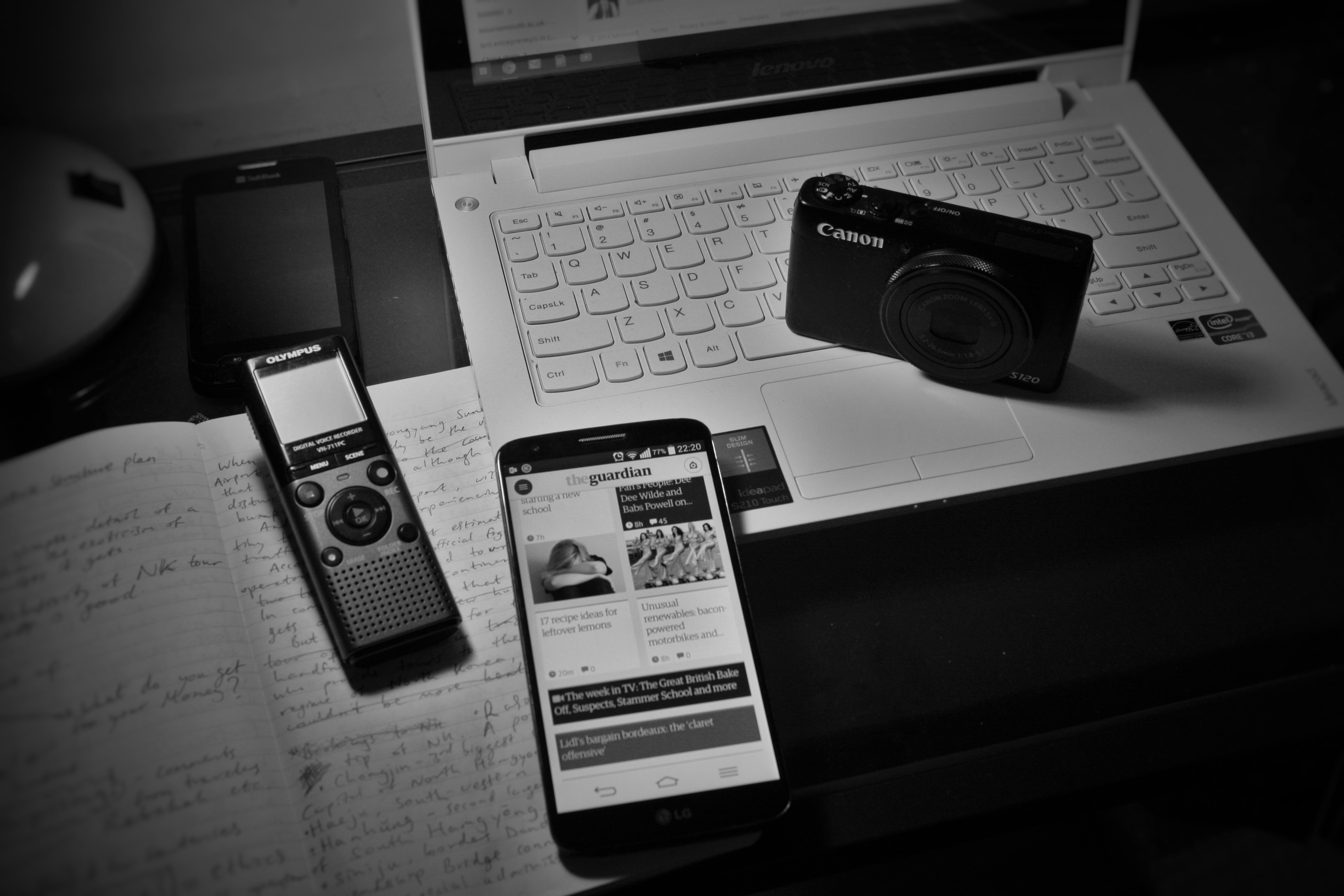
The above photo collects all the gadgetry that I use for my journalism work:
- Olympus digital voice recorder
- LG G2 smartphone
- Lenovo Ideapad S210 touchscreen laptop
- Canon S120 digital camera
The Olympus dictaphone was bought in England after I lost my previous Olympus. It cost £65. It picks up voices very well – defined from background noise. It has a little built-in stand that raises it from a surface, and the ability to slow down audio which comes in handy when transcribing interviews. There are fancier voice recorders out there (Sony do nice expensive ones) but unless you’re looking to record broadcast quality interviews, the Olympus is a lovely piece of kit.
The LG G2 smartphone is a new addition. My previous mobile phone (pictured in the top left of the photo) was a £60 “Softbank” smartphone bought in Hong Kong two years ago. A budget smartphone from 2012 is pretty ancient technology now and was starting to seriously slow, so I bought the LG secondhand in Bangkok for the equivalent of £165. The processor inside it is the generation ahead of the Samsung Galaxy S4 but a step behind the latest S5. So it’s still blazingly quick, and the G2’s camera is a massive upgrade from the Softbank’s and the screen is also about 1,600 times better. I use smartphones to jot down memos and article ideas while on the move; as a kind of scanner (with the camera) and as a phone obvs.
The laptop I picked up in Hong Kong & I wrote about it previously.
The Canon S120 camera was bought in Beijing earlier this year for the equivalent of £256. It works very well. It powers on quickly, focuses quickly and the best thing about it is that it’s incredibly small and unobtrusive. It also takes exceedingly good video. Photos I’ve taken using it have been published by The Telegraph and Aljazeera who paid me $450 for a photo gallery of shots I took in North Korea. I do also own a Canon 450D DSLR (which I used to take the above image) but I hardly use it these days. I didn’t take it to North Korea for instance because I knew it would be more conspicuous than a small compact camera and this would have a greater effect on the behavior of North Korean civilians, and because I knew that fiddling around with the DSLR would cause me to miss shots when the Canon S120 would make me a much more agile photographer.
**
I’m pretty happy with the equipment I have. The total cost is much less than a grand. Sure it’d be nice to have a Surface Pro 3 which has much better battery life than my current laptop (I like to work in cafes). And perhaps an iPad – for magazine subscriptions – and as a backup browser screen for reference purposes. But they are not essential. Upgrades would be a Samsung Galaxy Note 3: I love the stylus that comes with it; its features are very useful for a freelance journalist. And a Canon EOS M which is a camera slightly larger than the Canon S120 but with picture quality equal to DSLRs.
But I do not like to upgrade quickly. It’s a waste of money that could be spent on travel or experiences or stories. And in the next couple years everything will be that much better again. So don’t obsess about your kit, think instead about how to make the most of it.
4 awesome things about being a freelance journalist and 4 terrible downsides

The Awesome
The freedom
Go to North Korea? Sure, why not. Write about entrepreneurs in China just because it interests you and you might learn something and get paid for it? Of course, yes! So take a 20 day trip to Thailand. Take a break. Think about things you want to do, the “bucket list” kinda stuff. Do them. Write about them. Get published; get paid.
The variety
Here are the five most recent articles I’ve had published:
- An ode to Chinese greasy spoons
- Is North Korea on your tourism bucket list?
- Bringing the world closer to North Korea
- Money helps in Burma but it’s time and love that matter
- Does getting a 2:2 degree hinder your career
The ability to live vicariously
From doing journalism, I’ve learnt that it’s possible to move abroad to a foreign country and in two years start and sell off a business. I know it’s possible to live on a farm in Wales and just make videogames for a living. I know what it’s like being a tour guide in North Korea. How tough and incredible it is being a British charity worker in Burma. What it’s like to travel southeast Asia first as a freelancer, then as a correspondent. The methods and tactics of how to catapult yourself into becoming a media brand and a TV chef in China. I know all of that simply because I have a good enough reason to search someone out and talk to them.
The ability to give it all up should you want
‘Cause maybe one day you’ll want the opportunity to work in a normal environment. Those jobs don’t come for free though, so you’ll have to be eagle-eyed and work hard at making sure you’re so good they can’t ignore you.
The downsides
The bittiness
A piece there, a feature here, a report there. Freelancing can be piecemeal work and can sometimes leave you frustrated. Where’s my opus? you wonder. Where’s the work that I’ll be known for or at least acclaimed for in the short term? Staff writers have a greater chance of becoming known, to be appreciated and perhaps find fulfillment. But to be honest, the antidote is to start writing books. That’s the ambition, always.
The small-time salaries
It is possible to make a decent salary from freelancing alone, although you’re just as likely to see a shooting star in the morning. I’ve copped out a little bit by having another job which makes me about 40% more than what I earn from freelancing. This gives me leverage in what I want to write about: the freedom. But unless you have a very diversified freelance portfolio, are very productive or a star writer then it’s quite hard to be a wealthy freelance journalist.
The seeming lack of progression
If you work at a newspaper, progression is more obvious. The editor starts you off writing short pieces, nibs, round-ups, before giving you meatier reporting gigs, and then you become better known and start writing weighty features. When you’re freelance, progression is less clear. How do you move up as a freelancer? It’s a question I’m trying to answer. I’ll let you know when I’ve found it.
The overabundance of freedom
If you’re going to be a successful freelance journalist you’d better make damn sure that you’re organized, diligent and disciplined, independent and in possession of a giant’s store of initiative. For every well-chosen break or indulgent stroll in the park you should be working on the weekend pushing out that article or making plans in your “free time” to meet up with sources and always, always trying to make new contacts and rooting out possible stories.
An update on North Korea: the costs of freelancing from the Hermit Kingdom
So I traveled in late April to North Korea for a week. I wrote about it on this blog here. The trip, all inclusive, was through a Beijing-based tour company (tourism to NK is only permissible via these tour operators), and it cost me 1100 euros.
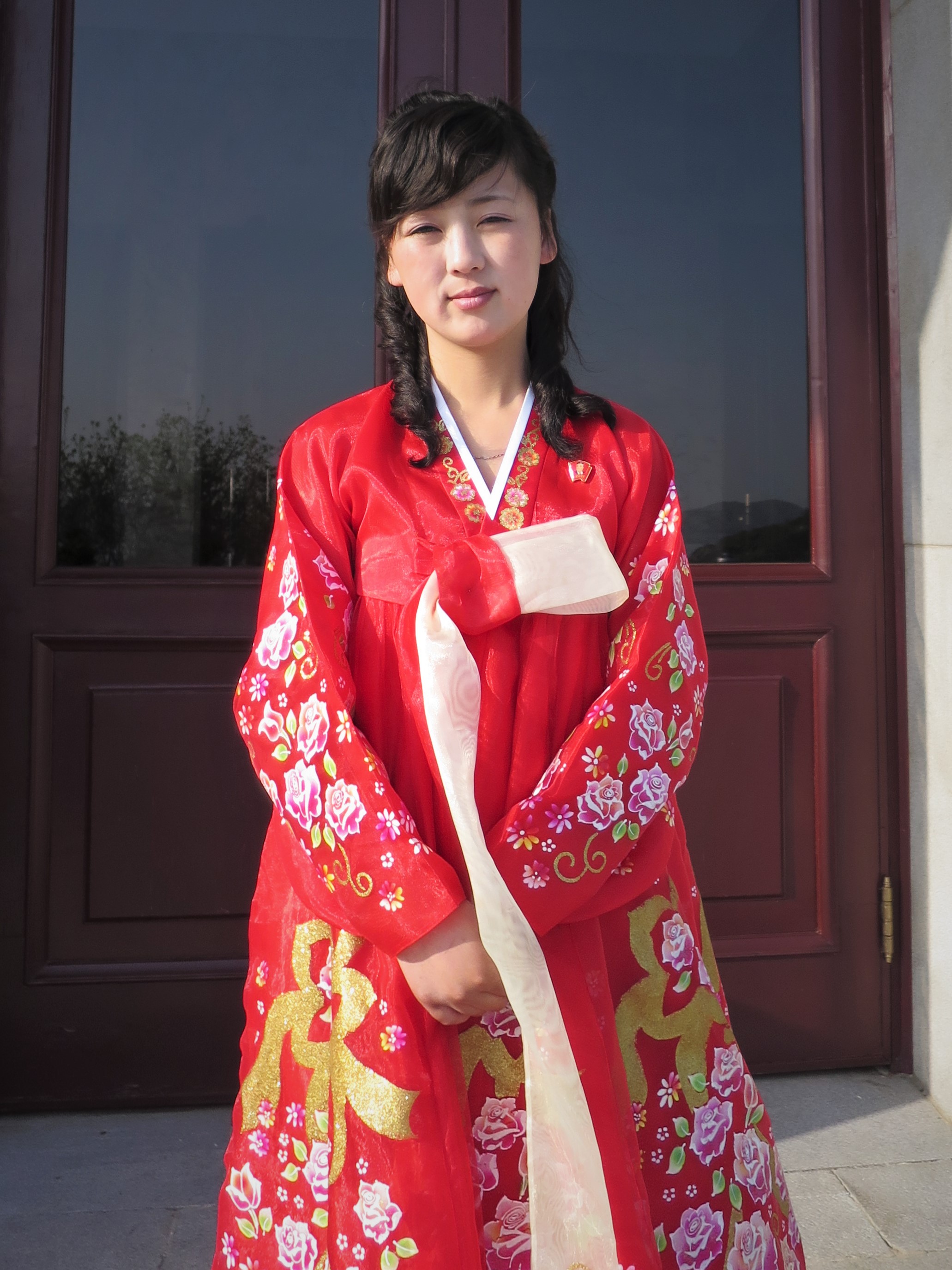
A North Korean greeter from the port of Nampo. Copyright: Lu-Hai Liang (2014).
It was a significant outlay. 1100 euros (875 British pounds or 1448 US dollars) is a lot of money and I dug into my overdraft to stump up the cash. Yes, I did want to go anyway, but I knew I would have to find ways to recoup the costs. How would I do that? By selling stories based on my trip of course. I am a freelance foreign correspondent after all.
However, at the time, I hadn’t been commissioned for anything. No editor at any newspaper, website or magazine was expecting Korea-related copy from me. This is, in short, not the way to do things.
A freelance should really have stories already booked in before s/he travels. And then he does more research and maybe pitches one or two more. After he comes back from said travel and has filed his commissioned stories, he digs around his head and thinks up further angles.
At the least, you should recoup what it cost; all the expenses that it took to go. For North Korea, I have not yet done that. I have in fact paid off 79% of the 1100 euros I spent.
This comes from three sources: a profile of a manager of one of these NK tour companies; an investigative feature on the growth of North Korean tourism; and a photo gallery.
The profile was published online by The Telegraph, and fetched me 150 pounds. Al Jazeera published both the feature and photo gallery, and the two together was worth $900 (both items each making up half that number).
The photo gallery was a useful reminder of how to diversify. If you have video or photos, it always pays to ask your editor if they want an edited together video or a photo gallery. Always ask if they’ll pay for it though – never believe your stuff should be free!
I haven’t yet pitched anything revolving around something like a travel narrative on my experiences traveling in North Korea, but that’s quite hard. It’s already been done quite a bit, so I’ll have to come up with a unique angle. But it’s good practice for next time, and for future trips. Travel + journalism is fun, yo.
Links:
Is North Korea On Your Tourism Bucket List? – Aljazeera (includes photo gallery)
Top 5 Laptops for Journalists (who like to work in cafes, travel, and write)
In Beijing, from where I freelance, I often like to sit in cafes to work. The coffee is a good accompaniment and there’s a better chance of random interactions, which I like. To go to these cafes, I used to lug around a heavy, chunky laptop that I’d had since 2009. The £400 Novatech laptop (a British brand and a university gift) powered me through uni, plus a year and a half in Beijing.
Unfortunately, it died when it suffered a big knock, and so I replaced it with this:

The laptop I own: the Lenovo Ideapad S210
Best affordable all-rounder
Lenovo Ideapad S210 Touch
It is small, light and very portable, about the same size as an 11-inch Macbook Air. It has an Intel Core i3 processor (which is fine for my needs), a touchscreen, runs Windows 8, and it was a bargain when I bought it in Hong Kong in January for around £318. The laptop has one major flaw however and that is a very short battery life. It lasts about three hours meaning I never can forget to bring its battery charger if I bring it out, which is an obstacle to the pick-up-anywhere-and-write mentality I value.
But, it does have a terrific keyboard. The little thing is great to write on, and how it feels typing out each letter and getting into a groove is a criterion on which I place unequal importance. Writing for a living is an inestimable joy and anything I can do to accentuate that I will. Therefore, this list will place a disproportionate weight on the typing experience.

Best battery life
Macbook Air 13-inch
I am reluctant to list this laptop. It’s easy to move around of course, being so thin and light. The trackpad is the best you can find. The battery life with 13+ hours is also class leading, so you don’t need to look for power sockets in a cafe every time, which is what I need to do.
For clearer text the screen resolution needs to be bumped up – the Macbook Pro’s retina screen is a clear improvement – which helps the eyes when you do as much reading as I do. But this is not the worst thing. No, the Macbook Air, and someone needs to say this, has perhaps the horriblest, most horrendous keyboard to ever grace such a costly machine. The Macbook Pro is better, but its slimmer brother has keys that are flat, squelchy and unresponsive. It’s like typing on a potato.
I would not say no if some kind stranger pressed one into my hands, but I would find no additional satisfaction from writing on a Macbook Air.
Budget alternative: Get an iPad and a third-party keyboard dock. Download the Microsoft Word app for further writing productivity, or alternatively just use a free writing app and send it to yourself via email. The iPad Air also has great battery life and doubles up as a fantastic way to subscribe to magazines etc, especially when you’re freelancing from overseas.

Most fun and portable
Microsoft Surface Pro 3
Most fun? What does that mean? It’s not really a metric tech sites can measure in their laptop reviews. And yet, I think the Surface Pro, which is a laptop in tablet form, is quite a fun little computer. It’s thinner than a Macbook Air and lighter.
In order to do any serious work, you’ll have to buy the separately sold keyboard attachment. They come in two types. One is touch responsive, meaning you’ll have to hammer on a flat piece of plastic with no buttons, or the other one which does have buttons. The latter keyboard is not great – it’s somewhat flimsy but I think it works fine enough, almost a novelty pleasure.
I like the Surface Pro because it’s a sleek tablet, with all the power of a laptop, and you can put it together like a writing transformer. Just taking it out of a bag, setting it up and magnetically attaching its keyboard is a cool experience. I realize how geeky and boyish that sounds.
Budget alternative: The Asus Transformer Book T100. A tablet that comes with a keyboard dock for a very cheap price. It runs Windows 8.1, comes with Microsoft Office installed and a processor that is not too bad. The keyboard dock is cramped and not that fun to use however.
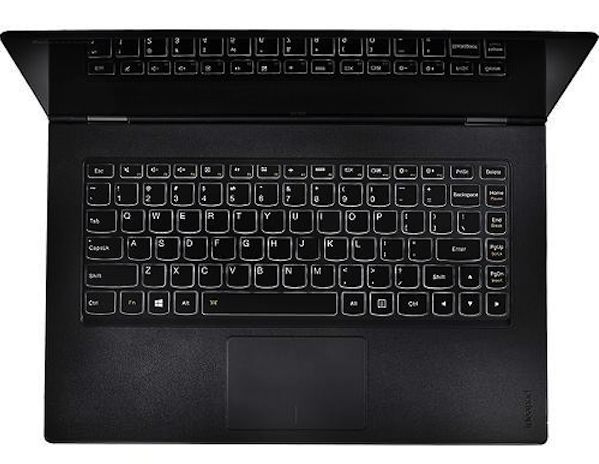
A great Windows laptop, with a fantastic keyboard
Lenovo Yoga 2 Pro
Lenovo is famous for the extra effort they put into keyboard design, and you’ll find superior keyboards across their range. Their ThinkPad line is especially well known for keyboards that resemble desktop typing with high, raised keys that provide excellent tactile feedback. The Yoga 2 Pro is an ultrabook with an HD touchscreen, a processor more than able to handle photo and video editing, and a neat trick of being able to fold over its body to become a tablet. Typing is fast, smooth and groovy.
Budget alternative: The Yoga 2 (without the “Pro” suffix) costs £400 to £700, depending what size you choose, otherwise the aforementioned Ideapad S210 Touch is a good bet although it is hard to find.

My favourite keyboard, and a killer machine
Dell XPS 13
This is a premium ultrabook with top-end specs. It looks great, is as thin as a Macbook Air but looks sturdier and more robust. Although the battery life could be improved (only about 6 hours), it does feature a higher resolution screen than Macbook Airs, meaning reading text is easier on the eyes.
This is an expensive machine, indeed the costliest on this list, but I’ll pay it to use that magnificent keyboard. The keys are wider and fatter, each click giving out robust feedback. The font of every letter demands to be hammered with vigour; powered by whisky and tobacco.
Typing on this thing is addictive, as if every hit is a small smack of satisfaction. For us modern writers, we will never get into the mechanical groove of typing on a typewriter like Jack Kerouac or Ernest Hemingway or even Hunter S Thompson. For me this keyboard provides a semblance of the same thrill.
The Key to a Successful Freelance Life Abroad: A Diary

Photo may not resemble reality.
7.40am
The key to a successful freelance life abroad is to get another job. I get woken up by the alarm at this hour to commute to The Day Job. I need to pay the bills, for dinners and frequent travel.
But seriously, unless you’ve got various regular clients and have the energy to freelance all the time, another job helps to relieve the stress. Don’t worry, I freelance a lot too – for stuff I care about, not just for financial survival. That’s the benefit of having a safe, reliable income until you’re a big famous writer.
8.30am
I usually dismiss the alarm and sleep more. The Day Job doesn’t mind that I come in late.
9.15am
Get on the subway, it’s pretty crammed. Here I usually use The Guardian news app on my phone to read articles offline. It’s the start to my reading and I read a lot. It helps you come up with ideas if you read half the internet every day. In your journalism field of interest obviously, not internet fluff about boners and 21 Things You Need To Know Before You’re 25.
9.30am
While holding the subway rail and trying not to make too many eyes at the pretty subway girl in the corner, a half-formed idea comes to me. It might not go anywhere, but I note it down on my phone’s notes app. It could be half a sentence. Whatever. Ideas are the reason for your existence as a freelancer abroad.
10.00am
Swipe into the office, which is a TV station with studios, editing computers, banks of TV screens, a make-up room and a canteen that serves, in the vivid parlance of a colleague, “toilet water”. It is free toilet water though and honestly the food isn’t that bad. Anyway, here the work at The Day Job begins. I turn on the computer and log on to my favourite blogs, check my email and read my regular websites. I’m numb to the world as I fall into a content black hole.
10.35am
I am awoken from my reading coma – “Did you receive the script I sent you?”, a colleague asks. This is the bulk of my job at the TV station; editing and writing scripts for presenters and voice-overs. It is not overly taxing or time-consuming, leaving plenty of time for reading interesting stuff, thinking about pitches and, when it’s extra quiet, writing freelance articles and blog posts. Oh, and the pay is good.
11.30am
Go for a brief walk around the office. Idly flirt, snoop on what people are working on, avoid the boss. Chat to my American co-workers who are the loudest people in the office. A good walk is vital to oil the ideas and half-thoughts bubbling away in the soup of your mind. You never know when something good will rise up out of the slime.
12.30pm
Go for lunch. The dilemma everyday: eat bad canteen food for free, OR, eat better food not for free?
1.30pm
Decided on not-free noodles today. Tasty. Back in the lobby of the day job building. Walk around and practice Chinese with the office girls. Listen to the Aussie rant about his Chinese co-workers. Drink some coffee.
2pm
Take a nap.
2.30pm
If you’re going to be a successful freelancer abroad, then you’d better learn how to pitch. And know when 9am is in the country of the publication to which you intend to pitch. I assume that’s when emails are first checked. Editors: feel free to tell me what exact time you check your emails!
A good pitch should be confident, concise and have a few vivid details. A strong pitch should be easily imaginable.
3pm
Go and record a voice-over about Chinese models working in Beijing for the day job. While I’m reading it over I think “hmm, I wonder what it’s like being a model here?” BOOM! An idea, an angle. Stories are everywhere if you just observe the curious parts of any subject. Some of the stories I’m currently developing:
The dangers of eating spicy food
Why young foreign architects are heading to China
Education in China – how is it changing?
4pm
This week I’ve sent five pitches to three editors from two publications. It helps if you know more than one editor at one place. Sometimes I will stud an email with mini-pitches, little pitchlets, if it’s an introductory email. Or I will surround a pitch I think has the best chance of commission with other pitches to lessen the chance that all of them will be rejected.
5pm
By this time I’ve usually sent out my pitches to the UK editors. The US ones will still be asleep. I will have also edited several scripts and recorded some voice-overs for the TV shows we work on in the office.
6pm
Clock off, swipe out of The Day Job.
6-9pm
Eat dinner. Head to bar, drink.
10pm
Get home, read more. Hear back from one of the UK editors I pitched earlier. Send pitches to the US editors. Work on this blog post. Stream a TV show. Start to feel sleepy. Have a brainwave and wake up reaching for my phone. Type an idea into it.
*
This post is indebted to Sarah Hepola.
Review: Letters to a Young Journalist
Inspired by Mario Vargas Llosa’s Letters to a Young Novelist, this immensely readable book is thought-provoking, wise, and, for the young journalist who already knows the basics, extremely nourishing.
Written by Samuel G. Freedman, an author and journalist, whose day job is teaching at the Columbia Graduate School of Journalism, the introduction is enticing: “Thirty years ago, when I was a good deal like you, I drove off to start my first job as a newspaper reporter….I was a few months short of nineteen then, and I didn’t even own a white shirt or navy blazer for the occasion.”

Published November, 2011. 206 pages. “Structure liberates writing”.
This is not a book to learn the building blocks of how to structure an article or the process of reporting. For that I recommend ‘Feature Writing: A Practical Introduction’ and ‘Good Writing for Journalists’, both of which were excellent education. But Freedman does provide inspiration and rock-hard nuggets of wisdom.
Although coming from an era few student journalists would recognize now — of local newspapers with individual departments covering crime or arts for example — those with a literary bent will appreciate chapters focused on reporting or writing or career.
One section entitled In Praise of Gradualism struck me as a much needed antidote to impatience. In it he says that for those in their early twenties the important thing is to develop your day-to-day skills, even if it’s at a small and humble publication.
“I can say that I have never seen a truly gifted young journalist go unrecognized. Maybe in the short run but never over time. There just isn’t that much excellence loose in the world that news executives can afford to ignore it.”
He goes on to cite several named journalists, a few of whom he taught, who went on to work at the likes of Rolling Stone or The New York Times, charting their personal qualities and rise to eventual success, remarking how each internship or lowly job was important to the opportunity that followed.
The emphasis here is on the individual drive to become better: “What looks like spontaneous creation…is so much more often the end result of an assiduous work ethic and a conscious effort to develop skills”.
Some may find the book too high-minded, American or preoccupied with art and literature, but then you come across lessons like this: “what does the article intend to say? What one central idea would animate the article, a decision that guided the remaining reporting in a more focused, channeled way”.
This is a short book with insights that illuminate every so often, and though parts may at times be preachy, it was a deep comfort to be reminded of journalism’s ambitions and a career choice that can offer some of the slow satisfaction of art.
**
Other book reviews:
Apologies to My Censor: The High and Low Adventures of a Foreigner in China
How a story about Chinese journalism students led to a chance at the New York Times

Recently, a piece I wrote, originally destined for CNN, was published on the Los Angeles Review of Books‘ China blog section. It took me a long time to find a home for the article after it was cancelled by CNN but its eventual publication, which was unpaid, has led to opportunities from, among others, the Washington Post and the New York Times.
The article is about Chinese journalism students, graduates and China’s journalism industry. It was fascinating to report on and some of the answers I found surprised and befuddled me. Here are some of the highlights:
“I think the Marxist view on journalism is right,” says Wang Zihao, a 22-year-old journalism major at Beijing’s Communications University of China. “Sometimes what the [Western] journalists do is just outrageous. They should have more professional ethics.”
…
According to 2013 government figures, there are over 250,000 journalists with press cards, which are mandatory for professional journalists in China.
…
“Sometimes one person has to do things that are supposed to be done by three people. So this is not discrimination against women, it’s just that men are better at working under pressure,” says Mr. Wang.
…
Issues of censorship and political agendas are, perhaps contrary to foreigners’ beliefs, much discussed on campuses and online. But the students’ opinions may not be what foreigners expect
For the whole article please use this link: http://blog.lareviewofbooks.org/chinablog/study-journalism-china/
Postscript
It was while I was reading an article about how the Chinese government was putting extra pressure on its journalists in The Washington Post that I came up with the idea for this story. A section in that Post article mentioned how student journalists in China and university faculties were also facing pressure, and I thought: “hmmmm, I wonder what’s it like to be a Chinese journalism student?”
So I pitched this idea to an editor at CNN’s website, who I had made contact with using Twitter.
Twitter’s a fantastic resource for journalists, and I have gotten email addresses, sources and contacts aplenty from it; usually I just ask – “hey do you take freelance, if so, what’s your email?” – or something along those lines.
The editor liked the idea, and off I went. I asked a Chinese friend to help me with the reporting and because she herself had gone through a journalism degree in China.
Cue lots of research and reporting.
I wrote up the article, during which the commissioning editor at CNN had gone on maternity leave.
My article got passed on to a couple of other editors, one of whom asked for the story to be re-reported. I wasn’t entirely comfortable with that – and they eventually spiked the story. It was my first ever story cancellation but I guess it happens.
Anyway, I tried to sell the story on to other outlets all of whom liked the story but felt it was perhaps a bit too niche a topic. It was picked up eventually as you all now know, although for free. I did hope that it would be a paid for, but the value of it being published anyway exceeded my expectations.
It was re-tweeted and favourited by dozens of journalists, writers and editors, partly I guess because the story is about journalism. I followed up on these and introduced myself. Cue opportunities to pitch editors who’ve seen my work – after reading the article – and who I now know enough to feel that when I pitch them that we’re not complete strangers (every little helps).
I will think and search for new pitches, because bylines in such storied publications as The Washington Post or The New York Times would be awesome.
Movin’ up: from poor freelancer to slightly rich writer
I’ve written about being a poverty-stricken writer before. Tales of squalor and survival. On having to eat street-cooked sweet potatoes for a week because I was waiting to be paid. On readjusting attitudes toward money, or rather the accumulation of it, beliefs which I still hold. But now the going should be easier.
I recently moved into a new apartment. It’s in a nice area of Beijing where rich couples stroll around in the evenings. It’s like a little community, a more cosmopolitan part of a city that’s usually gritty – Beijing is perhaps one of the more squalid capital cities of the world.
My old room cost me RMB 1200 a month, or £120. It was a tiny little place, where I could almost touch the walls, just big enough for a single bed, a desk, a sink and a wardrobe. My girlfriend commented that it was the smallest and horriblest place she’d ever seen someone living in (thanks!) and that the bathroom was like the setting for the movie SAW.
The new place is RMB 2400 a month, or £240. I will go to a Beijing IKEA in the near future to furnish the place. I’ve taken on a part-time tutoring job for an eight-year-old Chinese girl. The monthly fee from this pays the rent. I get RMB 10,000 a month (£1000) from my full-time job at the TV company. My freelance journalism pays around £300-500 monthly, depending on my own productivity.
In total then, my monthly salary is around £1600, or 16,000 Chinese RenMinBi. In the UK, £1600 to live on per month is not too bad although this would depend on where you lived. In London I can imagine, after rent, bills, transport and food, it would not stretch very far.
But in China, even in Beijing, this is quite a comfortable salary, what a 35-year-old manager might earn at a medium-sized media company so I’ve been told.
It has taken me seven months to reach this stage. For about seven months now, my UK bank account has been in the red, where I’ve made fervent use of my bank overdraft to finance rent deposits and visa runs to Hong Kong. It is just now back in the black.
The Chinese bank account, after paying for three months rent in advance and a deposit, still has left a sizable residue that will easily tide me over until my next paycheck. Which I will use for a 20-day vacation in Thailand. Life is alright, for now…
What should a freelance journalist do in the summer?
My productivity lately has nosedived. Temperatures in Beijing meanwhile peaked – last week it hit 41 Celsius. Summer in general is a difficult time for me. I find it harder to concentrate on work.
It feels perverse to be indoors hunched over staring at a computer screen when people are doing summery things. Hormones also go through the roof (or is that just me?) and the mind drifts toward an addled state fixated on hedonism, idleness and pleasures.
I’ve got a couple of commissioned pieces on the go. My day job (at the TV company) has been more demanding of late, requiring more energy but really that’s an excuse. Another disruption is that I’ve been homeless for about three weeks now. I’ve been staying (and overstaying) on friends’ couches around Beijing, after me and other tenants were kicked out of our rooms by the landlord. Landlords have far too much power.
I finally found a new place I was happy with but can’t move in until June 11th, so tonight I will be sleeping on a couch at my workplace. I’m writing this post now at my office’s desk at 11pm Beijing time.
So what should a freelancer do during this season? I’d like to know what other freelancers do, so please do leave a comment. I guess many cannot really afford to take much time off if their livelihood depend on the income, and they don’t live in a cheaper location such as China. Summer is often a dry period for news and contracted freelancers for newspapers often take time off.
I guess summer is a time for reading, relaxing, doing what humans like to do, traveling, swimming, eating, drinking, lounging, sexing, snorkeling in sapphire waters on a James Bond beach, taking time off and making memories that when the cold and drab colours of winter come back will offer some reserve of sun.
Soon I’ll be reunited with my half Japanese, half Ukrainian Canadian girlfriend in Thailand for 10 days. It’s going to be awesome. In the meantime I will work on two 5000-word essays on the freelancing life in Beijing and my Chinese political heritage for two editors that might one day be powerful champions. I will try to write but I guess I will mostly read. And that is just as important.
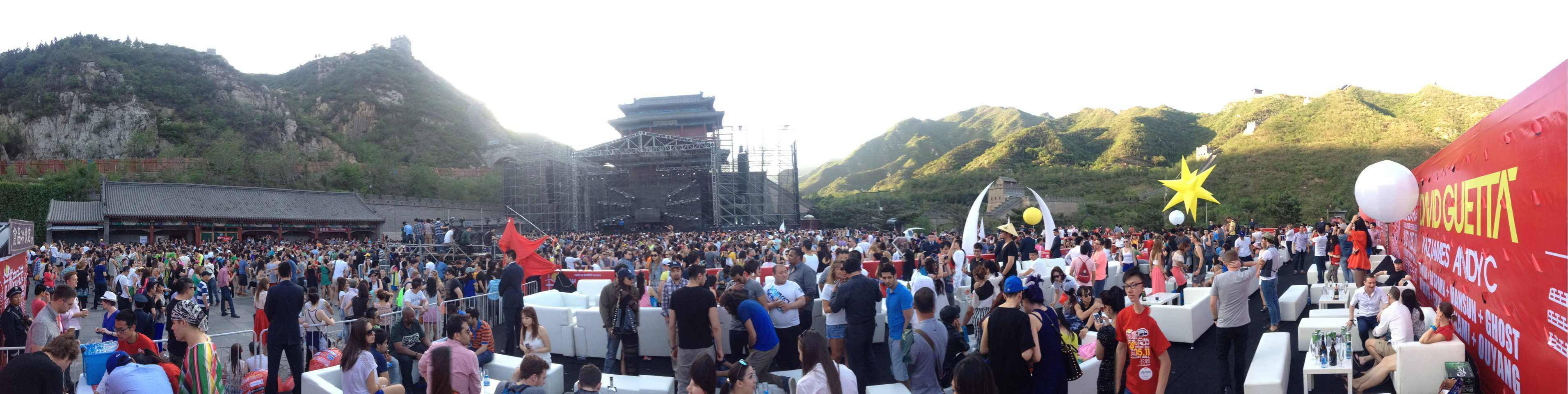
The Great Wall Music Festival, May, 2013. It was fun.
Photography + Journalism: The Best Cameras for Journalists
Plenty of would-be journalists fancy themselves also to be photographers. It’s a visual way of documentation and taking pictures provides immediate feedback (something we crave) and a tactile form of expression. But photojournalists, and especially their most extreme form the war photographer, are a breed apart. I have slummed it as a journalist, living in tiny rooms, subsisting on sweet potatoes, but those guys! They go from couch to couch, living off their assignments, eating whatever is at hand, and trying to go from grant to grant. It’s probably not like that, but I’ve known a few and read about more, and the truth is not unlike the popular image. If you want to be a photojournalist, you have to dedicate yourself to that path. As a journalist and writer first and foremost, I don’t try to impinge on their vocation by assuming some photographer pose (at least, try to not to…), but I do like to dabble, and taking photos while on assignment, especially if you’re interviewing someone a little bit special or going somewhere new, it helps to have a camera as the imagery you take can always come in handy. I’ve had a few published, and it’s always nice to see photo credits mirror bylines as you feel the visual is mirroring the auditory. In other words, the photos and the words attain a stronger, more singular identity. Here are some camera suggestions for journalists [they are not intended for professionals, photojournalists, or even amateur street photographers] –
Best overall

Canon EOS M2 with 22mm lens (40mm equiv. view)
The Canon EOS M (mark 2) is a small, compact-sized camera with the ability to change lenses. Inside is a sensor very similar to the sensors found in Canon’s entry to mid-level DSLR range. That means you get the same picture quality as the DSLRs but in a very unobtrusive package that you can carry around all day and shoot without fuss. If you attach the 22mm lens, it’s a small enough device to fit into a jacket or coat pocket. The 22mm lens gives you a 40mm equivalent view (all those old street photos by Henri Cartier-Bresson were taken on 50mm lenses). A quick note on fixed-length lenses (like the one in picture above) versus zoom lenses. Zoom lenses are useful things to have, and you’ll have to decide what you want. But fixed-length lenses are often sharper and because it limits you forces you to think more, and if you want to zoom you’ll have to move your feet! Getting closer to the subject is important for a journalist. You’ll want the mark 2, not the first version of the camera, as the autofocus has been much improved. This camera has good colour rendition, takes nice looking photos with background blur and is quick and ready for action. It won’t be as fast focusing on moving subjects as a DSLR but the smaller size and lower weight might mean it’ll be taken out more. £300, including 18-55mm lens.
Most portable

Canon S120
The Canon S120 is truly pocket-sized. It’s smaller than most smartphones. But the sensor it has (which is relatively large for a camera of its size) means it’ll be far better in low light. This thing is incredibly easy to use, is great for snapping out and about, day or night, for a landscape photo, or portraits at a bar. It’s quick to shoot video, just press the dedicated button, and takes smooth and great looking videos, even at night. Two cons: if you’re taking lots of photos battery life only lasts about half a day. And photos can look a bit too smooth (as in the in-camera JPEG processing will smooth over people’s skin and background details). £260.
Best for pictures of people

Fujifim X100s
This camera is the best camera for portraits. Often when you take photos for articles, it’s the people that are important, the ones you’ve interviewed or have some role in the story. This camera is optimised for that with great skin tones, great fill flash and colour correction for every kind of lighting condition. It also takes good street scenes and landscapes, although the colour won’t be as accurate and vibrant for landscape and nature photography as the Canons. It has a fixed lens so bear that in mind and it’s more costly than the other cameras featured, but it works great, has a large sensor, would probably work well for years and looks like a journalist’s camera. £869. Consider the Fuijfilm X-M1 if you want to be able to swap lenses.
Consider the alternative, or the best quality photos for vastly less money than the digital equivalent:

Olympus mju-II (35mm film camera)
Why is this cheap, plasticky thing better than the cameras above it? It’s simple. The sensors found in most compact digital cameras are actually very small. Basically, the larger the sensor the more information it can process, the better the low-light ability and more lower depth of field it can achieve. But this is for digital sensors which have become replacements for film. The usual size for film is 35mm. This size actually dwarfs most digital compact camera sensor sizes (like the Canon S120 shown above, or even the EOS M). To get the equivalent 35mm size in digital, what’s called “full-frame”, you have to shell out about £2000 for a camera such as the Canon 5D mk3. Which are much larger and heavier than the Olympus camera pictured. In other words, most film cameras have much greater low light and colour sensitivity than most digital cameras, because their “sensor” — each exposure of film — is far bigger than what’s available in digital cameras. Of course digital is more convenient, but if you’re on a more considered or more personal journalistic project, do consider film cameras. The one pictured costs about£50 in eBay and is noted for its accurate autofocus, sharp lens and smooth operation. You’ll have to do a bit of research on different film types, because they produce different tones, but the look and feel of the photos are different to digital. Most processing places are able to scan films too so you also have digital copies.
The future-present The iPhone camera is still better than most Android phone offerings. I’ve written before on its use and application as a camera. Images taken with an iPhone, sometimes from conflict zones, like Libya, have graced the front page of Time magazine, published in major newspapers and magazines around the world. It is discrete, small, works brilliantly and takes photos. The important thing is it takes photos. What’s in them is still up to you.
Advice – Choose based on how much weight you want to carry, how easy and unobtrusive it will be to take pictures, and how the camera will encourage you to take it up and shoot. Enjoyment is important.
Why I didn’t include any Sony cameras – because they have poor colour accuracy, which is fine for Facebook etc, but not so great for publishing in a journalistic setting. Their colour profiles lean too heavy on the greens and yellows.
Why I didn’t include any DSLRs – because they’re all pretty much the same now and they all work excellently and are all equally capable of taking brilliant photos. Any DSLR will work great.
Links:


 Lu-Hai Liang