Archive for the ‘Features’ Category
Love in Beijing
I recently went to Spring Cameras, a photography store in Beijing which develops film, sells secondhand film cameras, film, and photo books. I hadn’t been there for a while, but I went to get a roll of film developed. I browsed a little and happened on a photo book with the title: “Love in Beijing”.
The owner of the store was talking to another person when I asked him how much the photo book cost. He asked me to ask the maker of the photo book, who was the man he had been talking to. I bought a copy of the photo book (of which only 500 were printed), and we — him, the couple who own the store, and I — subsequently went for dinner. Here are some photos from his lovely book.

Caption reads: “Gezi & Xiaoge. During the year 2003-2013, they have moved 13 times among the places Chaozhu, Guangzhou, Beijing and Shanghai. Finally, they got married during the Spring Festival in 2012 after 9 years’ love. For them, the happiest time was when they were in Guangzhou. At that time, they lived underground, ate the cheapest food and watched a movie named “Saw”. However, they still believed they would have a good future. Now their daughter, Chongchong, is six months”.
As we approach 2016 I decided to buy a brand new smartphone — from 2013. Here’s why.
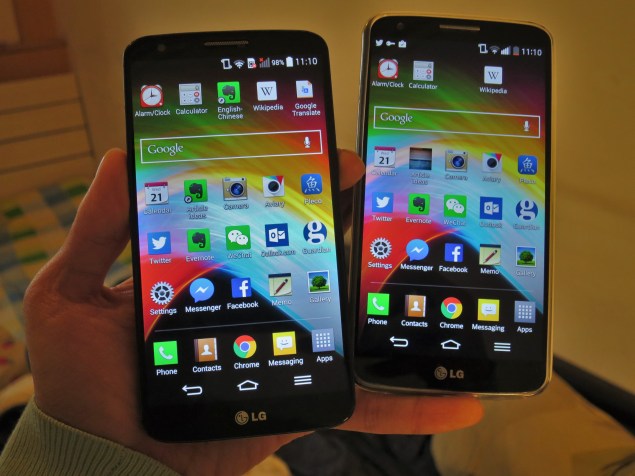
I got a new phone to replace my old broken phone. I decided to buy exactly the same model. When it was released in September 2013, the LG G2 cost around £468.
In October 2015, you can buy the Apple iPhone 6S, with its “3D Touch”, for £539. Or you could plump for the super sized curved-edge screen (£629) of the Samsung Galaxy S6 edge +.
The two “hottest” phones on the market right now, for these “flagship” pieces of tech, you pay a premium for “killer” features; top-of-the-line processors, screens and cameras, and, admittedly, the best design.
In September 2013, the LG G2 represented the highest end of “high-end” phones. Numerous tech sites proclaimed it as the best Android phone in the world. A year later, some still thought that was the case.
So it’s worth asking whether a great phone in 2013 is a bad phone in 2015.
And it’s worth asking whether you need all those premium features.
The answer to the first question is obviously not. The LG G2 was described as an “absolute speed demon” when it came out; possesses a gorgeous screen that’s a large 5.2 inches in a relatively small body, and a good camera with optical stabilization.
The price I paid for a brand new LG G2 (colour: black; memory: 32GB) in 2015 was a steal. Exactly how much I’ll let you know later.
I bought my first LG G2 in a phone market in Bangkok in the summer of 2014. It was secondhand and in less than perfect condition. This would prove to be its undoing finally when the screen broke. That first secondhand LG cost me around £180. The iPhone 6S costs £539, about 3x the price. But is it three times better?
You may feel that paying that much more is worth it to buy the best of the best; an intangible feeling of product greatness further justified that perhaps by spending more now you bought a phone that will last longer. But that’s millions of dollars of marketing hype speaking through you.
You can’t blame Apple’s or Samsung’s marketing departments for upspeaking their products’s “flagship premium features”. But the fact so-called tech “journalists” go along for the ride too is reprehensible.
Anyway, enough proselytizing.
My new LG G2 was bought for RMB 970, through Taobao.com — China’s eBay. The best phone of 2013 cost me in 2015 £99.
10 reasons why using Facebook sucks in China

1. The biggest problem with using Facebook in China is that you can’t. Facebook, like many western social media sites, is blocked by China’s so-called Great Firewall. YouTube, Twitter, several news sites, Instagram, and Dropbox, among others, are all disabled. There are ways to get around the firewall and most expats in China use a VPN (virtual private network) to leap over the wall. This makes getting in touch with your friends and seeing those all-important messages dependent on the reliability of your VPN.
2. The fact it’s banned means only a tiny minority of Chinese people — usually those who have had the most contact with foreigners — have used Facebook, making it harder to stay in touch with your Chinese friends. You can’t add friends if they aren’t on it.
![20151015_130308[1]](https://theluhai.com/wp-content/uploads/2015/10/20151015_1303081.jpg?w=300&h=225)
What a desktop VPN looks like
4. The Chinese government is notorious for its paranoia and censorship, about topics like pollution, human rights, Tibet and Xinjiang. Foreigners know this. This can create a small but noticeable sense of paranoia, manifesting itself into a shadow of self-censorship when you comment or post on Facebook, and other social media.
5. The ubiquity of Facebook means a lack of effort for more traditional, more intimate forms of communication. A dearly addressed email or a Skype call can be easily foregone when you have the convenient blue hub of Facebook. (Handwritten letters and postcards would be even better, in this writer’s opinion).
6. It can be a serious distraction when you find a cafe that has WiFi with a built-in VPN as everyone logs on to those sites usually blocked.
7. The “Like” button is the most inane, shallow form of interaction ever conceived. (Apart from perhaps the now disappeared “poke” feature, also a Facebook creation).
8. As a tool for interacting with less close friends and acquaintances, Facebook is both great and terrible. It’s great for passively consuming other people’s news, but also terrible for instilling this sense of passively watching other people while not really engaging with them. Commenting on an acquaintance’s post can feel almost intrusive or embarrassing; a ridiculous feeling.
![20151015_130319[1]](https://theluhai.com/wp-content/uploads/2015/10/20151015_1303191.jpg?w=300&h=225)
A few of these complaints may not be specific to China
10. The tenth reason why using Facebook sucks, in China, is because you’re inadvertently encouraging Mark Zuckerberg to be obsequious to the Chinese leadership. The Facebook founder was widely criticized last year for his fawning behaviour to China’s president Xi Jinping, following his suggestion to his employees to read the Chinese leader’s book The Governance of China, so they “understand socialism with Chinese characteristics”. A US current affairs magazine noted at the time: “for the free publicity he is providing the Chinese leader, Zuckerbeg has been widely condemned on the Chinese internet“. Lately, he was seen to be trying to impress Xi by speaking to him in Mandarin when the Chinese leader visited America in September.
Pitchable outlets #3: CNN.com
This is a series examining publications and their accessibility to freelancers. Use the pitchable outlets tag to see more in the series.

Status: medium-high / 1st tier
Reach: CNN, short for the Cable News Network, was the first 24-hour cable news network and the first all-news TV channel in the US. It launched its online counterpart CNN.com in 1995. Since then the website has grown into one of the most widely read news publications worldwide. It has numerous bureau across the globe and international channels such as CNN Espanol and CNN Philippines.
For an idea of reach, one of my stories for CNN.com scored over two million page views.
Accessibility: CNN.com’s China section is well developed with broadcasting staff based in Beijing, and editors in Hong Kong. Its China coverage is excellent, even if their TV broadcasts still tend toward the bombastic, with deeply reported online articles and news features that are often informative as well as entertaining. They have a good stable of Chinese news assistants who help in producing short-form video, and in Will Ripley they have a video correspondent who makes use of innovative reporting techniques.
My contributions to CNN.com have been in news features covering cultural trends in China. I made contact with their China editor via Twitter — I found her Twitter account, Tweeted a message to the effect of, “Hey, do you take freelance pitches?”, and she replied in the affirmative. She then sent me her email address via private message on Twitter.
I’ve published two articles about China for CNN, and a travel story for CNN’s online travel section. The pitch for the travel story was forwarded on to their travel editor by my China editor.
I’ve also had a story killed by CNN (my first kill and for which I did not receive a kill fee). The story had been commissioned, but then subsequently killed by someone who had been standing in for the editor who originally commissioned it.
CNN has a roster of staffers who report breaking news and generate stories. For a freelancer, you will have to pitch original ideas; ideas that a freelancer would have the time and flexibility to cover. For instance, these could be stories from China’s rural areas or under reported regions and industries, which staffers may not have time to get to. Their email format is: firstname dot lastname @ CNN dot com.
Writing style: CNN.com has a quite distinctive writing style. They tend to use short paragraphs — one sentence or two sentence paragraphs are not at all uncommon. What this means in practice for the journalist is less writing, and more reporting. Both of the articles I’ve had published took months before they were finally published as numerous rounds of back-and-forth took place. My editor would often ask additional questions and for information to be added, all of which meant additional reporting.
Each paragraph in their articles contain important items of information. This does not mean their articles are not stories. CNN.com articles often contain narrative, but they will be truncated and will fulfill a purpose. Numerous angles will need to be covered and reporting will need to be deep and varied. The prose style is snappy and chatty but authoritative.
For a story about how Buddhism is once again colonizing the hearts of Chinese people, I used an interview with a young man who wanted to become a monk. The interview transcript ran to several pages, and was immensely useful, but his story was condensed into a much shorter version in the final piece. It nevertheless formed a vital part of the article, and demonstrates how a journalist needs to filter information in order to master the narrative.
Payment: CNN have paid me $300 for 1000 words, for articles. This is not bad, but, considering the amount of work involved, not great either. They will pay more for photos to go along with a story (ie a photo gallery) but only if you agree to relinquish copyright of your photos to CNN.
Six things I really like
My Redwing boots. They are comfortable, weather resistant, and look great.
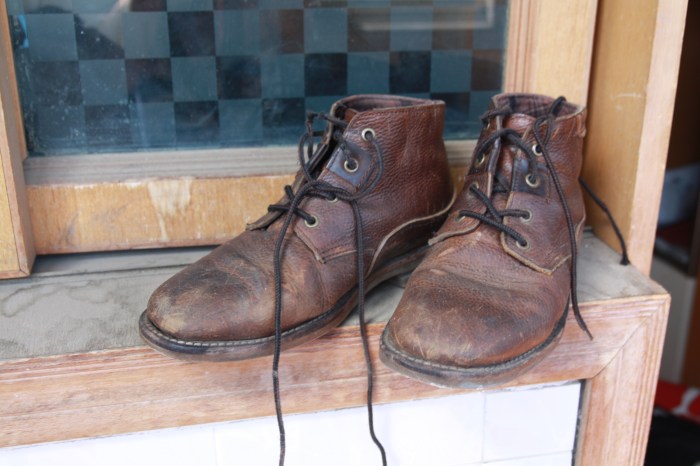
My Accurist watch. They’re a British brand producing watches that are tough and reliable, with a strong sense of style and identity. I’ve had this one since my student days. I’m very attached to it. It cost me £35.

My Canon camera. It’s kind of a perfect camera, for me. It won’t produce as immediately impressive photos as a Sony RX100 or a DSLR. But the S120’s combination of size, speed, and technical ability makes it super easy to take good, usable photos. As a tool, I’ve sold photos from this camera to Al Jazeera and CNN, more than making back what it cost to buy.

Of all the jobs I’ve had…
Perhaps the nicest was the summer job I had picking apples. I was 19 at the time. The farm manager would pick us up in the morning in a tractor, and drop us off to where we’d be working that day, on a row of apple trees ripe for picking. We’d work until dusk, taking breaks whenever we wanted.
It was 2008. I’d returned from ten months teaching English in China and I was looking to earn some money, ready for another stint abroad. I’d start university the following year, where I’d read multimedia journalism.
We were paid 80 pence a box. We each had a black marker we used to initial every box we filled, leaving them out in a row for the farmhand to pick up later in his tractor. The boxes were not large, but the apples were not big either. The old ladies who owned the farm always gave us tips and covered our transportation costs; train fare in my case. But we did not make much.
Alongside me were a bunch of geezers who for whatever reason chose to work this late summer job. For lunch we’d eat our sandwiches and crisps and whatever else we’d packed. And of course we ate apples. Lots of apples. When it was time to take a break, I’d pick an apple from a tree, sit myself down, and eat an apple. Among our heads, there were apples ripening in the sun. We’d hear apples falling on the ground. Sometimes they’d fall on your head, and it hurt a little bit.
As the summer wore on, I’d have dreams of apples. They’d be yellow and red and warm. And I would dream the sound of apples falling to the ground, a sound I can hear still. A low thud, a compact thud, that often came one thud after the other, like a weighty round earth striking a far larger earth, and gravity would ring out the little’s earth slight hollowness.
*
It was 2011, and I’d sit alone in my room in a house full of people. Six people and three floors. I was in my second year of university. I’d travel to London every week, spending two nights, attending a free journalism course where I’d hone my pitching skills. This was on top of my journalism degree. I did not work especially hard in my second year. Not on my journalism degree work anyway.
In my second year, I wrote music reviews for a website who would send me CDs in the post. I kept a film blog and I’d go watch movies at the movie theatre alone, keeping notes in the dark, and then write about the film for my blog. I’d submit these reviews to another website which paid me on the basis of view counts.
In that year, I accumulated Microsoft Word files. I accrued more and more sentences and paragraphs. I did not do much reporting in my second year of uni. You might think that strange, but a journalism degree doesn’t actually provide much reporting practice or training. But what I did do was write a lot. It was what you would call a formative year.
*
I’m sitting in a Costa Coffee in Beijing, and it’s 2015. I’ve accumulated lots of bylines. But in the past few months I’ve felt little progress. I’ve achieved a few things, in my freelance journalism career. But I am looking forward to going home. For Christmas. I look forward to maybe going to Scotland, to hike in mountains of snow. I look forward to this as much as I worry that I’ll squander away the time leading up to December.
Amid all this, for whatever reason, the memory of that summer, where I picked apples for a living, arrives abruptly in my head, a thud on my consciousness.

Being a journalist and being rich has little to no connection

I’ve been pondering something. The connection or correlation between how prestigious a publication is and how much that publication pays. When I first had the idea for this blog post, I had an alternate title:
“The Correlation Between a Publication’s Prestige and How Much It Pays”.
Journalists often develop an understanding of where publications stand in the hierarchy of prestige. That hierarchy may have individual quirks, dependent on your beat, but there will be some commonly held tacit acknowledgements.
That, for example, The New York Times is right up there, significantly above USA Today — even though USA Today has a higher circulation — and that “The Gray Lady”, on an international level at least, probably sits above The Wall Street Journal in terms of byline prestige.
Magazines such as The New Yorker, Vanity Fair, Vogue and Esquire are many writers’ dream destinations in which to be published. They form the Royalty.
Next come the venerable Dukes of Journalism: The Guardian, Washington Post, New York Times, The Times (of London). Adjacent to these are The International Names of Standing — The BBC, CNN.com, Al Jazeera, The Economist, Time.
And there are now digital titans who, like Knight errants, have a glamour of their own: VICE; BuzzFeed, disrupting things.
And yet, often, when I tell people about some of the publications I’ve been published in, they expect an amount of money I should have been paid commensurate to that publication’s prestige.
When I tell them the amount that I am actually paid, they are shocked.
And appalled.
So why do it?
The wild places: fear and travel in China
![mmexport1438084470614[1]](https://theluhai.com/wp-content/uploads/2015/07/mmexport14380844706141.jpg?w=411&h=308)
Inner Mongolia
I have not really traveled in China. The kind of travel where I’d leave my “home” of Beijing, jump on a train and end up somewhere. And then I’d need to figure out where my next stop would be.
That, to me, is travel.
You might not see places that are listed on the “Top 10 Amazing Landscapes You Have To See Before You Die“, but in its place are irrevocable insights and experiences.
It is also the hardest logistically, emotionally and physically. But that is why it is the most rewarding.
What most of us do is buy a plane ticket, head to a large city, and go to a booked hotel, or stay with a friend. That’s something we’ve all done, and we call it travel. But how often do we travel in the manner of not knowing our destination?
A big part of my reluctance to travel in China is the uncertainty, laziness and fear that traps me in safe, secure routine. It’s a box I need to forcibly break out of.
China is huge. Xinjiang, Tibet, Inner Mongolia, and Qinghai are, in descending order, its four most massive provinces, each a world in themselves.
I want to see them. But of course, life might get in the way…
Burmese Days
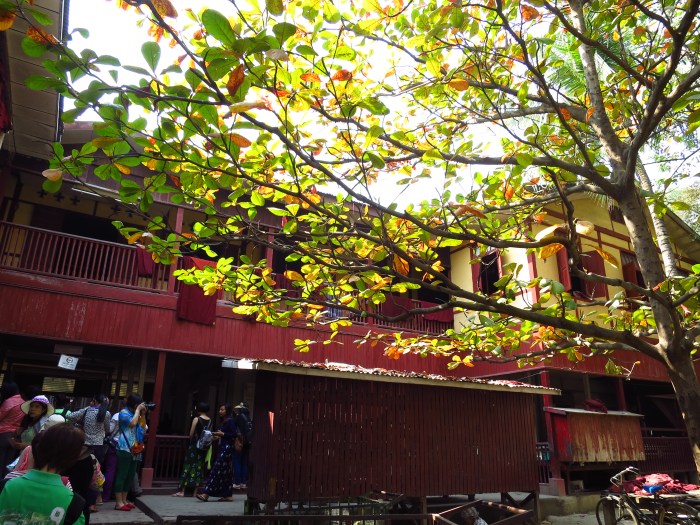
I hadn’t done much reading or planning before I went to Burma. I had a very rough idea of where I’d travel to, but nothing was laid out — these days I don’t even book accommodation. For some reason I thought I’d take a month for Burma, which is far too long. I spent 18 days there in the end.
It was February when I went, a cold and damp month in Beijing. I left the city at night, on my way to the airport, sleet falling on my face, two days after Chinese new year. I remember that I was feeling a little down, for wintry reasons.
Trepidation was accompanying me. The country was an unknown, a chasm only to be filled in by retrospect.


 Lu-Hai Liang