Posts Tagged ‘freelance journalism’
An update on North Korea: the costs of freelancing from the Hermit Kingdom
So I traveled in late April to North Korea for a week. I wrote about it on this blog here. The trip, all inclusive, was through a Beijing-based tour company (tourism to NK is only permissible via these tour operators), and it cost me 1100 euros.
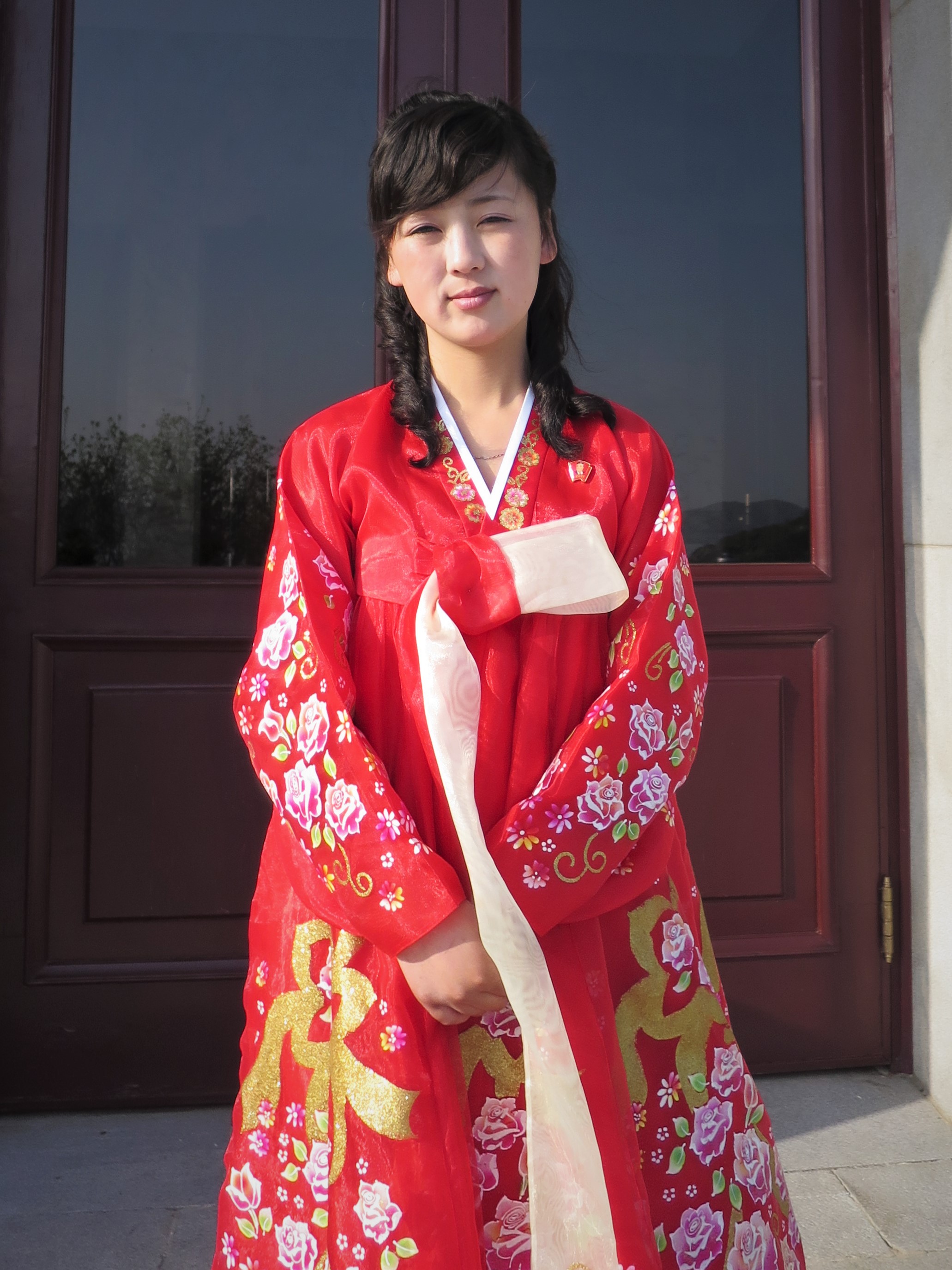
A North Korean greeter from the port of Nampo. Copyright: Lu-Hai Liang (2014).
It was a significant outlay. 1100 euros (875 British pounds or 1448 US dollars) is a lot of money and I dug into my overdraft to stump up the cash. Yes, I did want to go anyway, but I knew I would have to find ways to recoup the costs. How would I do that? By selling stories based on my trip of course. I am a freelance foreign correspondent after all.
However, at the time, I hadn’t been commissioned for anything. No editor at any newspaper, website or magazine was expecting Korea-related copy from me. This is, in short, not the way to do things.
A freelance should really have stories already booked in before s/he travels. And then he does more research and maybe pitches one or two more. After he comes back from said travel and has filed his commissioned stories, he digs around his head and thinks up further angles.
At the least, you should recoup what it cost; all the expenses that it took to go. For North Korea, I have not yet done that. I have in fact paid off 79% of the 1100 euros I spent.
This comes from three sources: a profile of a manager of one of these NK tour companies; an investigative feature on the growth of North Korean tourism; and a photo gallery.
The profile was published online by The Telegraph, and fetched me 150 pounds. Al Jazeera published both the feature and photo gallery, and the two together was worth $900 (both items each making up half that number).
The photo gallery was a useful reminder of how to diversify. If you have video or photos, it always pays to ask your editor if they want an edited together video or a photo gallery. Always ask if they’ll pay for it though – never believe your stuff should be free!
I haven’t yet pitched anything revolving around something like a travel narrative on my experiences traveling in North Korea, but that’s quite hard. It’s already been done quite a bit, so I’ll have to come up with a unique angle. But it’s good practice for next time, and for future trips. Travel + journalism is fun, yo.
Links:
Is North Korea On Your Tourism Bucket List? – Aljazeera (includes photo gallery)
Smog’s lesson in reselling freelance stories
That time I spent every week going to London to practice pitching
One reason you shouldn’t study a journalism degree is to learn how to freelance. J-school is woeful at teaching the mechanics, processes and techniques of successful freelance journalism. A much better way of learning is to buy a couple of books on it, practice what they teach and start doing it. Freelancing workshops can be pricey but worthwhile.
In the second year of my journalism degree I spent a couple days every week, for 12 weeks, attending another journalism course in London (which is three hours away from my university).
On this course, at the start of every class, we were asked to pitch ideas for magazine stories. To begin with our ideas were plagiaristic, rudimentary and not much different than the headlines we’d noted on the various news websites we checked.
Over the duration of the program however, as the weeks wore on, and we became used to the habit of pitching and coming up with ideas for stories our skills noticeably improved. The slant of our headlines steadily grew more sophisticated, our angles more acute, our ideas more original.
Who knows what quantifiable difference it made to our progression but I do believe that that weekly exercise irrevocably strengthened mine and my cohort’s ability to think up story ideas and to think in such a way that allowed us to be creative in a strict form – that of the story pitch.

In the classroom in London. For more on my time on this course, you can read this: http://wannabehacks.co.uk/2011/07/13/lu-hai-liang-catch-22-review-the-social-enterprise-journalism-placement/
That time my journalism tutor said something profound about freelancing
Back at university, we were given a couple of lessons in freelancing, which were superficial and lackluster, but one thing a tutor said stuck with me.
“The trick”, he would say, on more than one occasion, “is not to sell 17 ideas to one publication. The trick is to sell one idea 17 times”.
It has taken me some time to fully understand what that meant, and just how you do that.
Along the way I listened to an editor talk about a friend who was brilliant at selling off different parts of an interview to different publications: “He’d interview Nick Cohen and he’d ask him some questions about being Jewish and sell that to The Jewish Chronicle; he’d ask him about the war [Iraq] and sell that to a political magazine”, and so on…
The point
What is missing in these lessons is how to repackage and resell an existing idea. It is what one freelance I heard refer to as ‘re-nosing’.
The fact is you cannot re-pitch the exact same idea again – you have to adapt it, change it up, modify, refocus the angle, sell in in a different format…there are lots of ways you can mine existing ideas or articles you’ve written to make more business.
In my experience, what I’ve done on Beijing’s air pollution problem – described sometimes as ‘smog’ – is a clear example. It all started as an article about how Asia can be a job opportunity for graduates. One of the sources for that story became a profile feature for a business magazine. I adapted the angle so that it became a news feature when the smog got bad again…and so on. Below are the headlines and stand-firsts of the different stories which hopefully demonstrates what I mean more clearly:
Does Asia hold the answer to your graduate career hunt? [link]
Doing business in China: Lu-Hai Liang speaks to the founder of a successful Beijing-based startup about what it’s like running a company there [link]
The expats offering a breath of fresh air in polluted Beijing [link]
Related –
Why is China such fertile ground for young, ambitious Brits? Young British people are choosing to emigrate to China, armed with strategies for chasing success. Why? [link]
The other Jamie on a food mission: Meet the chef teaching people in the East to love Western food [link]
Flying the flag for the best of British in China: A young English woman who forged a successful career in China after moving there as a teenage is now promoting British brands to wealthy shoppers in Beijing [link]
4 ways to instantly improve your pitching – freelance journalism

- Think Visual
If you can write a pitch where the editor can ‘see’ the story, see the characters and the setting, then you’re immediately inside the editor’s mind, a good place to be. Just a couple of good sentences that can bring a character or some aspect of the pitch to life. Be vivid and show details that can make an editor stop and think. These words from Guy Davenport were influential to me not just for journalism but for writing in general:
Harry Levin, at Harvard, taught me a lot, especially about iconography, how to read images in a text—that literature is as pictorial as painting or sculpture. [Source: Paris Review]
- Think visual, visual, visual
Sorry to hammer home this point but it’s one of the quickest and easiest ways to improve pitches. I like to play with font colours, use bold where necessary, inject relevant photos inside the email, and hyperlink anything that might need clarification. You can use these formatting tools to emphasize points or themes. Just don’t go crazy, your central idea should always be the focus but a bit of extra effort will help your email stand out.
- Is it a complete story?
Don’t pitch topics or subjects, pitch stories. Pitch ideas that are wrapped in a story. What’s the difference between a story and an idea? To quote Richard Morgan, a complete story is one with “interesting characters in an interesting situation that changes over time in an interesting environment”. The story can also demonstrate a principle or universal theme adding depth and meaning, forming a ‘take-away’ feeling or message for the reader.
- Have an outline
You should have an outline of what the story will look like, who you’ll interview, the basic structure of the piece, and the estimated final word count. It pays to imagine for the editor what the content of the article will be and how it’ll develop paragraph by paragraph.
Show you have the expertise by quickly sketching which named people you’ll interview and who they are. It’s also good sometimes to offer options in your treatment of the story: a more intimate interviewee-based feature, or an omniscient analysis with multiple characters? Editors like surety so demonstrate you have a clear understanding of what the story will be and how it will progress.


 Lu-Hai Liang