Posts Tagged ‘China’
4 awesome things about being a freelance journalist and 4 terrible downsides

The Awesome
The freedom
Go to North Korea? Sure, why not. Write about entrepreneurs in China just because it interests you and you might learn something and get paid for it? Of course, yes! So take a 20 day trip to Thailand. Take a break. Think about things you want to do, the “bucket list” kinda stuff. Do them. Write about them. Get published; get paid.
The variety
Here are the five most recent articles I’ve had published:
- An ode to Chinese greasy spoons
- Is North Korea on your tourism bucket list?
- Bringing the world closer to North Korea
- Money helps in Burma but it’s time and love that matter
- Does getting a 2:2 degree hinder your career
The ability to live vicariously
From doing journalism, I’ve learnt that it’s possible to move abroad to a foreign country and in two years start and sell off a business. I know it’s possible to live on a farm in Wales and just make videogames for a living. I know what it’s like being a tour guide in North Korea. How tough and incredible it is being a British charity worker in Burma. What it’s like to travel southeast Asia first as a freelancer, then as a correspondent. The methods and tactics of how to catapult yourself into becoming a media brand and a TV chef in China. I know all of that simply because I have a good enough reason to search someone out and talk to them.
The ability to give it all up should you want
‘Cause maybe one day you’ll want the opportunity to work in a normal environment. Those jobs don’t come for free though, so you’ll have to be eagle-eyed and work hard at making sure you’re so good they can’t ignore you.
The downsides
The bittiness
A piece there, a feature here, a report there. Freelancing can be piecemeal work and can sometimes leave you frustrated. Where’s my opus? you wonder. Where’s the work that I’ll be known for or at least acclaimed for in the short term? Staff writers have a greater chance of becoming known, to be appreciated and perhaps find fulfillment. But to be honest, the antidote is to start writing books. That’s the ambition, always.
The small-time salaries
It is possible to make a decent salary from freelancing alone, although you’re just as likely to see a shooting star in the morning. I’ve copped out a little bit by having another job which makes me about 40% more than what I earn from freelancing. This gives me leverage in what I want to write about: the freedom. But unless you have a very diversified freelance portfolio, are very productive or a star writer then it’s quite hard to be a wealthy freelance journalist.
The seeming lack of progression
If you work at a newspaper, progression is more obvious. The editor starts you off writing short pieces, nibs, round-ups, before giving you meatier reporting gigs, and then you become better known and start writing weighty features. When you’re freelance, progression is less clear. How do you move up as a freelancer? It’s a question I’m trying to answer. I’ll let you know when I’ve found it.
The overabundance of freedom
If you’re going to be a successful freelance journalist you’d better make damn sure that you’re organized, diligent and disciplined, independent and in possession of a giant’s store of initiative. For every well-chosen break or indulgent stroll in the park you should be working on the weekend pushing out that article or making plans in your “free time” to meet up with sources and always, always trying to make new contacts and rooting out possible stories.
How a story about Chinese journalism students led to a chance at the New York Times

Recently, a piece I wrote, originally destined for CNN, was published on the Los Angeles Review of Books‘ China blog section. It took me a long time to find a home for the article after it was cancelled by CNN but its eventual publication, which was unpaid, has led to opportunities from, among others, the Washington Post and the New York Times.
The article is about Chinese journalism students, graduates and China’s journalism industry. It was fascinating to report on and some of the answers I found surprised and befuddled me. Here are some of the highlights:
“I think the Marxist view on journalism is right,” says Wang Zihao, a 22-year-old journalism major at Beijing’s Communications University of China. “Sometimes what the [Western] journalists do is just outrageous. They should have more professional ethics.”
…
According to 2013 government figures, there are over 250,000 journalists with press cards, which are mandatory for professional journalists in China.
…
“Sometimes one person has to do things that are supposed to be done by three people. So this is not discrimination against women, it’s just that men are better at working under pressure,” says Mr. Wang.
…
Issues of censorship and political agendas are, perhaps contrary to foreigners’ beliefs, much discussed on campuses and online. But the students’ opinions may not be what foreigners expect
For the whole article please use this link: http://blog.lareviewofbooks.org/chinablog/study-journalism-china/
Postscript
It was while I was reading an article about how the Chinese government was putting extra pressure on its journalists in The Washington Post that I came up with the idea for this story. A section in that Post article mentioned how student journalists in China and university faculties were also facing pressure, and I thought: “hmmmm, I wonder what’s it like to be a Chinese journalism student?”
So I pitched this idea to an editor at CNN’s website, who I had made contact with using Twitter.
Twitter’s a fantastic resource for journalists, and I have gotten email addresses, sources and contacts aplenty from it; usually I just ask – “hey do you take freelance, if so, what’s your email?” – or something along those lines.
The editor liked the idea, and off I went. I asked a Chinese friend to help me with the reporting and because she herself had gone through a journalism degree in China.
Cue lots of research and reporting.
I wrote up the article, during which the commissioning editor at CNN had gone on maternity leave.
My article got passed on to a couple of other editors, one of whom asked for the story to be re-reported. I wasn’t entirely comfortable with that – and they eventually spiked the story. It was my first ever story cancellation but I guess it happens.
Anyway, I tried to sell the story on to other outlets all of whom liked the story but felt it was perhaps a bit too niche a topic. It was picked up eventually as you all now know, although for free. I did hope that it would be a paid for, but the value of it being published anyway exceeded my expectations.
It was re-tweeted and favourited by dozens of journalists, writers and editors, partly I guess because the story is about journalism. I followed up on these and introduced myself. Cue opportunities to pitch editors who’ve seen my work – after reading the article – and who I now know enough to feel that when I pitch them that we’re not complete strangers (every little helps).
I will think and search for new pitches, because bylines in such storied publications as The Washington Post or The New York Times would be awesome.
Money: or rather the lack of it when you’re trying to freelance
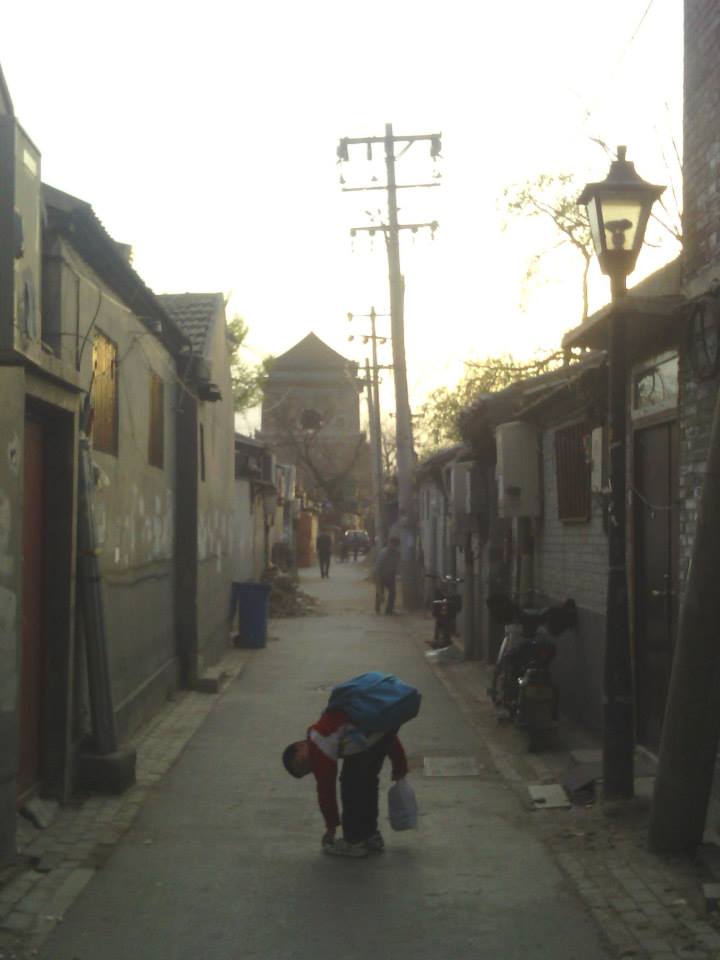
A Beijing hutong (alleyway). Copyright: Lu-Hai Liang.
Until very recently I did not have a regular income and though 2013 was marked by great experiences (some of the best ever in fact), it was not one that saw me in great wealth. I won’t go over the details but there were periods where I had to subsist on the cheapest foods and debt seemed unending.
Poverty. Not many of us actually know it and know it well, and I would not be one to claim expertise. But a couple of things I saw recently helped to reaffirm my position toward the accumulation of cash. The first was a quote I saw in Tom Bissell’s book Magic Hours. In an essay about writing and writers he quotes author Natalie Goldberg: “I feel very rich when I have time to write and very poor when I get a regular paycheck and no time to work at my real work”.
The second thing was a video of an interview with a musician who said: “If I have enough to pay rent, buy groceries then that’s cool – I can just concentrate on my music”.
Being ‘poor’ is relative. We live in an age of bounteous opportunity. Being so-called poor provides a clear set of options. How? Well, it frees you to concentrate on what most matters.
A month ago I published a post on WannabeHacks.co.uk, a website for aspiring journalists. There I set out the argument that in order to freelance, especially in the early stages of your career, one of the best things you can do is go and live in an emerging economy country.
In writing this blog, I have already made contacts with fellow freelancers who are doing what I am doing: taking a risk, moving to somewhere exciting where things are rapidly changing and kickstarting their journalism career. Someone I know (met via this blog) decided to relocate to Istanbul and has already been commissioned multiple times for a major magazine.
But it can be difficult, especially financially. It helps to have some money saved up. But one of the best things about living in a country like China or Turkey or Malaysia or Mexico is that although economies are growing things are still relatively cheap. In China I eat out almost everyday and party hard. If I were freelancing in London, I’d probably already be dead. Due to starvation and exposure (’cause I couldn’t afford a roof over my head).
Kate Hodal (Guardian) sold most of her possessions to finance a move to south-east Asia and was so hard-up on so many occasions that she almost went home. But she persevered and now has the envy-inducing job of being South-east Asia correspondent, meaning she gets paid to fly to places like Vietnam, Indonesia and the Philippines from her base in Thailand. Jonathan Kaiman (also Guardian) had to survive on a low-paid internship and a visa that forced him to take a bus full of Mongolian tradesman to Mongolia every month for almost a year, but he got bylines in the New York Times, LA Times, Foreign Policy and is now one of the most talented China correspondents around. Alec Ash, a Brit and correspondent for The Los Angeles Review of Books, wrote for four years for free on his blog about China from his home in Beijing. Now he’s living it up on an advance for a book he’s been signed to write.
Having the ability to purchase that new phone or buy that bag makes people happier. But it doesn’t, not really. You have to switch your mindset around to focus on what’s really going to drive you forward. Those shoes or that expensive meal might seem important but the enjoyment is absolutely inessential. You cannot, must not, think short-term material goals at this stage. What is important and infinitely more satisfying is recognition, appreciation of your work; the attainment of value.
To want more and more stuff is unerringly shallow. Invest in yourself. Buy what you need to hone your craft, no more. Spend on experiences…but spend wisely.
Being rich is meaningless if it doesn’t make you better at what you do.
What exactly is a freelance foreign correspondent?
Let me try and define it.
You go to a country. You might stay long. Or not for long before returning ‘home’.
You’re in China. In Beijing. And you explore the society and journalism topics about it all, and you pitch and write about them, about China. You grow your list of clients. But you’re also interested in South Korea. About their hi-tech but traditional society. So you read up about it. Maybe make some Korean friends. To ask questions.
Then maybe you hit on something you find fascinating. And salable. An idea you can sell. So you find contacts and maybe a Korean translator with journalism experience. You sell the idea. You book a ticket to Seoul. You find other ideas to make it worth your while. And you do your reporting while gazing at the skyscrapers and wacky advertisements and strutting South Korean girls in their converse shoes, miniskirts and perfectly arrayed hair.
Yes, you look a lot at those girls. Somehow exotic and yet familiar.
You do your reporting and you jet back ‘home’.
You become known for your interesting subjects and your unique take on China. You are also noted for your diversity (South Korea, maybe Japan and south-east Asia too).
You stay a year in China.
You become ‘famous’.
You decide to go to Brazil.
Because why not.
It’s lovely, the sand is warm. And heard you something about the…
For part two in this series go here
6 things I learned about the freelance journalism market while I was in China
There is still a massive demand for information, news and stories
Publications are hungry, starving for new and exciting information and stories. If you are placed in a niche or location that’s in demand, then you could be hot property. Say you’ve taken an interest in computer hacking, or maybe the latest developments in south-east Asian fashion. And generate even a casual expertise and a few contacts in this area, and dig around for stories and news unknown to others (and trust me, there is a lot of stuff that is unknown to editors), then editors will be clamoring for your attention.
If you’re a freelancer based in Latin American, South Africa or South Korea, say, then you’ll have access to stories that lots and lots of publications will want. Make sure you roam around topics and subject areas and find suitable publications accordingly.
There are holes and niches to be filled even at the biggest and most renowned publications
One regret I have is that I didn’t try to pitch more publications while China-bound. The areas I’m most interested in – culture and society means a lot of my potential markets are high-brow magazines like Prospect, New Statesman and broadsheet newspapers. Hard markets you may think. But because I was on the ground and had the balls to pitch them meant my potential for commissions was higher. The fact that you are there in a foreign locale (and China is massively in demand as a news source) and have ‘local’ knowledge makes you immediately sexier to editors.
You have to make the best use of your location and specificity
Simply because I was based in China, I felt like I had the access and privilege to write about the whole Asian continent. I wrote an article for The Guardian about job prospects in Asia, I wrote about India’s economics and entrepreneurs and of course about China. I did not have to be in China or Asia to have had written these articles. But simply by being there, my authority to write about them increases.
Specificity? That means making the most of your skills and potential. For example, writing about politics, technology and business is quite difficult unless you have sufficient contacts and experience. Certainly you could try – for smaller magazines, websites and B2B papers, but the bigger papers will be harder to entice.
What subjects interest you? And what about those subjects could you write that is feasible? Will you be able to get access to interviewees and enough information? Think small to begin with – insights, observations about trends, culture, little aspects of society of the country you’re in before jumping into 2000-word features about the sex trade in Brazil for example.
Money is and probably always will be an issue
When you’re young and starting out, don’t expect to be making lots of money. By all means, please please don’t write for free. But don’t expect to be living comfortably off your earnings. Being based in China helps. Most things are dirt cheap, but I still ended up in debt once I got back to England. You are making a name for yourself – writing about a different country, translating that foreign news to an audience is massively impressive. You will be read by thousands, or even if it’s just hundreds – foreign news is consumed by elites and influential people. It’s about the kudos and the glamour, not the money.
Having journalist friends opens an exponential amount of doors
While in Beijing, I befriended several journalists. I used LinkedIn, personal recommendations and events to connect with my fellow journos. I’ll write about how easy it is to do this in a future blogpost. One contact was particularly helpful – he gave me advice, introduced me to a news agency journo (who emailed me potential freelance opportunities) and also put me in touch with editors looking for more China stories. It’s a knock-on effect. Be generous, be helpful, connect people.
Freelancing is super f-ing fun and empowering
I had a blast. I’d have 2000 words to write in a day. The anxiety and pressure was…uncomfortable. But I felt awesome. The freedom to write articles you’ve come up with, to delve into topics you’re fascinated by and to talk to and meet people whose experiences outweigh your own is like the crack-addiction of a cocaine fiend.
It’s exciting, free and opens doors to experiences that you could never pay for. Enjoy the ride.
What happened last time I tried to be a freelance foreign correspondent
I finished university last year. After a busy summer (presenting, Olympics, work exp at The Guardian), I decided to go to Beijing,
I had no definite plan, no accommodation and I knew exactly four people who lived there, one of whom was a stewardess I had met a couple months prior. I had vague ideas about brushing up on my Chinese, exploring new opportunities and freelancing.
The first couple months were kind of miserable to be honest. I had few friends and I was just hemorrhaging money. I made very little progress journalistically and I was aimless and wondering what exactly I should be doing.
I then answered a chance call-out for interns for The Beijinger, a listings magazine aimed at expats that pre-dated Time Out. How wonderful, you might think, being an intern! Great!
But it was an opportunity. I still wasn’t making any money, I made enough just to cover rent. I was in the office three days a week. The managing editor of The Beijinger was a loud, rambunctious 30-year-old Manc, and his deputy was a very tall and louche Scouser. No, I am not making it up.
December came and I chanced upon a publication online called The Gateway. It’s a business newspaper aimed at students. I immediately dashed off an email to the editor asking if she would be interested in business articles focused on the booming economies of China and south-east Asia.
She would.
Meanwhile, a Chinese girl I was courting ended things abruptly. And that stewardess? Well, she was always flying everywhere, that’s the problem with stewardesses.
Anyway, January was my best ever month for freelance journalism, in terms of pure £. It was a grand whopping total of £700. But by then I had been given a full-time role at The Beijinger so I received a modest pay rise. I wrote some of those freelance articles in the office – something I would not recommend.
I spent a total of 7 months in Beijing, going to some great events, learning a lot (about magazines, staff banter, freelancing, women) before my visa ran out. I even got two great big commissions from The New Statesman which I royally fucked up. Lesson there: if you’re working on something ambitious, be sure to have already done some groundwork on it before pitching.
In a future blog, you’ll find out why I’m returning for a second round.
For more about my experience at The Beijinger, see here.
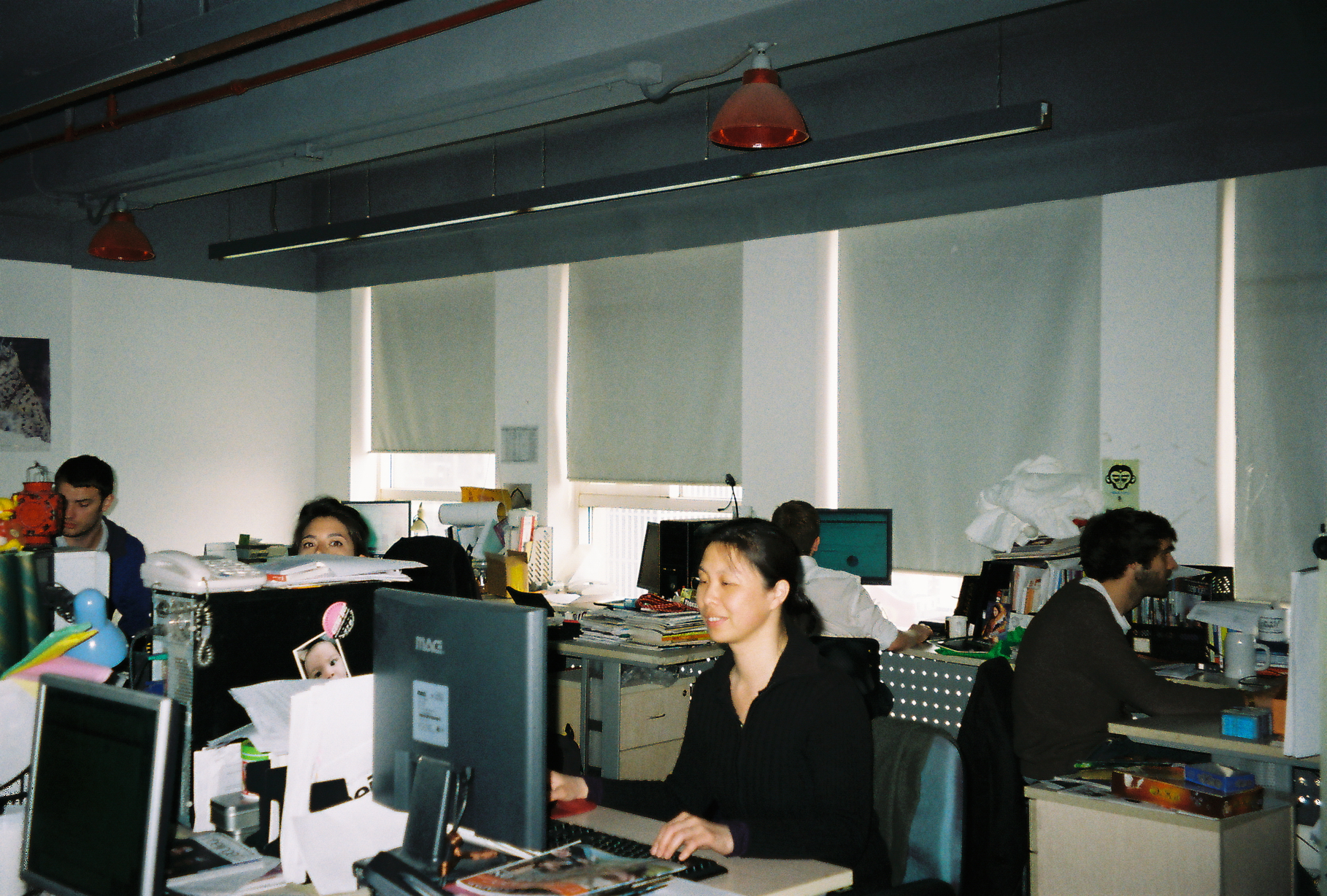
The Beijinger office.


 Lu-Hai Liang