Posts Tagged ‘Beijing’
Money: or rather the lack of it when you’re trying to freelance
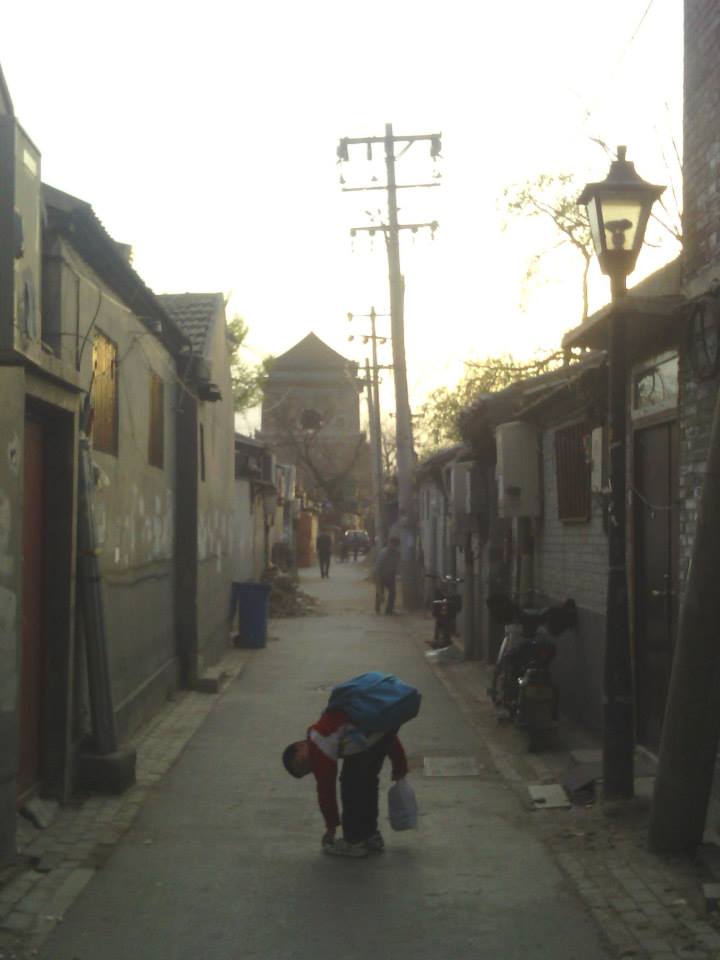
A Beijing hutong (alleyway). Copyright: Lu-Hai Liang.
Until very recently I did not have a regular income and though 2013 was marked by great experiences (some of the best ever in fact), it was not one that saw me in great wealth. I won’t go over the details but there were periods where I had to subsist on the cheapest foods and debt seemed unending.
Poverty. Not many of us actually know it and know it well, and I would not be one to claim expertise. But a couple of things I saw recently helped to reaffirm my position toward the accumulation of cash. The first was a quote I saw in Tom Bissell’s book Magic Hours. In an essay about writing and writers he quotes author Natalie Goldberg: “I feel very rich when I have time to write and very poor when I get a regular paycheck and no time to work at my real work”.
The second thing was a video of an interview with a musician who said: “If I have enough to pay rent, buy groceries then that’s cool – I can just concentrate on my music”.
Being ‘poor’ is relative. We live in an age of bounteous opportunity. Being so-called poor provides a clear set of options. How? Well, it frees you to concentrate on what most matters.
A month ago I published a post on WannabeHacks.co.uk, a website for aspiring journalists. There I set out the argument that in order to freelance, especially in the early stages of your career, one of the best things you can do is go and live in an emerging economy country.
In writing this blog, I have already made contacts with fellow freelancers who are doing what I am doing: taking a risk, moving to somewhere exciting where things are rapidly changing and kickstarting their journalism career. Someone I know (met via this blog) decided to relocate to Istanbul and has already been commissioned multiple times for a major magazine.
But it can be difficult, especially financially. It helps to have some money saved up. But one of the best things about living in a country like China or Turkey or Malaysia or Mexico is that although economies are growing things are still relatively cheap. In China I eat out almost everyday and party hard. If I were freelancing in London, I’d probably already be dead. Due to starvation and exposure (’cause I couldn’t afford a roof over my head).
Kate Hodal (Guardian) sold most of her possessions to finance a move to south-east Asia and was so hard-up on so many occasions that she almost went home. But she persevered and now has the envy-inducing job of being South-east Asia correspondent, meaning she gets paid to fly to places like Vietnam, Indonesia and the Philippines from her base in Thailand. Jonathan Kaiman (also Guardian) had to survive on a low-paid internship and a visa that forced him to take a bus full of Mongolian tradesman to Mongolia every month for almost a year, but he got bylines in the New York Times, LA Times, Foreign Policy and is now one of the most talented China correspondents around. Alec Ash, a Brit and correspondent for The Los Angeles Review of Books, wrote for four years for free on his blog about China from his home in Beijing. Now he’s living it up on an advance for a book he’s been signed to write.
Having the ability to purchase that new phone or buy that bag makes people happier. But it doesn’t, not really. You have to switch your mindset around to focus on what’s really going to drive you forward. Those shoes or that expensive meal might seem important but the enjoyment is absolutely inessential. You cannot, must not, think short-term material goals at this stage. What is important and infinitely more satisfying is recognition, appreciation of your work; the attainment of value.
To want more and more stuff is unerringly shallow. Invest in yourself. Buy what you need to hone your craft, no more. Spend on experiences…but spend wisely.
Being rich is meaningless if it doesn’t make you better at what you do.
So I got a job with a Chinese TV company
It turned out easier than I thought. Let me tell you exactly how it happened. In August I connected to a HR person of a TV company, over LinkedIn. I dashed off a quick message inquiring if they had any opportunities. She replied that they in fact did, that they were developing new programmes and hiring for reporters.
I sent off a CV to her – at this time I was in England, the company in Beijing – so she replied that when I returned we should meet.
Skip forward to October, and I arrived at their offices keen of face desperate of spirit (for I really needed some regular income) for an interview with this Chinese TV company in Beijing.
And that was that. It is interesting working for a Chinese broadcaster. They have programmes in English so language is not a big problem. Bureaucracy, endless meetings and a sense of inertia are, but these are not Chinese problems I’d hazard but endemic to TV across the world.
The Chinese way of thinking about how to best present China to foreigners however is unique. There’s a lot of talk and much consultation with the ‘foreign experts’ (really simply foreigners) over how foreigners think and how they perceive this or that.
I can hardly imagine a BBC meeting going like that. It’s quite alien to me – this intertwining of nationalism and entertainment.
But anyways, it’s a job. I get on with it – I write scripts and help with their programme development, specifically on pilots for a Beijing news show. My pay is fairly generous and I really needed the regular income. Having a day job is also healthy I think – endless freelancing, which mainly consists of me sitting alone in cafes browsing the internet can get lonely and it’s tiring always living inside your own head.
I will continue freelancing on the side, and will negotiate a part-time work schedule early in the new year. I’ve told them already. Getting some more TV experience always helps of course, and working in Chinese media always generates great experiences and insights.
Working in the media in China is not very difficult. Magazines, newspapers, websites, radio and TV – all have positions available. Just don’t expect to be earning big bucks. It helps, as always, if you have an IN – know the right people, do a bit of hustling and have experience bouncing around various local media.
Nyima Pratten became managing editor, at the age of 25, at a popular magazine in Shanghai after six months of smart decisions. Look out for a future guest post from her about how she did it.
4 Good & Bad Things about Living in Beijing
The Bad
1. The Size of Beijing
And no, I don’t mean how big Beijing is. And Beijing is plenty big: the metropolitan area is about the same size as London, but with a population numbering a million more (12.7m). But actually, for an expat, Beijing can be surprisingly small.
The main areas where foreigners hang out in Beijing are Wudaokou, Sanlitun and Gulou. The first is a university area, where overseas students from the US, England, Korea and elsewhere hang. Sanlitun is an upmarket shopping area featuring a huge Apple store and expensive brands, as well as plenty of dives, clubs and bars. It’s very popular with expats.
Finally, Gulou is a trendy area liked by creative types, where Beijing’s traditional alleys (called ‘hutongs’ in Mandarin) are still in place. Nestled in these alleyways are cool little bars and cafes, and music venues such as the legendary Mao Livehouse and DJ-heavy Dada.
These three places are vacuums into which foreign residents of Beijing invariably get sucked. They are the go-to places, the natural recourse. But it can feel humdrum & cliche telling a taxi driver to take you to Sanlitun the Nth time.
2. Budgeting
Beijing is a pretty cheap place to live, even though it’s pricier than most the rest of China. I can eat well for less than £5 a day. Bottles of beer are less than a pound. Buses are four pence(!) a journey. Subway trips are 20p. So spending becomes automatic. Cash flows through your hands like water. You end up eating out all the time, treating yourself to snacks, going to lavish restaurants, buying clothes like it’s nothing. Beijing becomes an arena to give away your cash for stuff. It’s a ‘communist’ country by the way.
3. Taxis
This is another budgeting thing. Transport isn’t so great in Beijing despite its cheapness. Subway stations are not so numerous and bus routes can be elephantine. Taxis are the easiest and relatively inexpensive. But it all adds up and taking taxis regularly can be a significant drain on finances.
4. The DUST*
It is everywhere. In the air. On the floor. In your pocket. Up your nose. On your clothes. Smeared in your hair. Layering over your face. Inside your mouth. Invisibly on your food. It’s a mixture of sand blown in from the northern Mongol deserts, brick dust (demolition and building is rampant) and general pollution (car fumes, smoke etc). Let’s not even talk about the cancerous air pollution… *It isn’t as apocalyptic as this description may seem, but it does go everywhere.
The Good
1. The Size of Beijing
Didn’t you already say this was a bad thing? Yes I did, but things can be contradictory okay? This is China we’re talking about. Where you can buy tons of stuff but kids are schooled in Marxist theory. Beijing is small enough so it can feel like a village, where you can bump into that pretty girl who you’ve noticed but can’t ever seem to talk to again and again and again. And large enough that you can find weird, soothing, crazy, peaceful places too.
2. Access to VIPs
This ones for the journos. You can quite easily bump into local luminaries. If you’re at a popular dive, you’ll probably be glancing over various entrepreneurs, star writers and local ‘celebs’. They’re all very approachable and easy to get in touch with.
3. Availability of Information
Want to know what’s cool in Beijing? Where to go, what to do and what to eat? You are well served. There are four big expat publications here all catering to that service: The Beijinger, TimeOut, City Weekend, That’s Beijing. Not too mention countless blogs and websites. It’s all free too. Beijing’s grapevine is a generous bounty.
4. The Dating Scene
Because the foreigners here tend to be a self-selecting bunch it means you get to meet interesting, lively, thoughtful, intelligent and bold people. Because why else would you decide to come here if you weren’t crazy enough to leave your comfy life back home for this dusty, cash-sucking city? Chinese girls are a totally different story and one we can save for a possible future.

Sanlitun (circa 2008). Photo: Lu-Hai Liang
Back in The Big Beige
My nickname for Beijing is The Beige, which is usually the colour of the sky, owing to the terrific pollution and smog. I’ve arrived in the city from my small hometown of Hastings and the first couple days I always find it a surrealist experience. It takes a little time to adapt to the ‘Chinese-ness’ of everything. Also Beijing is massive and colossal in many aspects, the size of everything, the number of people and cars, the dysfunction of blocky communist architecture with islands of modernity nestled between roads the size of Wales.
The pollution sucks. It’s not just the tiny particles which can have health-screwing effects in the long term, there’s also the dust. Oh the dust. Already my nose is perpetually blocked and every time I come home I feel like Han Solo; dusty and disheveled.
Still there are benefits, the cheap food (I almost never cook in China), the cheap beer and the opportunity of it all. It’s a city built on dreams: gaudy, grand governmental dreams, small and large foreigner dreams, and the many million migrant dreams which are invariably crushed by reality.
What will I do different this time? Hmmmm, lots of things I hope. Really try to completely fluent up my Chinese, try to actually get a steady paying, no screw that, a big paying job. Get a bike. Make more cool friends. Travel more. Write more. Essays.
I’ve already landed an apartment. 1200 Yuan a month. That’s about £120. Found it on a Chinese site – they’re cheaper than the expat sites. The place doesn’t have a kitchen and the room is small, but for that price, I cannot really complain. I’m also heavily cash-less, relying on my bank overdraft. And waiting on several hundreds of pounds from freelance clients. It’ll come.
So for now, I’m sitting pretty, soaking it up, keeping busy and sipping coffee. The Beige is a colour you get used to.
Why I’m heading back to Beijing – and why you REALLY should learn a language
I’ve booked a flight back to polluted, dusty, thrilling Beijing. I’m pretty much broke and owed a significant amount of money by freelance clients. It will be a struggle to survive. I have two options: either freelance or get a job with a TV network who’ve expressed interest.
Most would plump for the latter and I wouldn’t blame you. It’s a small, independent English-language TV network. But I hear that further up the ladder it’s owned by Chinese managers connected to the government. It’s of questionable integrity.
It would still be a good experience and I’d like to brush up on my broadcasting skills. And the money and security would be nice.
But the allure of freelancing is powerful for me. It means freedom, independence and the luster of impressive bylines. The demand, like I’ve said in a previous post, is high for China-related articles.
Also I’m heading back to start a crystal meth lab. Only kidding. Probably. I’m also looking to improve my Chinese.
There’s been news about falling rates of study for languages. Businesses are increasingly looking for language skills as trade becomes more globular. If you have a language, it opens doors.
If you live in China, or looking to go there, it is easily the best investment you can make. The amount of opportunities that become available to you in business, public relations, marketing, start-ups and the media, among much else, increases vastly.
Learn Spanish, Brazilian Portuguese, Russian, Arabic or Chinese and you will be especially in demand. For a freelance foreign correspondent, it presents a particular opportunity.
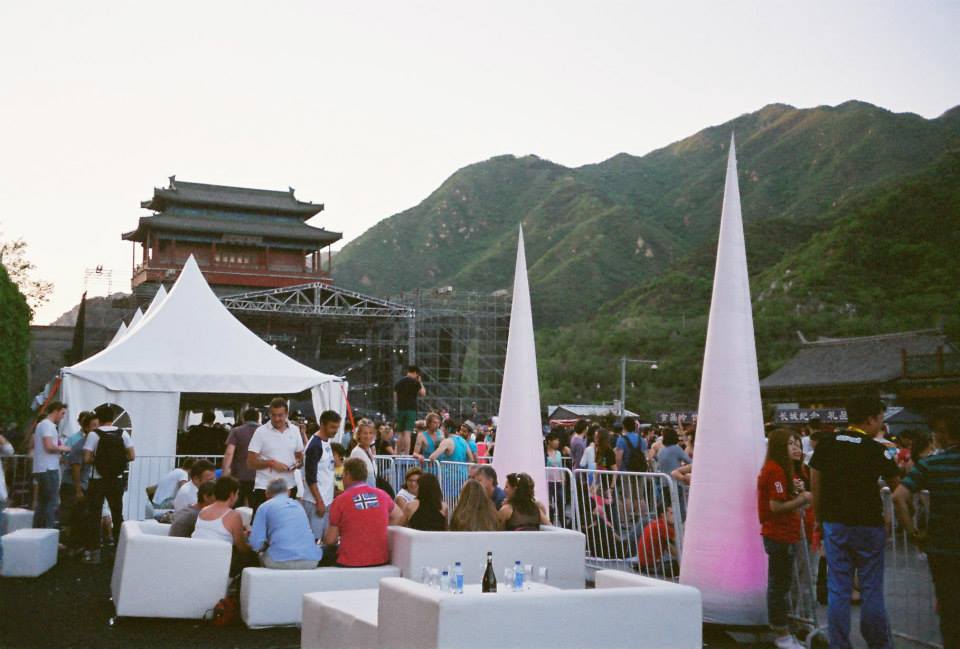
The Great Wall Music Festival, near Beijing. May 2013.
What exactly is a freelance foreign correspondent?
Let me try and define it.
You go to a country. You might stay long. Or not for long before returning ‘home’.
You’re in China. In Beijing. And you explore the society and journalism topics about it all, and you pitch and write about them, about China. You grow your list of clients. But you’re also interested in South Korea. About their hi-tech but traditional society. So you read up about it. Maybe make some Korean friends. To ask questions.
Then maybe you hit on something you find fascinating. And salable. An idea you can sell. So you find contacts and maybe a Korean translator with journalism experience. You sell the idea. You book a ticket to Seoul. You find other ideas to make it worth your while. And you do your reporting while gazing at the skyscrapers and wacky advertisements and strutting South Korean girls in their converse shoes, miniskirts and perfectly arrayed hair.
Yes, you look a lot at those girls. Somehow exotic and yet familiar.
You do your reporting and you jet back ‘home’.
You become known for your interesting subjects and your unique take on China. You are also noted for your diversity (South Korea, maybe Japan and south-east Asia too).
You stay a year in China.
You become ‘famous’.
You decide to go to Brazil.
Because why not.
It’s lovely, the sand is warm. And heard you something about the…
For part two in this series go here
6 things I learned about the freelance journalism market while I was in China
There is still a massive demand for information, news and stories
Publications are hungry, starving for new and exciting information and stories. If you are placed in a niche or location that’s in demand, then you could be hot property. Say you’ve taken an interest in computer hacking, or maybe the latest developments in south-east Asian fashion. And generate even a casual expertise and a few contacts in this area, and dig around for stories and news unknown to others (and trust me, there is a lot of stuff that is unknown to editors), then editors will be clamoring for your attention.
If you’re a freelancer based in Latin American, South Africa or South Korea, say, then you’ll have access to stories that lots and lots of publications will want. Make sure you roam around topics and subject areas and find suitable publications accordingly.
There are holes and niches to be filled even at the biggest and most renowned publications
One regret I have is that I didn’t try to pitch more publications while China-bound. The areas I’m most interested in – culture and society means a lot of my potential markets are high-brow magazines like Prospect, New Statesman and broadsheet newspapers. Hard markets you may think. But because I was on the ground and had the balls to pitch them meant my potential for commissions was higher. The fact that you are there in a foreign locale (and China is massively in demand as a news source) and have ‘local’ knowledge makes you immediately sexier to editors.
You have to make the best use of your location and specificity
Simply because I was based in China, I felt like I had the access and privilege to write about the whole Asian continent. I wrote an article for The Guardian about job prospects in Asia, I wrote about India’s economics and entrepreneurs and of course about China. I did not have to be in China or Asia to have had written these articles. But simply by being there, my authority to write about them increases.
Specificity? That means making the most of your skills and potential. For example, writing about politics, technology and business is quite difficult unless you have sufficient contacts and experience. Certainly you could try – for smaller magazines, websites and B2B papers, but the bigger papers will be harder to entice.
What subjects interest you? And what about those subjects could you write that is feasible? Will you be able to get access to interviewees and enough information? Think small to begin with – insights, observations about trends, culture, little aspects of society of the country you’re in before jumping into 2000-word features about the sex trade in Brazil for example.
Money is and probably always will be an issue
When you’re young and starting out, don’t expect to be making lots of money. By all means, please please don’t write for free. But don’t expect to be living comfortably off your earnings. Being based in China helps. Most things are dirt cheap, but I still ended up in debt once I got back to England. You are making a name for yourself – writing about a different country, translating that foreign news to an audience is massively impressive. You will be read by thousands, or even if it’s just hundreds – foreign news is consumed by elites and influential people. It’s about the kudos and the glamour, not the money.
Having journalist friends opens an exponential amount of doors
While in Beijing, I befriended several journalists. I used LinkedIn, personal recommendations and events to connect with my fellow journos. I’ll write about how easy it is to do this in a future blogpost. One contact was particularly helpful – he gave me advice, introduced me to a news agency journo (who emailed me potential freelance opportunities) and also put me in touch with editors looking for more China stories. It’s a knock-on effect. Be generous, be helpful, connect people.
Freelancing is super f-ing fun and empowering
I had a blast. I’d have 2000 words to write in a day. The anxiety and pressure was…uncomfortable. But I felt awesome. The freedom to write articles you’ve come up with, to delve into topics you’re fascinated by and to talk to and meet people whose experiences outweigh your own is like the crack-addiction of a cocaine fiend.
It’s exciting, free and opens doors to experiences that you could never pay for. Enjoy the ride.
What happened last time I tried to be a freelance foreign correspondent
I finished university last year. After a busy summer (presenting, Olympics, work exp at The Guardian), I decided to go to Beijing,
I had no definite plan, no accommodation and I knew exactly four people who lived there, one of whom was a stewardess I had met a couple months prior. I had vague ideas about brushing up on my Chinese, exploring new opportunities and freelancing.
The first couple months were kind of miserable to be honest. I had few friends and I was just hemorrhaging money. I made very little progress journalistically and I was aimless and wondering what exactly I should be doing.
I then answered a chance call-out for interns for The Beijinger, a listings magazine aimed at expats that pre-dated Time Out. How wonderful, you might think, being an intern! Great!
But it was an opportunity. I still wasn’t making any money, I made enough just to cover rent. I was in the office three days a week. The managing editor of The Beijinger was a loud, rambunctious 30-year-old Manc, and his deputy was a very tall and louche Scouser. No, I am not making it up.
December came and I chanced upon a publication online called The Gateway. It’s a business newspaper aimed at students. I immediately dashed off an email to the editor asking if she would be interested in business articles focused on the booming economies of China and south-east Asia.
She would.
Meanwhile, a Chinese girl I was courting ended things abruptly. And that stewardess? Well, she was always flying everywhere, that’s the problem with stewardesses.
Anyway, January was my best ever month for freelance journalism, in terms of pure £. It was a grand whopping total of £700. But by then I had been given a full-time role at The Beijinger so I received a modest pay rise. I wrote some of those freelance articles in the office – something I would not recommend.
I spent a total of 7 months in Beijing, going to some great events, learning a lot (about magazines, staff banter, freelancing, women) before my visa ran out. I even got two great big commissions from The New Statesman which I royally fucked up. Lesson there: if you’re working on something ambitious, be sure to have already done some groundwork on it before pitching.
In a future blog, you’ll find out why I’m returning for a second round.
For more about my experience at The Beijinger, see here.
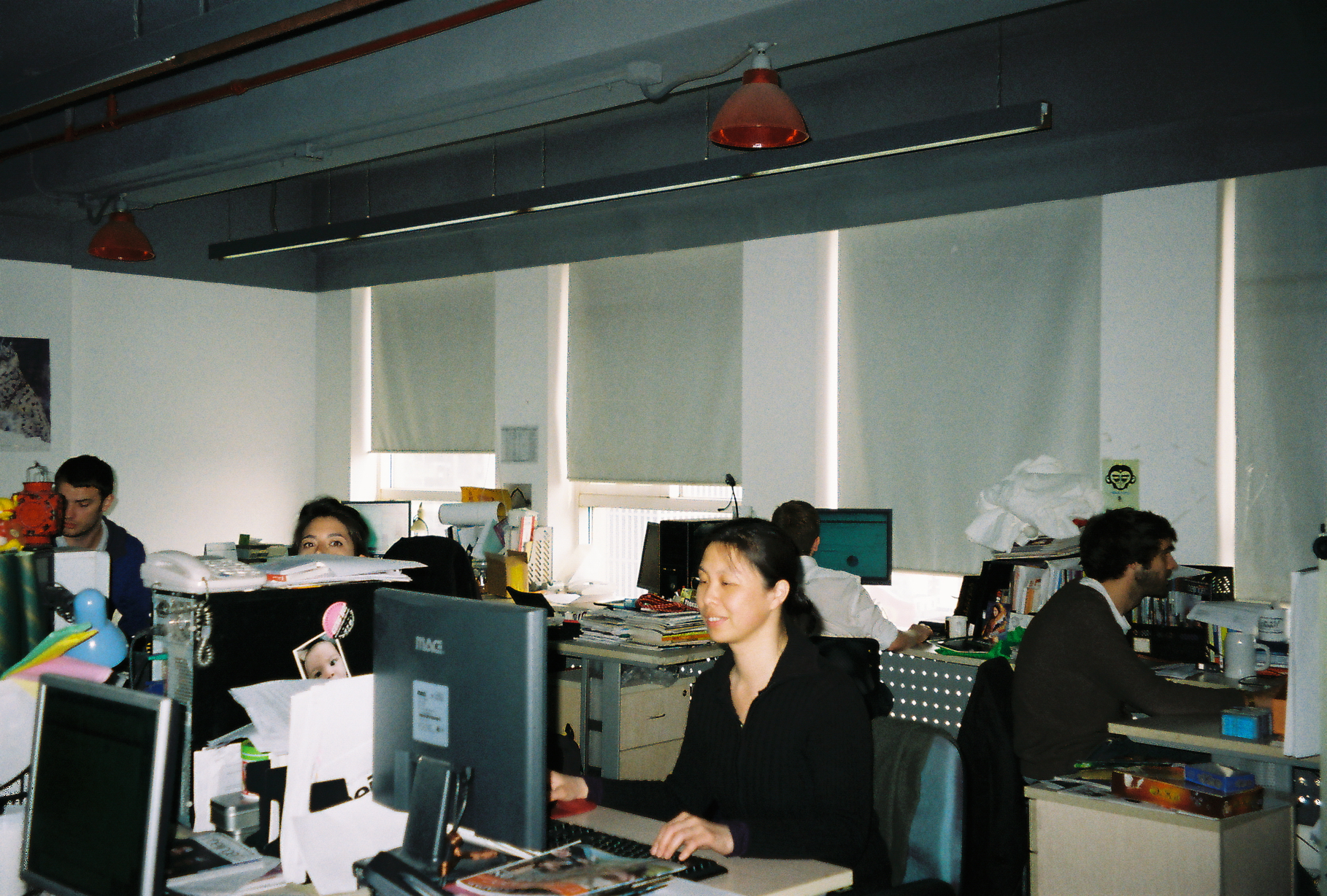
The Beijinger office.


 Lu-Hai Liang