Review: War Reporting For Cowards by Chris Ayres (2005)
Chris Ayres is a coward. And comes from a ‘long line of cowards’. He is a British journalist for The Times, covering a cozy beat as Hollywood reporter in Los Angeles. But his world is thrown into sand when he’s sent to Iraq as war correspondent, embedded with the US Marines as they fight off Saddam Hussein’s forces.

“All life, ultimately, exists on the brink of death; war just makes it obvious”.
This is the set up, and while the cowardly thing might be a conceit, and an over-egged one at that, it does allow for amusing and sympathetic contrasts.
The most revealing and inspiring section of the book, for student journalists anyway, is the vivid and brisk tale of Ayres’ rise as a journalist. From City postgrad to ‘workie’ at The Times, his descriptions of fellow journos and the newsroom are top rate and heady with the scent of clattered keyboards and inky shirts.
Here he is on his nascent career: “The nib I completed for Barrow on that traumatic Thursday was followed by more nibs, then, in a profound development of my Times career, by some ‘lead’ nibs. Eventually I was trusted with a few proper news stories, which carried my name at the top of them…..By August, Barrow had agreed to pay me £30 for a weekly Friday shift”.
He ends up in New York covering Wall Street when two planes are flown into the two towers. His response, which is not exactly Hemingway-esque, is deftly handled and the overall effect is one of woozy surrealism. The feeling was one a lot of people felt just watching the events unfold on telly, let alone in the shadow and dust of the ensuing tragedy.
One of the most enjoyable aspects is the recurring rivalries Ayres has with other journos, especially one Oliver Poole. The Telegraph reporter is presented as an unflappable ideal, scoring constant scoops and a war natural.
Both of them end up on an embed scheme run by the US government and Ayres sets off for Iraq. After a listless interlude in Kuwait, we storm into the desert and across the border. We meet Captain Buck Rogers, who seems to quietly disdain the reporter’s presence, and Murphy, a small Irish marine with violent tendencies.
We are introduced to military language and acronyms which use and effect is astutely noted by the author, as the euphemisms progressively dull the senses to the mortality of warfare. Dialogue is realistic and the marines are portrayed as smarter and more sensitive than gung-ho preconceptions expect.
Ayres is best when capturing the grim glamour of war: “…as much as you hate the fear and the MREs and the mutilated corpses and incoming mortars and the freezing nights in the Humvee, you know you’ll be a more popular and interesting person when, or if, you return. Because war is all about death, and everyone wants to know what death is like”.
It’s not a long book and a brisk narrative. And you will like the sense of having learnt something about war reporting, the ultimate gig in this cowardly heroic job.
Why I’m heading back to Beijing – and why you REALLY should learn a language
I’ve booked a flight back to polluted, dusty, thrilling Beijing. I’m pretty much broke and owed a significant amount of money by freelance clients. It will be a struggle to survive. I have two options: either freelance or get a job with a TV network who’ve expressed interest.
Most would plump for the latter and I wouldn’t blame you. It’s a small, independent English-language TV network. But I hear that further up the ladder it’s owned by Chinese managers connected to the government. It’s of questionable integrity.
It would still be a good experience and I’d like to brush up on my broadcasting skills. And the money and security would be nice.
But the allure of freelancing is powerful for me. It means freedom, independence and the luster of impressive bylines. The demand, like I’ve said in a previous post, is high for China-related articles.
Also I’m heading back to start a crystal meth lab. Only kidding. Probably. I’m also looking to improve my Chinese.
There’s been news about falling rates of study for languages. Businesses are increasingly looking for language skills as trade becomes more globular. If you have a language, it opens doors.
If you live in China, or looking to go there, it is easily the best investment you can make. The amount of opportunities that become available to you in business, public relations, marketing, start-ups and the media, among much else, increases vastly.
Learn Spanish, Brazilian Portuguese, Russian, Arabic or Chinese and you will be especially in demand. For a freelance foreign correspondent, it presents a particular opportunity.
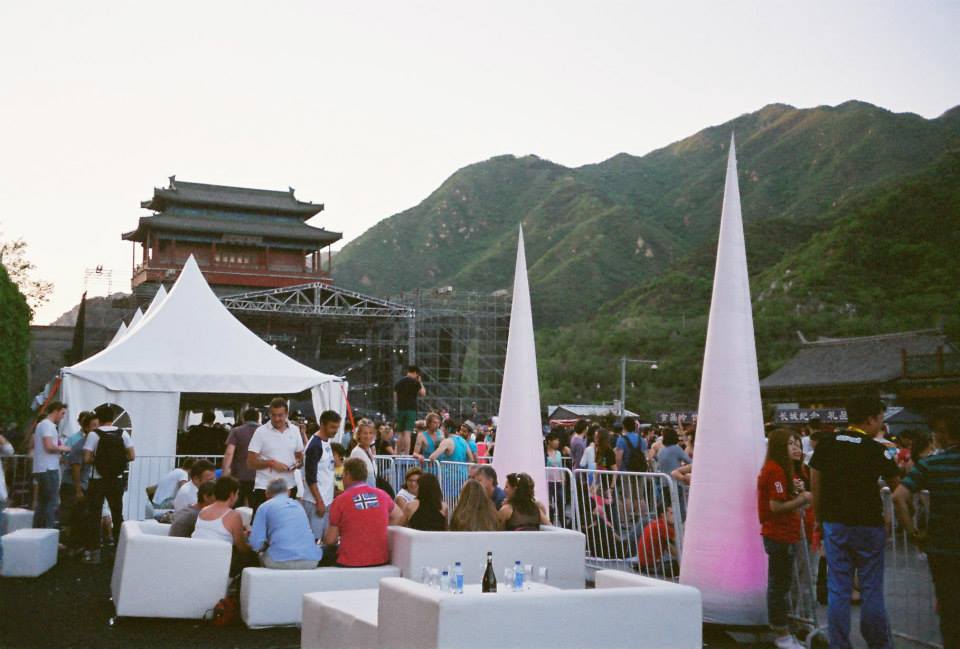
The Great Wall Music Festival, near Beijing. May 2013.
Wishlist: 4 gadgets I’d love to do journalism with

1. iPhone 5S, £549 (32GB)
Why? Because it’s pretty much all you need to do journalism – it browses the internet, sends emails, makes calls, records audio, takes fantastic photos and records incredible video. It’s a media production machine. I’ve heard of at least one freelancer who wrote entire features for almost an entire year using just an iPhone (more on that in a future blog).
The best thing about it is the quality of the images it can make. More than that, it’s the ease and convenience of it that puts it head and shoulders above everything else.
iPhone photos have graced the likes of Time magazine (front cover!), New York Times and much else besides. Conflict photographer Ben Lowy uses it almost exclusively and he’s covered Afghanistan, Libya and the Arab Spring.
Videojournalism? Guardian reporter Adam Gabbatt uses an iPhone to make short video reports which you can see here and here. The Guardian’s SE Asia correspondent Kate Hodal interviewed Suboi, Vietnam’s first mainstream female rapper: “I interviewed her and she gave me an exclusive freestyle, which I caught on my iPhone and then uploaded to our editors in London”.
If you are going to make a video report however, do invest in an external mic – that is extremely important. You want decent video and audio. Some sort of tripod/monopod for it would be very handy too.

2. Surface RT, £279 (with touch cover £319)
The Microsoft Surface RT is a great productivity tool for journalists. It is much lighter than most laptops, coming in at 676 grams (the Macbook Air in contrast weighs 1.3kg), and has a battery life of 8 hours. Why get this tablet rather than an iPad? Two words: Microsoft Office. Apart from being cheaper than an iPad, the Surface RT unlike all other tablets has Microsoft Word. You’ll want the optional touch/type covers – which click in magnetically – to do any serious typing work.
Yes it doesn’t have anywhere near the amount of apps Apple and Android tablets have, but so what. They are distractions you don’t need. You have the internet, email and Word (plus a front-facing camera for Skype calls) – what more do you need as a journo? You have a smartphone anyway for those apps. Another benefit is that you can split the screen in half – so on one side you can browse the web, while the other is on Word for example.
There are two Surface machines. The RT, pictured above, is the cheaper, lighter and smaller version, and runs a custom RT operating system. The Surface Pro is much more powerful (on a par with high-end ultrabooks), much heavier and runs Windows 8, meaning you can install any/all programs you currently run on a normal laptop. Most gadget reviewers say get the Pro, but I prefer the simplicity of the RT and of course it’s a lot lighter and much less pricey.
UPDATE: The Surface 2, an update to the RT, is to be released later this month. It’ll feature an upgraded processor, screen, back and front cameras and a kickstand that is more adjustable. The Surface 2 will retail for £70 more than the RT, at £349 (for the 32GB version).

Panasonic GH3 – a much better choice than a Canon 5D Mk 3, especially for video.
3. Panasonic Lumix DMC-GH3, £1299 (including 14-140mm lens)
This digital camera takes higher-quality videos than a Canon 5D Mk3. And it is well over £1000 cheaper. Here’s an excerpt from DPreview.com’s review of the camera: “The enthusiastic and largely unanticipated response to the GH2’s movie capabilities by working videographers (Google ‘GH2 video hack’ to get an idea for how keenly its capabilities are being exploited) has meant that Panasonic must now also consider that its camera is being integrated into professional video rigs”.
Needless to say it also produces great photos, and for video there is simply no equal. The sensor inside the camera will be much larger than most dedicated video cameras. And while it won’t quite be able to beat the Canon 5Ds for low-light capability, it does have better video features, frame-rate options and better detail at 1080p HD levels.
For the aspiring video journalist interested in producing films with professional-level picture quality, look no further.

4. Moleskine notebook, £9.41 (240 pages, 13x21cm)
Not exactly a gadget but for someone whose profession is the creation of words, the pleasure of putting pen on paper should still be paramount. I bought my first pocket-sized moleskine last year and I’ve loved the aesthetic, the pages are crisp and a joy to write in. The dimensions are perfect and the pocket in the back is great for storing business cards and cuttings. I recently purchased the larger moleskin (pictured) and I have to say I like it even more. A4-sized notebooks still have a place in my stationary, particularly for taking telephone and face-to-face interview notes, as well as for diagramming article structure plans. But for the simple pleasure of writing and jotting down ideas, the larger moleskin has perfect weight and dimensions.
As design critic and writer Stephen Bayley said in a 2012 article entitled ‘The joy of Moleskine notebooks’: “there aren’t many things you can buy for £10 that are the best of their kind. I buy them compulsively. It makes you think you are just about to write, for once, something brilliant.”
What exactly is a freelance foreign correspondent?
Let me try and define it.
You go to a country. You might stay long. Or not for long before returning ‘home’.
You’re in China. In Beijing. And you explore the society and journalism topics about it all, and you pitch and write about them, about China. You grow your list of clients. But you’re also interested in South Korea. About their hi-tech but traditional society. So you read up about it. Maybe make some Korean friends. To ask questions.
Then maybe you hit on something you find fascinating. And salable. An idea you can sell. So you find contacts and maybe a Korean translator with journalism experience. You sell the idea. You book a ticket to Seoul. You find other ideas to make it worth your while. And you do your reporting while gazing at the skyscrapers and wacky advertisements and strutting South Korean girls in their converse shoes, miniskirts and perfectly arrayed hair.
Yes, you look a lot at those girls. Somehow exotic and yet familiar.
You do your reporting and you jet back ‘home’.
You become known for your interesting subjects and your unique take on China. You are also noted for your diversity (South Korea, maybe Japan and south-east Asia too).
You stay a year in China.
You become ‘famous’.
You decide to go to Brazil.
Because why not.
It’s lovely, the sand is warm. And heard you something about the…
For part two in this series go here
6 things I learned about the freelance journalism market while I was in China
There is still a massive demand for information, news and stories
Publications are hungry, starving for new and exciting information and stories. If you are placed in a niche or location that’s in demand, then you could be hot property. Say you’ve taken an interest in computer hacking, or maybe the latest developments in south-east Asian fashion. And generate even a casual expertise and a few contacts in this area, and dig around for stories and news unknown to others (and trust me, there is a lot of stuff that is unknown to editors), then editors will be clamoring for your attention.
If you’re a freelancer based in Latin American, South Africa or South Korea, say, then you’ll have access to stories that lots and lots of publications will want. Make sure you roam around topics and subject areas and find suitable publications accordingly.
There are holes and niches to be filled even at the biggest and most renowned publications
One regret I have is that I didn’t try to pitch more publications while China-bound. The areas I’m most interested in – culture and society means a lot of my potential markets are high-brow magazines like Prospect, New Statesman and broadsheet newspapers. Hard markets you may think. But because I was on the ground and had the balls to pitch them meant my potential for commissions was higher. The fact that you are there in a foreign locale (and China is massively in demand as a news source) and have ‘local’ knowledge makes you immediately sexier to editors.
You have to make the best use of your location and specificity
Simply because I was based in China, I felt like I had the access and privilege to write about the whole Asian continent. I wrote an article for The Guardian about job prospects in Asia, I wrote about India’s economics and entrepreneurs and of course about China. I did not have to be in China or Asia to have had written these articles. But simply by being there, my authority to write about them increases.
Specificity? That means making the most of your skills and potential. For example, writing about politics, technology and business is quite difficult unless you have sufficient contacts and experience. Certainly you could try – for smaller magazines, websites and B2B papers, but the bigger papers will be harder to entice.
What subjects interest you? And what about those subjects could you write that is feasible? Will you be able to get access to interviewees and enough information? Think small to begin with – insights, observations about trends, culture, little aspects of society of the country you’re in before jumping into 2000-word features about the sex trade in Brazil for example.
Money is and probably always will be an issue
When you’re young and starting out, don’t expect to be making lots of money. By all means, please please don’t write for free. But don’t expect to be living comfortably off your earnings. Being based in China helps. Most things are dirt cheap, but I still ended up in debt once I got back to England. You are making a name for yourself – writing about a different country, translating that foreign news to an audience is massively impressive. You will be read by thousands, or even if it’s just hundreds – foreign news is consumed by elites and influential people. It’s about the kudos and the glamour, not the money.
Having journalist friends opens an exponential amount of doors
While in Beijing, I befriended several journalists. I used LinkedIn, personal recommendations and events to connect with my fellow journos. I’ll write about how easy it is to do this in a future blogpost. One contact was particularly helpful – he gave me advice, introduced me to a news agency journo (who emailed me potential freelance opportunities) and also put me in touch with editors looking for more China stories. It’s a knock-on effect. Be generous, be helpful, connect people.
Freelancing is super f-ing fun and empowering
I had a blast. I’d have 2000 words to write in a day. The anxiety and pressure was…uncomfortable. But I felt awesome. The freedom to write articles you’ve come up with, to delve into topics you’re fascinated by and to talk to and meet people whose experiences outweigh your own is like the crack-addiction of a cocaine fiend.
It’s exciting, free and opens doors to experiences that you could never pay for. Enjoy the ride.
What happened last time I tried to be a freelance foreign correspondent
I finished university last year. After a busy summer (presenting, Olympics, work exp at The Guardian), I decided to go to Beijing,
I had no definite plan, no accommodation and I knew exactly four people who lived there, one of whom was a stewardess I had met a couple months prior. I had vague ideas about brushing up on my Chinese, exploring new opportunities and freelancing.
The first couple months were kind of miserable to be honest. I had few friends and I was just hemorrhaging money. I made very little progress journalistically and I was aimless and wondering what exactly I should be doing.
I then answered a chance call-out for interns for The Beijinger, a listings magazine aimed at expats that pre-dated Time Out. How wonderful, you might think, being an intern! Great!
But it was an opportunity. I still wasn’t making any money, I made enough just to cover rent. I was in the office three days a week. The managing editor of The Beijinger was a loud, rambunctious 30-year-old Manc, and his deputy was a very tall and louche Scouser. No, I am not making it up.
December came and I chanced upon a publication online called The Gateway. It’s a business newspaper aimed at students. I immediately dashed off an email to the editor asking if she would be interested in business articles focused on the booming economies of China and south-east Asia.
She would.
Meanwhile, a Chinese girl I was courting ended things abruptly. And that stewardess? Well, she was always flying everywhere, that’s the problem with stewardesses.
Anyway, January was my best ever month for freelance journalism, in terms of pure £. It was a grand whopping total of £700. But by then I had been given a full-time role at The Beijinger so I received a modest pay rise. I wrote some of those freelance articles in the office – something I would not recommend.
I spent a total of 7 months in Beijing, going to some great events, learning a lot (about magazines, staff banter, freelancing, women) before my visa ran out. I even got two great big commissions from The New Statesman which I royally fucked up. Lesson there: if you’re working on something ambitious, be sure to have already done some groundwork on it before pitching.
In a future blog, you’ll find out why I’m returning for a second round.
For more about my experience at The Beijinger, see here.
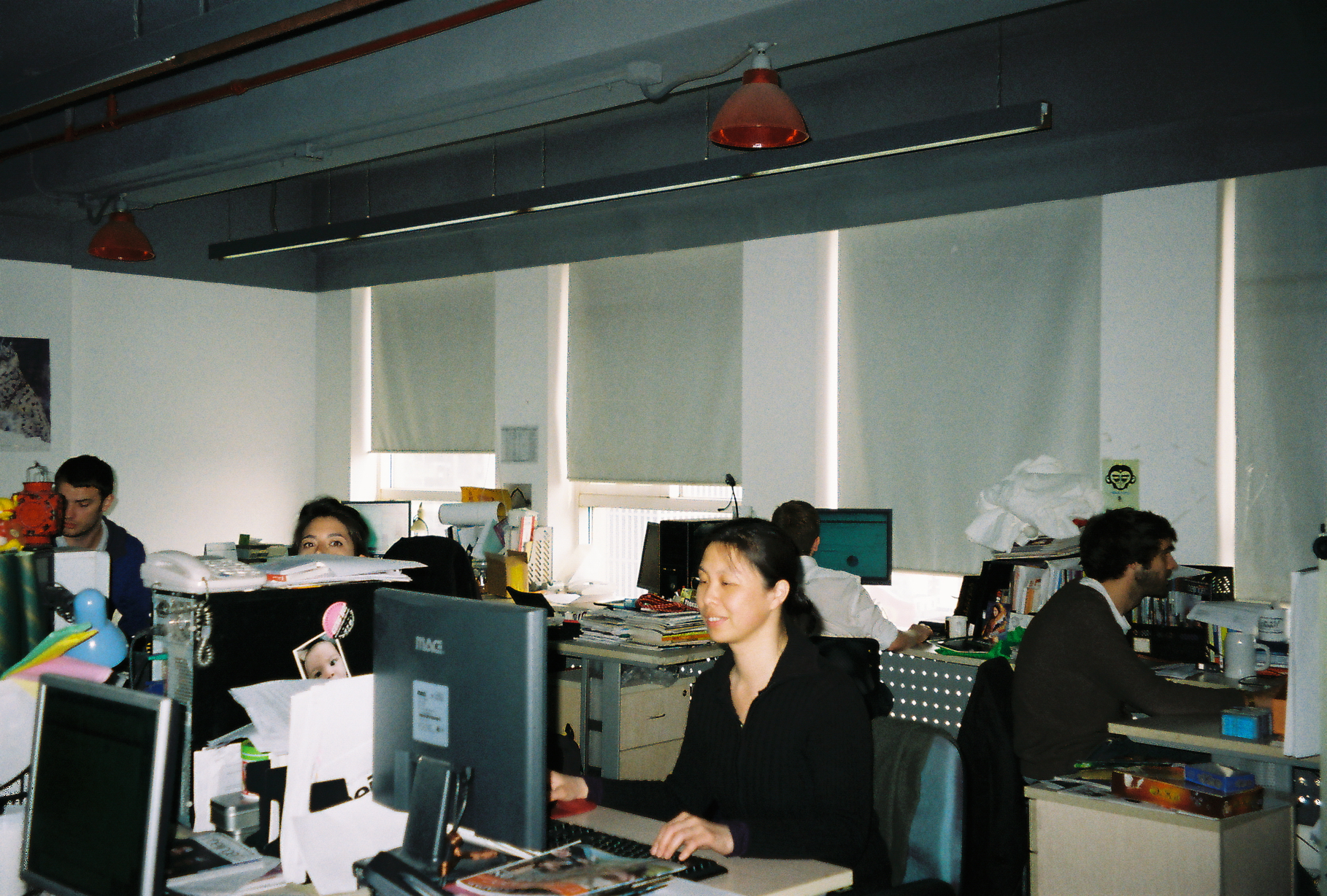
The Beijinger office.
Welcome: misson statement
The idea of the foreign correspondent still holds a certain pull on the aspiring journalist’s imagination. If you’re of the literary persuasion, you’ll think of Graham Greene gallivanting among the exotica of south-east Asia, or of Ernest Hemingway filing his dispatches from Franco-ridden Spain, braving bullets and swigging Valdepeñas.
Or else you think of crusaders like John Pilger, the Aussie who brought the horrors of the Pol Pot regime to the attention of people around the world.
It’s the most adventurous, intrepid and romantic of journalism’s repertoire.

Hemingway and a small tiger.
Budgets are tight nowadays and newspapers can ill-afford to maintain many international bureaux and send reporters across the globe as they used to. But some enterprising people decide to head off pretty much on a whim, going it alone.
Deborah Bonello of MexicoReporter.com did it. Graham Holliday of Kigali Wire did it. And Kate Hodal, the Guardian’s south-east Asia correspondent did it.
So perhaps freelance is the best way to do it. You get the freedom to explore what you want to explore. Write what you want to write and travel wherever you want to go.
This blog will track a journey to be an in-demand freelance foreign correspondent. It will be a mixture of journalism tips and tricks, insights and news about the country I’m in and how you can make the most of it, as well as looking at the romance (both of life & love) of a foreign correspondent’s life. Because, let’s face it, that’s part of the fun.
About
Lu-Hai Liang is a multimedia journalist and writer.
- Video for The Press Association
- Words (& Photos) for Aljazeera, Business Insider, BBC Future, BBC Future Planet, BBC News, Inkstone, New Statesman, CNN, Forbes, The Guardian, The Independent, The Independent on Sunday, CNN Travel, The Cornell Enterprise, Wanderlust, Space, Nine MSN, Nikkei Asian Review, Marie Claire (Netherlands & South Africa), Attitude, Dazed & Confused, IGN, Paste, Eurogamer, TheGamer, GamingBible, Kotaku, The Daily Telegraph, Penguin, The Atlantic, Covert literary magazine, Los Angeles Review of Books, The Willowherb Review, The Wire China, The National, Foreign Policy, UnderPinned, BBC Worklife, and WIRED.
- Presenter for Tribal China – an international documentary
- Camera Assistant for Olympic Broadcasting Services at London 2012 Olympics.
Contact: luhai_liang@hotmail.com
Twitter: @LuHai_Liang
Short bio
Lu-Hai Liang is a British-Chinese journalist and writer. He was based in Beijing for six years. He has been published widely in international media.
These include The Guardian, BBC, CNN, Foreign Policy, Wired, The Atlantic, New Statesman, Aljazeera, Daily Telegraph, Dazed, Eurogamer, The Independent, and Nikkei Asian Review, among others.

Longer bio
Liang was born in Guilin, China, and was moved to the United Kingdom aged five, and grew up in the seaside town of Hastings in southeast England.
Sorry, I’m going to switch to first-person.
I completed a bachelors degree in multimedia journalism at Bournemouth University in 2012. Following a summer working as a camera assistant for OBS at the London 2012 Olympic Games, I decided to move to Beijing.
My first job in the Chinese capital was listings editor at the magazine, The Beijinger, promoted from paid intern. After a summer break at home in England, I returned to Beijing in autumn 2013 and this blog was born, tracking my life and career as a journalist in Beijing.
I was based in Beijing from 2012 to 2018.
These six years were a heady, adventurous, difficult, lonely, rewarding, thrilling, impactful yet oddly unsatisfying time, like a tempestuous love affair.
I have visited Myanmar, Nepal, Thailand, Malaysia, Singapore, Vietnam, Philippines, Taiwan, Japan, South Korea, and North Korea. And I often wrote reports and features about my host countries.
From 2019 to September 2020, I was a roving, nomadic, freelance journalist endlessly criss-crossing southeast and east Asia, until the pandemic decided to end it.
These days I am trying to become a published author and I am a cohort of the 2021 HarperCollins author academy.

(Samples of my work)


 Lu-Hai Liang