I got hypnotized, literally, in Beijing
“There are three ducks in a lake”, says a soft voice and I duly imagine three fluffy yellow ducks paddling in a lake. “Ducks don’t get wet. They have a special coating on their feathers. But if it was a chicken, if you threw a chicken into a bath, it would sink”. I cannot help but smile at this visual but there is a point to this somewhat surreal exercise. It’s the first image or series of stories designed to achieve goals I had written down, something every person undergoing hypnotherapy is encouraged to do.
It’s a surprising and stimulating experience, and whether you choose to embrace or reject the concept, it’s a powerful way of seeing one’s own mind once you realise what it’s trying to do. Its success rate in dealing with problems ranging from weight loss to depression, confidence issues, aiding recovery from illness and changing habits, is debated. But by the end of the session I am stunned to learn something about myself that I had not considered.
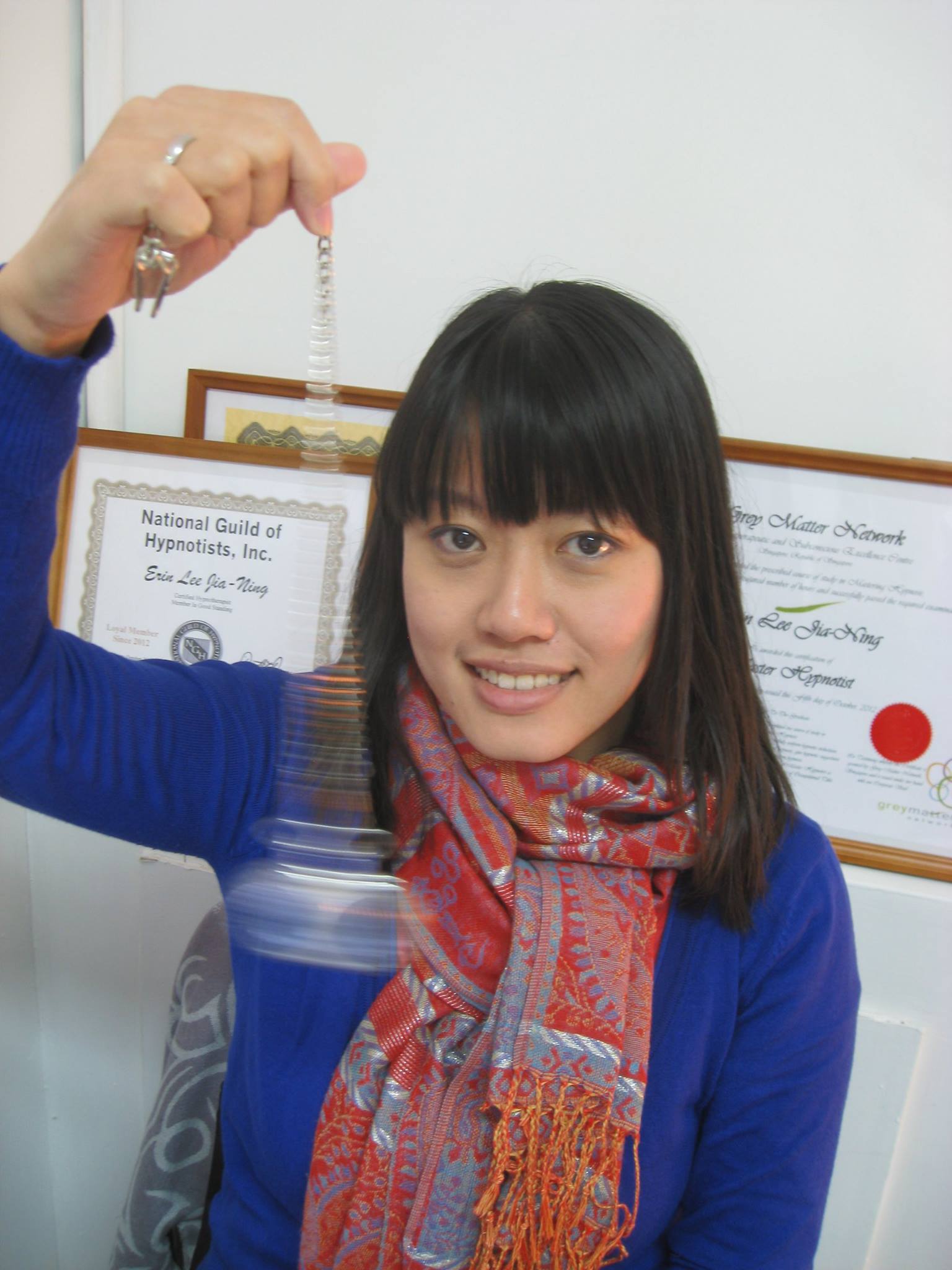
Erin Lee, hypnotherapist.
Like a lot of people I had thought of myself as impervious to hypnosis. That I, an independent, strong-willed individual, would not be susceptible to such gullible mind tricks. But Erin Lee, the certified hypnotherapist whose voice starts this article, is quick to dispel this idea.
“That’s one of the common misconceptions”, says Lee. “Some people are more susceptible to hypnosis than others. Some people believe they can’t be hypnotized. But, in fact, you can. Hypnosis is an everyday, natural occurrence. Everyone can go in or out of hypnosis. For example, when you’re daydreaming or absorbed in a book or movie and you can’t hear your mum calling out to you. That is a form of self-hypnosis”.
I mention the instance of when I’m driving or playing a video game of periods in time when I don’t realise what I’m doing, that, after, I had no memory of doing something seemingly quite complicated.
“Yes, that’s called ‘highway hypnosis’. It’s a natural state of mind. But these forms of self-hypnosis they don’t usually come with therapeutic goals, which is the difference with hypnotherapy. It’s to work towards a specific, positive goal”.
Erin Lee, 30, is from Singapore and has been in Beijing for two years. Before that she worked in the communications industry for almost a decade. She still does PR work but four years ago she discovered hypnotherapy. “I was at a low period in my life and had really low confidence. I had a great job, a lot of achievements in my work, but I was basically unhappy. I had long hours and I didn’t know what I was slogging so hard for”.
She then went through hypnotherapy herself and took an active interest in it, consuming books on the subject. She started official training last year and has since become certified by the American National Guild of Hypnotists, among other bodies.
Lee’s small office holds a green therapy chair that she invites me to lie on. I slouch back, take off my shoes, and get comfortable. There follows repetitive instructions to descend into deeper and deeper levels of relaxation. She puts on calming music, speaks softly but insistently, and counts: “five, four, and you’re falling deeper and deeper…”
I come into a state where my eyes rest behind my eyelids and my mind is in that pleasant place where it’s unselfconscious. I am aware but tranquil. My mind is calm when it is usually overactive. It’s a nice sensation. I could open my eyes and stop all of this at once – but I don’t want to.
Next, it’s the visualization – “imagine a nice place”, and I imagine a field of golden wheat softly blowing in the breeze. Before the session I had written down my goals for Erin. I had wanted to have better self-esteem, be less self-conscious and to be in a better position to deal with hurtful things said by people in the past. Standard-issue issues.
I wander around my ‘nice place’ and then there’s a lake. Cue the ducks. There is a leaf, a perfectly-shaped green leaf, on which is a droplet of water. Ducks don’t get wet, even in the rain. The droplet of water is like a bad word. It falls on the duck and it rolls right off. The bad things people say is like water off a duck’s back.
Another scene: there’s a girl in a class. This metaphor deals with how you deal with people’s judgments and perceptions of you. It’s interesting that Erin uses a girl. In the form I had filled in it asked to list some of my favourite things. I had mentioned one of my best female buddies and my sister. Perhaps I find it easier to empathize with girls.
The end comes in the form of a pebble that encapsulates all the messages that were communicated. When the pebble hits the bottom of the lake, the messages will have been taken in. She anchors the feeling to the colour red. When I see red colours, she says, I will remember these feelings. When I ‘wake’, I feel a rare calmness. Lee asks me about the experience.
I tell her that at times I couldn’t hear what she was saying, that I was ‘somewhere else’ (it felt a little like dozing off), but that I would…’come back’ (eyes still closed). She tells me that that was hypnosis. I had been hypnotized. In those moments when I couldn’t hear. My subconscious mind, she says, however, was taking it in. That’s how hypnosis works.
I am surprised.
After the official session, she shows me a pendulum; yes it’s not a myth, they are still used, although mostly for children, who can find it difficult to concentrate. I hold the pendulum and she asks me to move it with my mind. It does, and it genuinely feels like I am controlling it with my mind. But, alas, I know how it works and I tell her: “It’s just suggestion, isn’t it? I suppose once you know how it works, it loses some of the magic”.
“Yes”, she replies, “a popular saying among hypnotists is: ‘All forms of hypnosis are self-hypnosis'”.
I realise I am just as susceptible as everyone else. Of course, I could choose not to be suggestible. But that choice, an active, almost willful exercise in mind management is not something we do all the time, perhaps not even often. Whether it’s an advertisement, social media, or a passing comment made by a friend or relative, we are all prone to external influences.
Hypnosis could strengthen the subconscious to be stronger against the negative feedback, to fortify the mental walls. But I have a hunch that its greater power, its true effect, is in training and exercising the conscious mind to be more disciplined; to be better stewards of our own thoughts and feelings.
When I return home I always pass a stallholder that I usually stop to chat to. She’s just dyed a streak of her hair a lovely shade of red. It looks nice, and I smile.
**
Disclosure: I went to get hypnotized in December 2012, to tie in with World Hypnosis Day (4th January). This article was originally filed for a local Beijing magazine. No money exchanged hands between Erin, the magazine or I.
Smog’s lesson in reselling freelance stories
That time I spent every week going to London to practice pitching
One reason you shouldn’t study a journalism degree is to learn how to freelance. J-school is woeful at teaching the mechanics, processes and techniques of successful freelance journalism. A much better way of learning is to buy a couple of books on it, practice what they teach and start doing it. Freelancing workshops can be pricey but worthwhile.
In the second year of my journalism degree I spent a couple days every week, for 12 weeks, attending another journalism course in London (which is three hours away from my university).
On this course, at the start of every class, we were asked to pitch ideas for magazine stories. To begin with our ideas were plagiaristic, rudimentary and not much different than the headlines we’d noted on the various news websites we checked.
Over the duration of the program however, as the weeks wore on, and we became used to the habit of pitching and coming up with ideas for stories our skills noticeably improved. The slant of our headlines steadily grew more sophisticated, our angles more acute, our ideas more original.
Who knows what quantifiable difference it made to our progression but I do believe that that weekly exercise irrevocably strengthened mine and my cohort’s ability to think up story ideas and to think in such a way that allowed us to be creative in a strict form – that of the story pitch.

In the classroom in London. For more on my time on this course, you can read this: http://wannabehacks.co.uk/2011/07/13/lu-hai-liang-catch-22-review-the-social-enterprise-journalism-placement/
That time my journalism tutor said something profound about freelancing
Back at university, we were given a couple of lessons in freelancing, which were superficial and lackluster, but one thing a tutor said stuck with me.
“The trick”, he would say, on more than one occasion, “is not to sell 17 ideas to one publication. The trick is to sell one idea 17 times”.
It has taken me some time to fully understand what that meant, and just how you do that.
Along the way I listened to an editor talk about a friend who was brilliant at selling off different parts of an interview to different publications: “He’d interview Nick Cohen and he’d ask him some questions about being Jewish and sell that to The Jewish Chronicle; he’d ask him about the war [Iraq] and sell that to a political magazine”, and so on…
The point
What is missing in these lessons is how to repackage and resell an existing idea. It is what one freelance I heard refer to as ‘re-nosing’.
The fact is you cannot re-pitch the exact same idea again – you have to adapt it, change it up, modify, refocus the angle, sell in in a different format…there are lots of ways you can mine existing ideas or articles you’ve written to make more business.
In my experience, what I’ve done on Beijing’s air pollution problem – described sometimes as ‘smog’ – is a clear example. It all started as an article about how Asia can be a job opportunity for graduates. One of the sources for that story became a profile feature for a business magazine. I adapted the angle so that it became a news feature when the smog got bad again…and so on. Below are the headlines and stand-firsts of the different stories which hopefully demonstrates what I mean more clearly:
Does Asia hold the answer to your graduate career hunt? [link]
Doing business in China: Lu-Hai Liang speaks to the founder of a successful Beijing-based startup about what it’s like running a company there [link]
The expats offering a breath of fresh air in polluted Beijing [link]
Related –
Why is China such fertile ground for young, ambitious Brits? Young British people are choosing to emigrate to China, armed with strategies for chasing success. Why? [link]
The other Jamie on a food mission: Meet the chef teaching people in the East to love Western food [link]
Flying the flag for the best of British in China: A young English woman who forged a successful career in China after moving there as a teenage is now promoting British brands to wealthy shoppers in Beijing [link]
Getting into Video Storytelling – using a cheap compact camera
I’ve been pretty inspired recently. And have become obsessed with a YouTuber named Casey Neistat. He’s a 32-year-old filmmaker who advocates limited resources film making. I stumbled upon his videos, and more importantly the story behind his ascent, from this Guardian article: Ten tools for digital and citizen journalists on the go. Specifically this video:
Casey likes to use a digital compact camera to make his videos.
After making videos that went viral, using basic equipment, he was tapped by Nike to make a commercial.
“Nike asked me to make a movie about what it means to #makeitcount. Instead of making their movie I spent the entire budget traveling around the world with my friend Max. We’d keep going until the money ran out. It took 10 days.”
The ad-hoc video he made from that trip, entirely shot on a point-and-shoot camera (Canon S120), was accepted by Nike and the ‘commercial’ has now over 10 million hits on YouTube.
So I read everything I could about Casey Neistat (I often do this when I find someone I can potentially learn from), and realized three things:
1. The camera you use is not important, and actually using ‘crappy’ equipment might work to your advantage.
2. Having limitations can create awesome things and can cultivate a unique style.
3. It’s all about the story. Story telling. Telling stories. The STORY.
People like to be engaged and a video with a strong hook will pull in audiences even if it’s shot on a crappy camera phone compared to expensive DSLR footage that’s only about scenery that admittedly looks incredible.
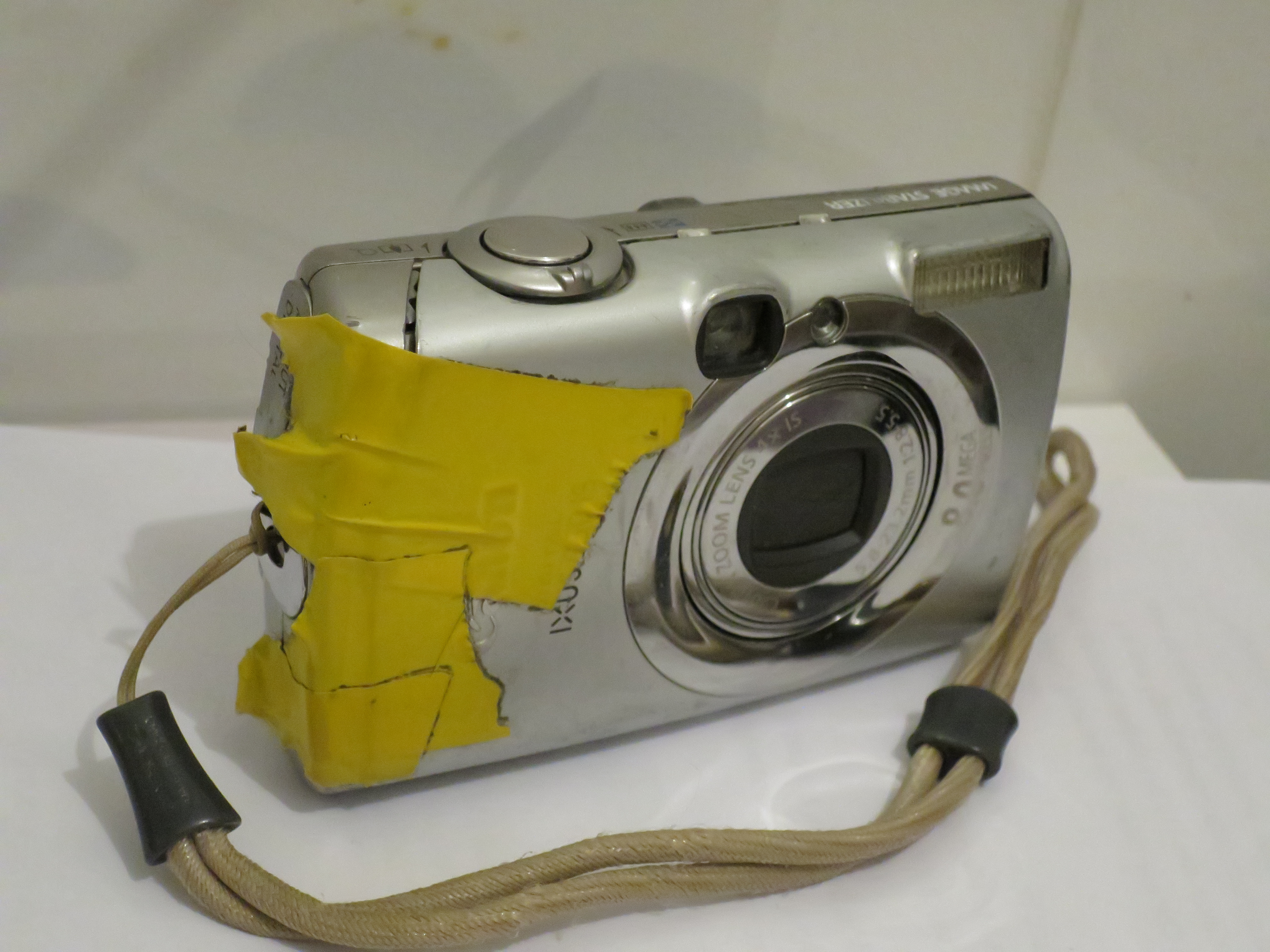
My seven-year-old compact digital camera which I have now replaced. It still works though – the three pictures below were all taken with this camera over the past two years.
So I’m going to start doing that then. I bought a Canon S120 (for £270 ’cause my old compact camera is literally falling apart) and downloaded Windows Movie Maker. That’s right, the free-to-download most basic video editing software available. It might sound amusing, but hey at least I’ve started. I’ll keep you updated when my first video hits and where it may end up.
Money: or rather the lack of it when you’re trying to freelance
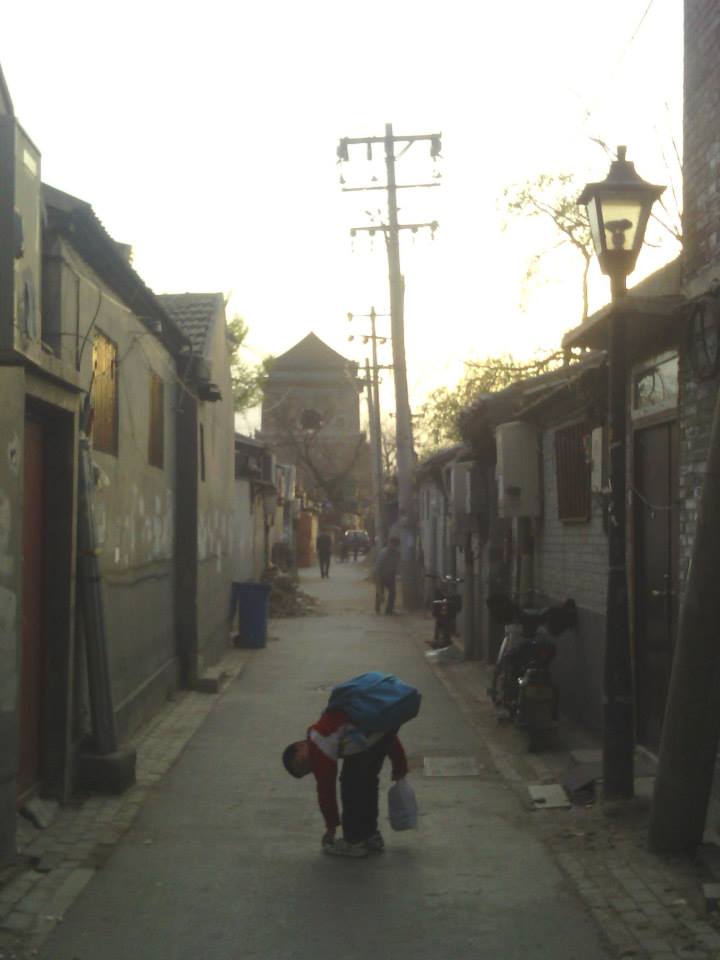
A Beijing hutong (alleyway). Copyright: Lu-Hai Liang.
Until very recently I did not have a regular income and though 2013 was marked by great experiences (some of the best ever in fact), it was not one that saw me in great wealth. I won’t go over the details but there were periods where I had to subsist on the cheapest foods and debt seemed unending.
Poverty. Not many of us actually know it and know it well, and I would not be one to claim expertise. But a couple of things I saw recently helped to reaffirm my position toward the accumulation of cash. The first was a quote I saw in Tom Bissell’s book Magic Hours. In an essay about writing and writers he quotes author Natalie Goldberg: “I feel very rich when I have time to write and very poor when I get a regular paycheck and no time to work at my real work”.
The second thing was a video of an interview with a musician who said: “If I have enough to pay rent, buy groceries then that’s cool – I can just concentrate on my music”.
Being ‘poor’ is relative. We live in an age of bounteous opportunity. Being so-called poor provides a clear set of options. How? Well, it frees you to concentrate on what most matters.
A month ago I published a post on WannabeHacks.co.uk, a website for aspiring journalists. There I set out the argument that in order to freelance, especially in the early stages of your career, one of the best things you can do is go and live in an emerging economy country.
In writing this blog, I have already made contacts with fellow freelancers who are doing what I am doing: taking a risk, moving to somewhere exciting where things are rapidly changing and kickstarting their journalism career. Someone I know (met via this blog) decided to relocate to Istanbul and has already been commissioned multiple times for a major magazine.
But it can be difficult, especially financially. It helps to have some money saved up. But one of the best things about living in a country like China or Turkey or Malaysia or Mexico is that although economies are growing things are still relatively cheap. In China I eat out almost everyday and party hard. If I were freelancing in London, I’d probably already be dead. Due to starvation and exposure (’cause I couldn’t afford a roof over my head).
Kate Hodal (Guardian) sold most of her possessions to finance a move to south-east Asia and was so hard-up on so many occasions that she almost went home. But she persevered and now has the envy-inducing job of being South-east Asia correspondent, meaning she gets paid to fly to places like Vietnam, Indonesia and the Philippines from her base in Thailand. Jonathan Kaiman (also Guardian) had to survive on a low-paid internship and a visa that forced him to take a bus full of Mongolian tradesman to Mongolia every month for almost a year, but he got bylines in the New York Times, LA Times, Foreign Policy and is now one of the most talented China correspondents around. Alec Ash, a Brit and correspondent for The Los Angeles Review of Books, wrote for four years for free on his blog about China from his home in Beijing. Now he’s living it up on an advance for a book he’s been signed to write.
Having the ability to purchase that new phone or buy that bag makes people happier. But it doesn’t, not really. You have to switch your mindset around to focus on what’s really going to drive you forward. Those shoes or that expensive meal might seem important but the enjoyment is absolutely inessential. You cannot, must not, think short-term material goals at this stage. What is important and infinitely more satisfying is recognition, appreciation of your work; the attainment of value.
To want more and more stuff is unerringly shallow. Invest in yourself. Buy what you need to hone your craft, no more. Spend on experiences…but spend wisely.
Being rich is meaningless if it doesn’t make you better at what you do.
4 ways to instantly improve your pitching – freelance journalism

- Think Visual
If you can write a pitch where the editor can ‘see’ the story, see the characters and the setting, then you’re immediately inside the editor’s mind, a good place to be. Just a couple of good sentences that can bring a character or some aspect of the pitch to life. Be vivid and show details that can make an editor stop and think. These words from Guy Davenport were influential to me not just for journalism but for writing in general:
Harry Levin, at Harvard, taught me a lot, especially about iconography, how to read images in a text—that literature is as pictorial as painting or sculpture. [Source: Paris Review]
- Think visual, visual, visual
Sorry to hammer home this point but it’s one of the quickest and easiest ways to improve pitches. I like to play with font colours, use bold where necessary, inject relevant photos inside the email, and hyperlink anything that might need clarification. You can use these formatting tools to emphasize points or themes. Just don’t go crazy, your central idea should always be the focus but a bit of extra effort will help your email stand out.
- Is it a complete story?
Don’t pitch topics or subjects, pitch stories. Pitch ideas that are wrapped in a story. What’s the difference between a story and an idea? To quote Richard Morgan, a complete story is one with “interesting characters in an interesting situation that changes over time in an interesting environment”. The story can also demonstrate a principle or universal theme adding depth and meaning, forming a ‘take-away’ feeling or message for the reader.
- Have an outline
You should have an outline of what the story will look like, who you’ll interview, the basic structure of the piece, and the estimated final word count. It pays to imagine for the editor what the content of the article will be and how it’ll develop paragraph by paragraph.
Show you have the expertise by quickly sketching which named people you’ll interview and who they are. It’s also good sometimes to offer options in your treatment of the story: a more intimate interviewee-based feature, or an omniscient analysis with multiple characters? Editors like surety so demonstrate you have a clear understanding of what the story will be and how it will progress.
Great journalists and great journalism: How to make a name for yourself pt. 2

I spend a lot of time reading. I like to consume and devour long articles and essays especially, like the ones found in The New Yorker and The Atlantic. I also like to read about the lives and careers of rising stars in journalism.
I had the opportunity to interview Nicole Tung in September. Tung is an American photojournalist and a war photographer. She went to Syria where she smuggled herself into the country, hung out with rebels, saw mercenaries from Libya and Oman, and was a witness to bombing and carnage.
Her first experience of war came a few years earlier. Here is someone who took herself to Libya, without assignment and of her own accord. She was 24 and barely out of college. She went for the experience.
Quite a lot has been written about the amount of photojournalists, green and sometimes shooting with iPhones, who made their name during that conflict. And the dangers are very real. Everyone needs to start somewhere.
During that interview with Nicole, I was intimidated. Here is someone who is fearless, deeply concerned about the plight of those caught in conflict, but also someone deeply ambitious.
Or consider Michael Hastings. Hastings died in a car accident at the age of 33. He was a Rolling Stone writer and a senior reporter for BuzzFeed. A hard worker and tenacious, he wrote a profile of General Stanley McChrystal, a NATO commander, that, through his patient and intimate reporting, led to the General’s resignation. Here’s someone who worked extremely hard and has the bravery to challenge those around him.
Or consider Paul Salopek who is spending seven years walking. Walking over 20,000 km around the world, covering early humans’ migration out of Africa, for the National Geographic. Sometimes, the best journalism is slow journalism.
These are people who take risks. It is not the only way. Brilliance flourishes in quiet, unassuming ways too. But ambition speaks. The willingness to work hard speaks. But perhaps the desire and the effort used to take yourself out of your comfort zone matters most of all.
***
This is a continuing series exploring the strategies of success of journalists and writers. Parts one and three in the series can be found here and here.
How I Got My First Ever Paid Freelance Gig
It had all started with a burning desire. The time was 2009/10, the setting mostly my university dormitory. It was the first year of my journalism degree and I had one hot desire to be published in a national newspaper.
And in late spring, in the dog months of the academic year, when students were beginning to laze around dorms and on campus, settling into dreamy thoughts in the warming days when finally the effort was rewarded, culminating in a byline freshly and eternally emblazoned on a piece of paper that had been printed by The Guardian.
I went about it quite systematically I guess, looking back. At first it all started with asking questions. You’re watching TV with your flatmates and something is mentioned on the news or in a sitcom. “Huh, I wonder why that is?” or “yeah that’s interesting, but I wonder if X is also like that?”
One time I was thinking about Robin Hood, because the film starring Russell Crowe was due to be released. I thought to myself “hmmmmm…I wonder if there are real-life Robin Hoods?” IDEA!
At the time I was also reading books like ‘Feature Writing: A Practical Introduction‘ and ‘Good Writing for Journalists‘ which I either bought or loaned out from the uni library, and paying particular attention to the sections about pitching. They mentioned that you should always pitch to the relevant editor, the editor who’s responsible for that section ie music or film or business etc. It advised that having a name and addressing your email to that name was vital. I proceeded to ignore some of that advice.
I checked online and on Wikipedia and found that there were indeed several cases of real-life Robin Hoods.
I found the phone number for The Guardian’s switchboard and asked them to direct me to the ‘music and film desk’. They did so and I found myself speaking to an editor. I proceeded to pitch over the phone (not really something you should do often). I explained to them that I had this article and that it would be good to coincide with the release of the new film.
The editor explained that they had already planned some content around that movie. After this failure, I proceeded to blanket email the desks of most of the national newspapers with my article. Here was the email I sent:
Hi there, to coincide with the release of the film Robin Hood, I have written a 600 word article on real-life Robin Hoods.
The article is structured in a list system, with each figure as a headline and subsequent info. They range from modern to historical times.
The article could go in the paper, or in the online edition.My name is Lu-Hai Liang and I have published in local papers and student media. I am a Journalism BA at Bournemouth University.
Thanks for your time, please get back to me if you are interested.
Suffice to say, my first ever pitch was a no-go. But I continued to walk the road between asking questions and then turning those questions into saleable pitches. It’s not completely natural to think in this way. It requires, like many skills in life, commitment, patience, and most importantly, practice.
It took me a few pitches more before I struck lucky. And I was very fortunate – sometimes it can take 10, 20 pitches before you land your first. In fact, it took me a long while before I got a byline in a national again – more on that later.
This is the pitch which led me to my first ever paid freelance article:
Dear Ms. Wooley,
Would the Guardian be interested in a short article about the difficulty of Chinese exams, specifically the gaokao, the chinese university entrance exam, which chinese teenagers have just taken. The exams are the only thing considered by universities, so no interviews or recommendations, and ‘questions’ on the exams include obtuse prompts such as: “Looking at the stars with your feet on the ground”.
Many thanks, Lu-Hai Liang
Notice the difference between this pitch and the previous one. I am addressing a named editor. I’m offering interesting, tantalizing details about the article. There are many flaws too. First of all, I’d already written most of the article – not something a regular professional freelance should do (we just can’t afford to). There’s a very noticeable looseness in the sentences, like as if a breathless, eager young journalism student had written them. One line sentences, not multiple sub-clause sentences, are the name of the game in pitches. But there’s a certain charm to the pitch I suppose.
Here is the editor’s response:
Dear Lu-Hai Liang
This sounds quite fascinating. Can you send me any cuttings of your work?
Alice
Very terse. Editors are terse people. Busy folk, they are. Below is my response:
Dear Ms. Woolley,
I’m a Journalism student at Bournemouth University. I have written by-lined articles for my local newspaper, The Hastings Observer – including a news report, film review and band interview. I’m going home tomorrow where my copy of the newspaper is, so I can’t scan them for you until tomorrow.I’ve written up the article for your consideration. For a journalism student, by-lines are, of course, much needed. Any edits or further information needed, please let me know.
I have also written for my student magazine. My online portfolio can be found here: http://buzz.bournemouth.ac.uk/?author=299
Many thanks, Lu-Hai
p.s. I will scan the cuttings and the magazine article for you tomorrow, if your interested.
And then her response, which was one of the sweetest, finest emails I’ve ever received:
Lu-Hai
I really like your article!
I will need to edit it a bit but I would like to use it in Education Guardian asap. Too late for next Tuesday’s issue but hopefully the one after.
No need to scan your cuttings as I am happy with what you have done.
Do you have a mobile number for any queries?
Best, Alice
The 400-or-so-word piece was published by The Guardian, both online and in the newspaper. My fee was £151. I was deliriously happy.
It took me 2 years before I was published by The Guardian again (online and unpaid), so don’t think it’s so easy to break into but it’s much much more accessible than people realize.
***
If you’re serious about freelancing I am sure you have the wherewithal to Google how to do it, read the right books and practice. But here is the single most important piece of advice and inspiration that I’ve come across (which unfortunately cannot find the source):
“You know as editors we always want pitches, actually I’m surprised sometimes I don’t get more”.
And here is an uncommonly good guide to pitching: http://www.theatlantic.com/business/archive/2013/08/how-not-to-pitch/279193/
3 month update: freelancing in Beijing

Moving somewhere new can take a lot out of you. Uncertainty rests sharply between your shoulders, and that’s just on the flight over. Once you arrive you have to go out and secure somewhere halfway decent to live; a job or some source of income; and local markers of routine.
Once you find those things you move upward into essential inessentials: regular people to hang out with, a good coffee shop, companionship, sex. And even once you settle (which can take longer than expected) loneliness and homesickness can still strike.
January is a tough month anyway, the cold and SAD creeps into the consciousness. I’m oscillating between feeling really motivated, for new projects, things that can be done in this bright new year, and extreme boredom, wondering at the general futility of it all.
Since I’ve been here, I’ve only freelanced ONE article: a long piece about entrepreneurship in Beijing for the New Statesman. I was commissioned for two last month, which is keeping me occupied currently – December and January are slow months for freelance anyway.
But I’ve had a full-time job so freelance has taken a backseat.
Pitching is like a video game. You win or you don’t. When you’re starting out, each commission feels like Christmas. It’s getting paid for an idea, for your writing. And you get bylines. It feels great. But once you pitch enough you realize you have to treasure each pitch. This year I want to throw out bigger hooks and catch bigger fish.
2014 needs to be the year where I do something big, risk more, settle into the journalism projects that I really want to do.
Write a book? Work on big articles? Make videos? A multimedia project? Start a business? Bigger projects can result in bigger returns, at least that’s the hypothesis I want to test.
The end of 2013 (October – December) has been mostly up. I got a job, fell into a couple of fast paced blaze & burn(ed) relationships, traveled with family, got new readers of this blog, made little progress with my Chinese, ended up with a good handful of bylines.
But there’s always a little rut from which you, and only you, can drive yourself out of. I will spend the next 6 weeks focused on that so in February I’ll be on upward momentum. Thanks to all those who have read and continue to read. Have an eventful 2014.
How does a journalist make a name for him/herself? Part 1.

Patrick Kingsley (left) is a 25-year-old journalist, currently Egypt correspondent for The Guardian. His rise has been precipitous.
Some journalists and writers seem to rise out of no-where, their names shared around all of a sudden. Laurie Penny arrived after being noticed for blog-posts about politics. Owen Jones arrived in similar fashion, helped along with the publication of his zeitgeisty book.
Some have a dizzying ascent, characterized by bravado and a ferocious intellect. But a rapid fall can also occur: Johann Hari, Jonah Lehrer. Say what you will about Hari but he made his name with a series of columns – one in which he seduced a homophobic neo-Nazi – that were breathtakingly audacious.
On this blog you can find posts with interviews and profiles of journalists who’ve ‘made it’. Their paths to success can be determined or rather fortunate. But we all like to know other people’s ‘secret’ to success, so that we might copy the route.
It’s certainly something I like to ponder. But having vaguely defined goals or even closely set markers of achievement may not be enough. There has to be a system.
Of the journalists whose bylines are worth remembering, there seems to be 3 underlying factors to their success:
1. The Precocious Upstart
They write a book, an article (or series of), or start a blog which either catches some part of the popular imagination, or comes to the attention of a few influential editors, writers.
Examples: Owen Jones, Caitlin Moran
2. The Master Craftsman
After many years refining their craft, they ‘break out’ with sensation-making articles, noted for either their writing style, depth of reporting and story-telling skills, or innovative choice of subject matter.
Examples: Malcolm Gladwell, David Grann
3. The ‘Lucky’ Student
These are those who are given an opportunity – work experience at The Guardian say, or who got a chance start at a national newspaper or magazine, and then proceeded to impress with their originality, cleverness or diligence.
Examples: Patrick Kingsley, Helen Pidd
**
Getting your name recognised and winning a certain level of renown is not simply down to you of course. Other people have to be talking about you, discussing your work and wondering about the person behind it. Maybe they admire your way of thinking or your audacity. It is not a science.
To get to that stage, it should go without saying that doing good work, showing originality and verve in your work is requisite. But plenty of freelancers or even seasoned journalists do this. What separates those who do good work but remain relatively anonymous, their bylines not expected with a certain drool-worthy eagerness, from those whose writing and reporting commands attention, higher fees and reader loyalty?
Over this spring season, I’ll be analysing just why in this series. Look for the ‘How to make a name for yourself’ blog titles.
**
Journalists mentioned in this post and articles about their rise:
Patrick Kingsley, Egypt correspondent for The Guardian – Patrick Kingsley is one of life’s overachievers: Guardian feature writer at just 23 and voted by MHP Communications as one of the top five young journalists to watch in 2012.
David Grann, staff writer for The New Yorker – The Storyteller’s Storyteller: No journalist working today spins a yarn quite like The New Yorker’s David Grann
Helen Pidd, northern editor of The Guardian – How hairy armpits can get you a job at The Guardian
Malcolm Gladwell, acclaimed author and staff writer at The New Yorker – Outliers: Malcolm Gladwell’s Success Story
This is a continuing series exploring the strategies of success of journalists and writers. Parts two and three in the series can be found here and here.
From freelance to foreign correspondent – one person’s success story
“I sold or gave away most of my stuff and headed east, pretty much on a whim”.
Those are the words of Kate Hodal, The Guardian’s south-east Asia correspondent. The story of how she got there is an inspiring antidote to these gloomy times. She also has some fantastic advice about multimedia journalism, especially video, for which she says there is tremendous demand. I had the fortune to interview Kate, via email, while I was based in China.
Here is the interview: http://www.journalism.co.uk/news/journalist-q-a-from-freelancer-to-se-asia-correspondent/s2/a553906/


 Lu-Hai Liang