Movin’ up: from poor freelancer to slightly rich writer
I’ve written about being a poverty-stricken writer before. Tales of squalor and survival. On having to eat street-cooked sweet potatoes for a week because I was waiting to be paid. On readjusting attitudes toward money, or rather the accumulation of it, beliefs which I still hold. But now the going should be easier.
I recently moved into a new apartment. It’s in a nice area of Beijing where rich couples stroll around in the evenings. It’s like a little community, a more cosmopolitan part of a city that’s usually gritty – Beijing is perhaps one of the more squalid capital cities of the world.
My old room cost me RMB 1200 a month, or £120. It was a tiny little place, where I could almost touch the walls, just big enough for a single bed, a desk, a sink and a wardrobe. My girlfriend commented that it was the smallest and horriblest place she’d ever seen someone living in (thanks!) and that the bathroom was like the setting for the movie SAW.
The new place is RMB 2400 a month, or £240. I will go to a Beijing IKEA in the near future to furnish the place. I’ve taken on a part-time tutoring job for an eight-year-old Chinese girl. The monthly fee from this pays the rent. I get RMB 10,000 a month (£1000) from my full-time job at the TV company. My freelance journalism pays around £300-500 monthly, depending on my own productivity.
In total then, my monthly salary is around £1600, or 16,000 Chinese RenMinBi. In the UK, £1600 to live on per month is not too bad although this would depend on where you lived. In London I can imagine, after rent, bills, transport and food, it would not stretch very far.
But in China, even in Beijing, this is quite a comfortable salary, what a 35-year-old manager might earn at a medium-sized media company so I’ve been told.
It has taken me seven months to reach this stage. For about seven months now, my UK bank account has been in the red, where I’ve made fervent use of my bank overdraft to finance rent deposits and visa runs to Hong Kong. It is just now back in the black.
The Chinese bank account, after paying for three months rent in advance and a deposit, still has left a sizable residue that will easily tide me over until my next paycheck. Which I will use for a 20-day vacation in Thailand. Life is alright, for now…
What should a freelance journalist do in the summer?
My productivity lately has nosedived. Temperatures in Beijing meanwhile peaked – last week it hit 41 Celsius. Summer in general is a difficult time for me. I find it harder to concentrate on work.
It feels perverse to be indoors hunched over staring at a computer screen when people are doing summery things. Hormones also go through the roof (or is that just me?) and the mind drifts toward an addled state fixated on hedonism, idleness and pleasures.
I’ve got a couple of commissioned pieces on the go. My day job (at the TV company) has been more demanding of late, requiring more energy but really that’s an excuse. Another disruption is that I’ve been homeless for about three weeks now. I’ve been staying (and overstaying) on friends’ couches around Beijing, after me and other tenants were kicked out of our rooms by the landlord. Landlords have far too much power.
I finally found a new place I was happy with but can’t move in until June 11th, so tonight I will be sleeping on a couch at my workplace. I’m writing this post now at my office’s desk at 11pm Beijing time.
So what should a freelancer do during this season? I’d like to know what other freelancers do, so please do leave a comment. I guess many cannot really afford to take much time off if their livelihood depend on the income, and they don’t live in a cheaper location such as China. Summer is often a dry period for news and contracted freelancers for newspapers often take time off.
I guess summer is a time for reading, relaxing, doing what humans like to do, traveling, swimming, eating, drinking, lounging, sexing, snorkeling in sapphire waters on a James Bond beach, taking time off and making memories that when the cold and drab colours of winter come back will offer some reserve of sun.
Soon I’ll be reunited with my half Japanese, half Ukrainian Canadian girlfriend in Thailand for 10 days. It’s going to be awesome. In the meantime I will work on two 5000-word essays on the freelancing life in Beijing and my Chinese political heritage for two editors that might one day be powerful champions. I will try to write but I guess I will mostly read. And that is just as important.
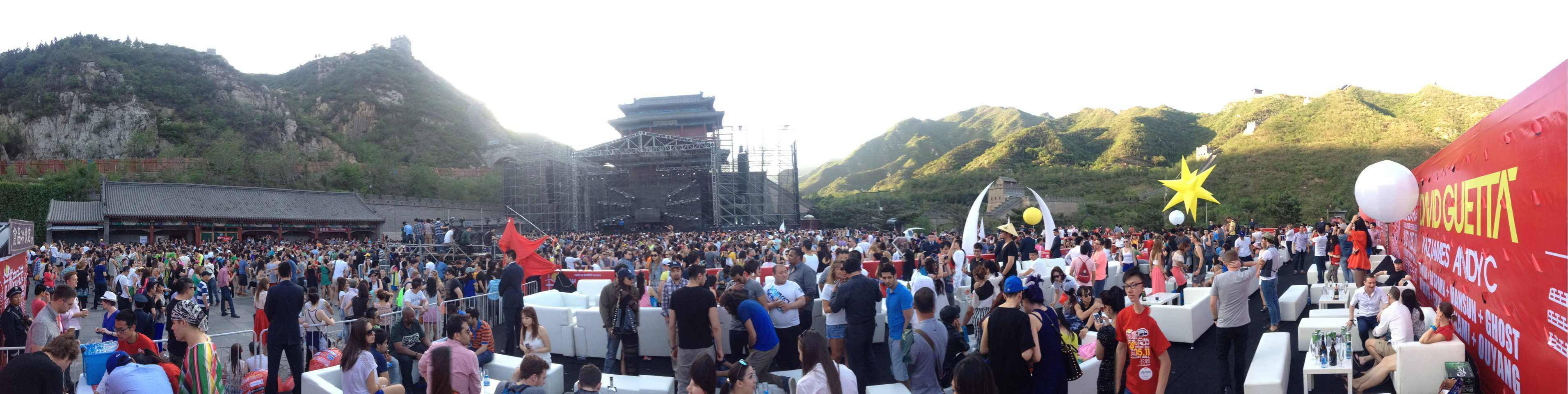
The Great Wall Music Festival, May, 2013. It was fun.
Photography + Journalism: The Best Cameras for Journalists
Plenty of would-be journalists fancy themselves also to be photographers. It’s a visual way of documentation and taking pictures provides immediate feedback (something we crave) and a tactile form of expression. But photojournalists, and especially their most extreme form the war photographer, are a breed apart. I have slummed it as a journalist, living in tiny rooms, subsisting on sweet potatoes, but those guys! They go from couch to couch, living off their assignments, eating whatever is at hand, and trying to go from grant to grant. It’s probably not like that, but I’ve known a few and read about more, and the truth is not unlike the popular image. If you want to be a photojournalist, you have to dedicate yourself to that path. As a journalist and writer first and foremost, I don’t try to impinge on their vocation by assuming some photographer pose (at least, try to not to…), but I do like to dabble, and taking photos while on assignment, especially if you’re interviewing someone a little bit special or going somewhere new, it helps to have a camera as the imagery you take can always come in handy. I’ve had a few published, and it’s always nice to see photo credits mirror bylines as you feel the visual is mirroring the auditory. In other words, the photos and the words attain a stronger, more singular identity. Here are some camera suggestions for journalists [they are not intended for professionals, photojournalists, or even amateur street photographers] –
Best overall

Canon EOS M2 with 22mm lens (40mm equiv. view)
The Canon EOS M (mark 2) is a small, compact-sized camera with the ability to change lenses. Inside is a sensor very similar to the sensors found in Canon’s entry to mid-level DSLR range. That means you get the same picture quality as the DSLRs but in a very unobtrusive package that you can carry around all day and shoot without fuss. If you attach the 22mm lens, it’s a small enough device to fit into a jacket or coat pocket. The 22mm lens gives you a 40mm equivalent view (all those old street photos by Henri Cartier-Bresson were taken on 50mm lenses). A quick note on fixed-length lenses (like the one in picture above) versus zoom lenses. Zoom lenses are useful things to have, and you’ll have to decide what you want. But fixed-length lenses are often sharper and because it limits you forces you to think more, and if you want to zoom you’ll have to move your feet! Getting closer to the subject is important for a journalist. You’ll want the mark 2, not the first version of the camera, as the autofocus has been much improved. This camera has good colour rendition, takes nice looking photos with background blur and is quick and ready for action. It won’t be as fast focusing on moving subjects as a DSLR but the smaller size and lower weight might mean it’ll be taken out more. £300, including 18-55mm lens.
Most portable

Canon S120
The Canon S120 is truly pocket-sized. It’s smaller than most smartphones. But the sensor it has (which is relatively large for a camera of its size) means it’ll be far better in low light. This thing is incredibly easy to use, is great for snapping out and about, day or night, for a landscape photo, or portraits at a bar. It’s quick to shoot video, just press the dedicated button, and takes smooth and great looking videos, even at night. Two cons: if you’re taking lots of photos battery life only lasts about half a day. And photos can look a bit too smooth (as in the in-camera JPEG processing will smooth over people’s skin and background details). £260.
Best for pictures of people

Fujifim X100s
This camera is the best camera for portraits. Often when you take photos for articles, it’s the people that are important, the ones you’ve interviewed or have some role in the story. This camera is optimised for that with great skin tones, great fill flash and colour correction for every kind of lighting condition. It also takes good street scenes and landscapes, although the colour won’t be as accurate and vibrant for landscape and nature photography as the Canons. It has a fixed lens so bear that in mind and it’s more costly than the other cameras featured, but it works great, has a large sensor, would probably work well for years and looks like a journalist’s camera. £869. Consider the Fuijfilm X-M1 if you want to be able to swap lenses.
Consider the alternative, or the best quality photos for vastly less money than the digital equivalent:

Olympus mju-II (35mm film camera)
Why is this cheap, plasticky thing better than the cameras above it? It’s simple. The sensors found in most compact digital cameras are actually very small. Basically, the larger the sensor the more information it can process, the better the low-light ability and more lower depth of field it can achieve. But this is for digital sensors which have become replacements for film. The usual size for film is 35mm. This size actually dwarfs most digital compact camera sensor sizes (like the Canon S120 shown above, or even the EOS M). To get the equivalent 35mm size in digital, what’s called “full-frame”, you have to shell out about £2000 for a camera such as the Canon 5D mk3. Which are much larger and heavier than the Olympus camera pictured. In other words, most film cameras have much greater low light and colour sensitivity than most digital cameras, because their “sensor” — each exposure of film — is far bigger than what’s available in digital cameras. Of course digital is more convenient, but if you’re on a more considered or more personal journalistic project, do consider film cameras. The one pictured costs about£50 in eBay and is noted for its accurate autofocus, sharp lens and smooth operation. You’ll have to do a bit of research on different film types, because they produce different tones, but the look and feel of the photos are different to digital. Most processing places are able to scan films too so you also have digital copies.
The future-present The iPhone camera is still better than most Android phone offerings. I’ve written before on its use and application as a camera. Images taken with an iPhone, sometimes from conflict zones, like Libya, have graced the front page of Time magazine, published in major newspapers and magazines around the world. It is discrete, small, works brilliantly and takes photos. The important thing is it takes photos. What’s in them is still up to you.
Advice – Choose based on how much weight you want to carry, how easy and unobtrusive it will be to take pictures, and how the camera will encourage you to take it up and shoot. Enjoyment is important.
Why I didn’t include any Sony cameras – because they have poor colour accuracy, which is fine for Facebook etc, but not so great for publishing in a journalistic setting. Their colour profiles lean too heavy on the greens and yellows.
Why I didn’t include any DSLRs – because they’re all pretty much the same now and they all work excellently and are all equally capable of taking brilliant photos. Any DSLR will work great.
Links:
North Korea: a journey in 8 photos
I spent eight days in North Korea, so here are eight photos from each of the days…
Day one

With our North Korean guide Ms. Jong and the statues of Kim Il-Sung and Kim Jong-il at Munsudae Hill in Pyongyang.
Day two

A street scene taken from our tour bus. We were allowed at times to walk the streets but not often.
Day three
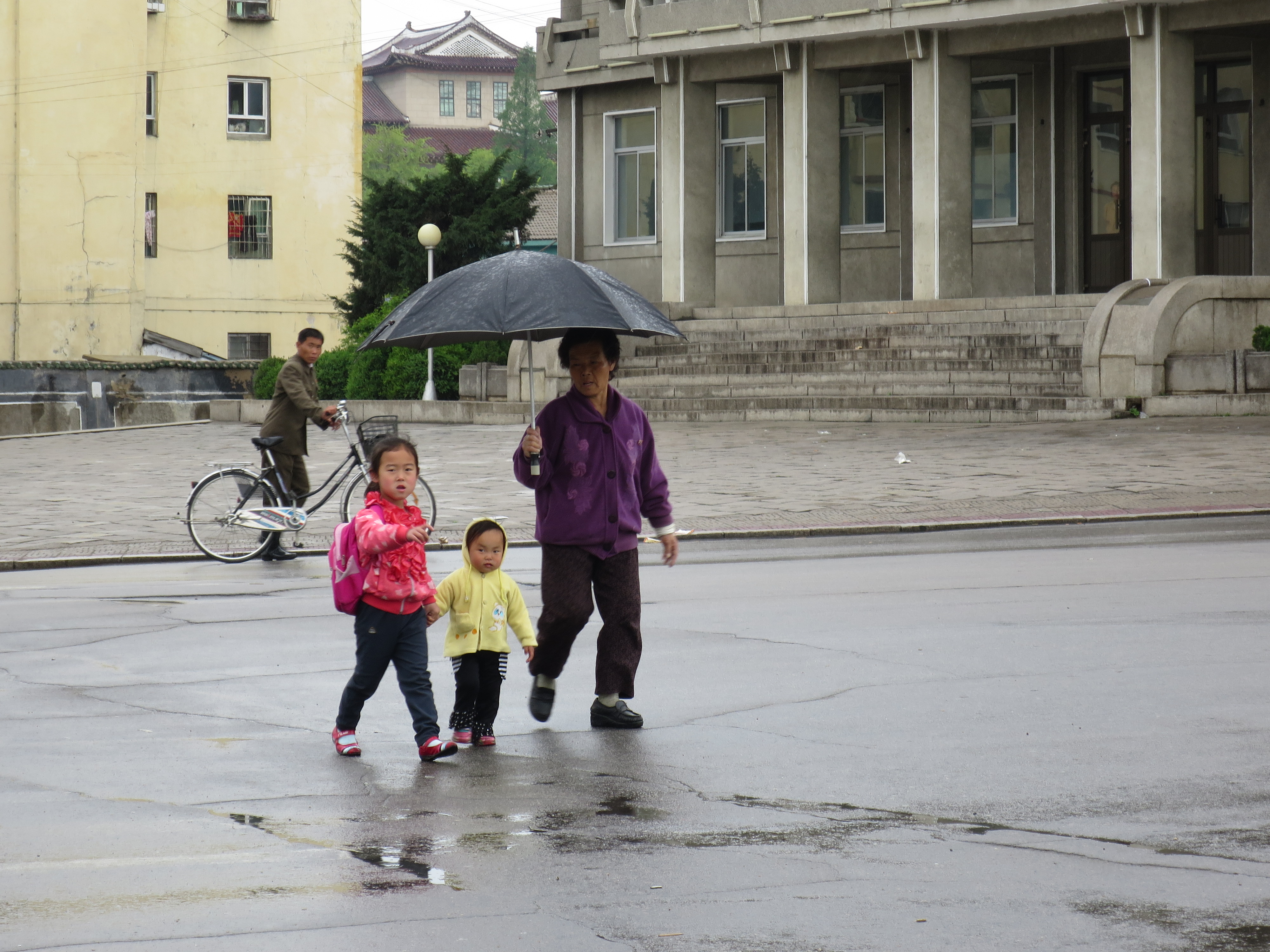
Another street scene. This was taken in Kaesong, a city close to the South Korean border.
Day four
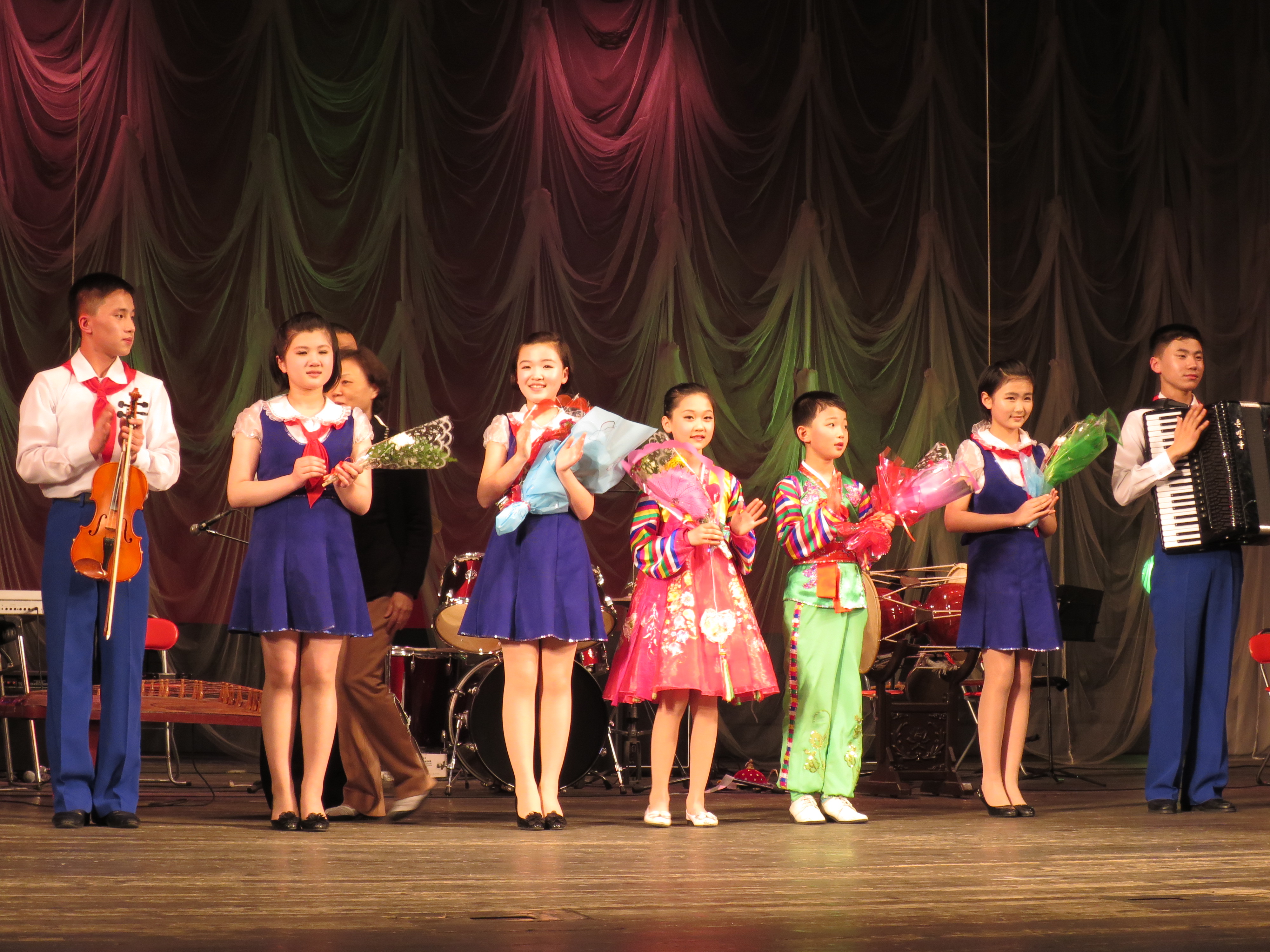
A performance by schoolchildren for tourists.
Day five

A photo taken while riding the Pyongyang metro. The North Koreans are flanked by my fellow tourists (19 of us in the tour group).
Day six
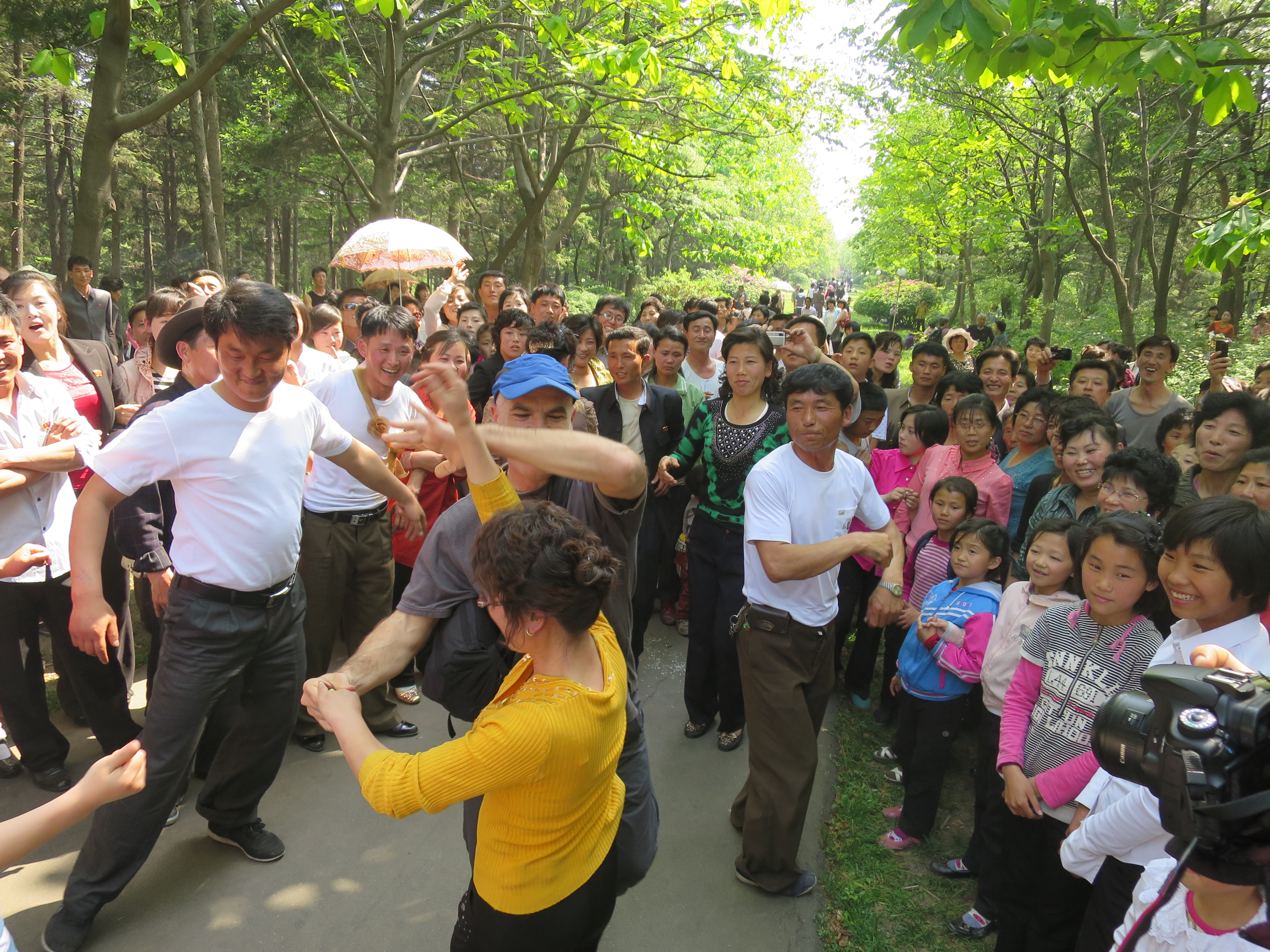
Dancing with the locals in a park in Pyongyang. It was a national holiday (May 1).
Day seven
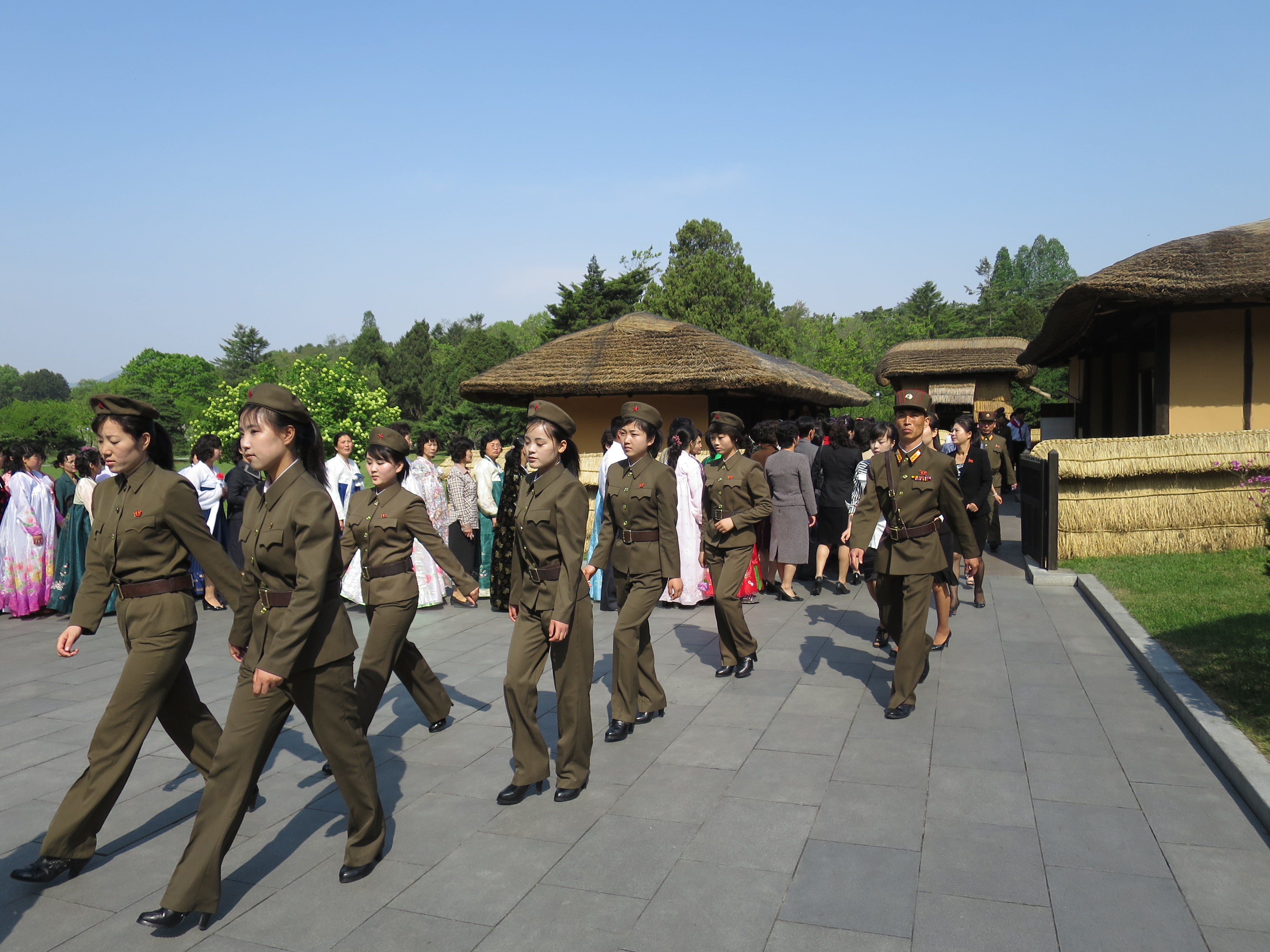
Women in military uniform – not an uncommon sight – at a tourist location.
Day eight

The view from my hotel (floor 39, room 19) at the Yanggakdo International Hotel, in the capital Pyongyang. The colour tint is due to the fact I used my sunglasses as a filter for my camera to cut down on the haze.
Apologies for not updating this blog for a while. I got back from a trip to North Korea last Sunday. The trip programme packed a tight schedule. I took hundreds of photos and made videos too. It was a great tour. I will write about it in time – sometimes a bit of distance helps. Hope you all enjoy the photos but please do ask permission should you want to re-post or use them, thanks – Lu-Hai Liang.
Freelancing in Beijing: 6 month update

I am going to North Korea at the end of this week. I’m very excited because it’s a country not many can say they’ve been to; one of the most unusual nations on the planet.
I will be going partly for journalistic reasons. It’s a gamble – although the travel company taking me says my safety is ensured – as the trip is expensive and I’m pretty sure I won’t earn it all back by selling off the related stories.
But hey, I’m young, without responsibilities and it’s a once-in-a-lifetime sorta thing. I’ve got several commissioned articles in the pipeline, with the potential for travel. I am fulfilling one of the aims I had for this year which was to combine freelancing and travel.
I am more or less financially stable now, with an increased salary from the TV company where I work. This month and the next I have more freelance work too. The freelance work does seem to come in batches; I’ll have periods where it’s bit of a desert, and then come sudden oases of plentiful commissions. I will resolve to try and make £300, at least, a month from freelancing. But what’s nice about having the other job is that I can do it for my own benefit rather than purely for financial survival.
As for my non-professional life, Beijing is starting to feel like my new home. I enjoy the social scene and the ease of going for lunch or dinner. It’s affordable and so very tasty. Let me emphasise again: the ability to eat out and hang out is unrivaled by what I could afford back in England.
It’s much warmer now. Winter is long and harsh here and the warming days changes drastically the atmosphere of the city. I will be soon be moving out of my tiny, tiny rented room into something bigger. Upwards!
The next three months – May, June, July – I will lay down more plans for travel. And I guess I’ll continue writing and selling. I am itching to do something big and to really venture beyond my comfort level, to tackle a large project or subject. I haven’t decided exactly what yet (I have a few ideas) but before this year is out I definitely want to try.
In my experience, taking a calculated risk in the creative field usually pays off – whether it’s professionally funded or led by personal motivation, the profit of the experience is invaluable. In my view, creativity is defined by passionate risks.
How to write an article you’ve never written before

Over the years I’ve written about various disparate subjects. They’ve ranged from 1500-word features on economics to interview-based features, short travel pieces and investigatory video game essays. Sometimes you’ll write pieces which you have no clue how to write, how to structure it, what to put in.
In these cases, what I do is very simple. I was reminded of this when I read an online article in The New Yorker. It is about author Akhil Sharma and the 12 years he spent producing a novel: “After writing seven thousand pages over twelve and a half years, I now have a novel, published this week, that is two hundred and twenty-four pages long”.
The piece focuses on the technical challenges that Sharma faced writing his novel. It deals with what I believe writing can tend to be – a series of technical puzzles.
In these instances, it’s best to follow Sharma’s method:
“When I run into technical challenges, I look to writers who are not only better than I am but better than I ever probably will be. All I needed to do, therefore, was find novels that shared some of the same DNA as my book”.
I’m not comparing my journalism to the art of his fiction making. But what he said rung true. When I am unsure of how to achieve something, whether it’s a sentence, a paragraph or an article, I’ll often find prior examples, articles with similar subjects, and read. I’ll read it closely, and I’ll read it to study.
New territory
Recently I have not been so focused on pure journalism. I have in fact focused more on nonfiction. It is a fine distinction. Nonfiction tend to be essays, first-person pieces, memoir and narratives that don’t have a solely journalistic focus. Trying to make it as a writer, I feel nonfiction offers some of the creative freedom of fiction and the possibility of some personal renown.
You always have to aim upwards. I published a piece of nonfiction, but it was unpaid, and am now looking for paying outlets. Bigger and better.
Writing is a craft. And people may think writing just happens. But they don’t see the years of reading, of the early amateur practice pieces and the careful note-taking of other people’s sentences, the visual diagramming of how to put together an article.
But at least in journalism, there’s no sacrifice as equal in measure as Sharma’s: “The book took twelve and a half years of my life and I am not sure if it was the right investment of my time”.
Traveling + Writing
China is big. Very big. Asia – or East Asia to be more precise, is bigger still. It includes the economic powerhouses of Japan and South Korea. It includes the cultural stew and rapid developments of south-east Asia, of which Indonesia is the most feted. It includes the basket case of North Korea and the fortress of Burma.
One of the draws of being based in Beijing was the relative ease of traveling to all these exciting locations. In the reality, the distances and airfares involved in flying around Asia is not so convenient. But still, I have spent the past week in the idylls that are Thailand’s islands.
Originally my plans were to incorporate travel & journalism – to go somewhere and experience the country while digging up stories, interviewees and new angles. It was a very appealing idea.
This time I didn’t do that. I just wanted to relax. It was a very valuable vacation. I read, wrote and jotted down notes and ideas, scraps of articles and blogs while sipping on a coconut, mango and lassi shake. I wrote the intro for an article, this blog, and wrote down a couple of pitches in detail, and jotted down ideas for others.
Sometimes, a holiday is exactly what you need to refresh the freelancing imagination…

In Koh Lanta, Thailand.
Why I moved to Istanbul – by Samantha North
It was a wet and windy Saturday afternoon in Istanbul. Istiklal Caddesi (Independence Avenue), Istanbul’s main tourist artery, was crammed with people waving colourful flags, shouting and chanting.

Samantha North (pictured) tries freelancing in Turkey.
The police hovered close by with their riot shields and tear gas guns. Looming behind were the giant vehicles used in Gezi Park to water cannon protesters out of the way like rubble.
But this time everything stayed peaceful. The good-humoured crowd were yelling in Ukrainian and Russian for Putin’s exit from Crimea. They sang songs and posed for photos.
Some of them paused in their chanting for interviews with Turkish media. All the time the rain was lashing down on the crowds with their rumpled umbrellas.
Spending the weekend in the middle of a political protest is probably not everyone’s idea of a good time. But for me, a freelance journalist new to Istanbul, it was a timely reminder of why I’d moved here in the first place.
One might question why any newbie foreign journalist would move to a country notorious for jailing others in the same profession. Indeed, a recent Al Jazeera feature described Turkey as the “world’s biggest prison for media” – right up there with well-known offenders Iran and China.
Recent announcements from the government suggest that the the situation is only going to get worse. Parliament’s passing of a bill to tighten internet control has become the latest cause for concern.
From last month onwards, the authorities can now take down any ‘unsuitable’ website, without warning. There has even been talk of banning Facebook and YouTube, under claims of ‘immorality and espionage’. Clearly, this sets a worrying precedent and has sent many Turks back to the streets in protest.
Street protests are becoming a regular feature in Turkey these days. In fact they are becoming an integral part of the country’s national image. But protesting as a way to express discontent and cause social change appears to have lost much of the impact it had during last year’s Gezi events. It also seems to have little effect on government policy-making.
So why would a journalist head to a place like this? It’s pretty obvious really. Turkey is a key geopolitical player in the Middle East. It’s safe, stable and foreigner-friendly; especially when compared with neighbours like Iraq and Syria.
Those places are accessible from Turkey if the foreign journalist feels so inclined (I don’t, yet…). Iran is close by, as is Israel. Even the Crimean peninsula, where Russia’s latest power play is currently unfolding is just a short hop over the Black Sea. There are plenty of stories to be dug up by the bold and imaginative foreign journalist.
For a Brit, one big advantage is being an English speaker. If you’re a good writer and have some ability in editing, work with Turkish publications is out there. Opportunities can usually be found by doing a bit of strategic networking. And don’t forget to network with other journalists in town, especially the really experienced ones.
In a future post I’ll go into more depth about getting started in Turkey. It’s still very early days for me and my lofty dreams of writing for the Guardian, Independent and Daily Telegraph are yet to be made reality. But I’ve just started freelancing regularly for an international print magazine…so more news on that to follow.
*
Read Samantha North’s follow up: Freelancing in Istanbul: the breakthrough
Samantha North is a British freelance journalist currently based in Istanbul, where she writes for Time Out magazine. She is founder and editor of the website PlacesBrands, which specializes in issues concerning soft power, public diplomacy and country branding. Samantha has lived in Qatar, Belgium and China over the past eight years, before moving to Istanbul in February 2014. Her website is samanthanorth.com
30th blog post anniversary: The Top Seven Posts
Hello all! This post marks the 30th post on this blog (not including the ‘About’ post). So I thought now would be a good time to mark the seven most popular posts in this blog’s existence.
Before that, a brief history: this site was originally created as a simple holding page for my portfolio and bio – an online CV basically. But it soon morphed into an idea – I was going off to China soon, to once again grind at the freelance coal pit, an addictive and unhealthy pursuit with world-beating highs and irredeemable, squalid lows.
I thought I should also write a blog on my experience of trying to make it overseas, as a ‘freelance foreign correspondent’ as I termed it. I started blogging at the end of September, 2013. The first post on this site is ‘Welcome: mission statement’. Since then I’ve made new contacts, people who are on a similar journey to me, deciding to up sticks, move to a new country and try their hand in journalism in a foreign land. There are new plans developing for this site, with writers from other countries who I hope will become regular contributors. There might even be a redesign and rebranding at some point. But anyway, I waffle. Without further ado, these are the top seven most popular posts.
The seven most popular posts on this site to date:
7. How I Got My First Ever Paid Freelance Gig
This post tells, in detail, the story of how I got my first ever byline in The Guardian when I was a first year student at university. It took me two years before I got in that newspaper again…
6. The Illusion of Journalistic Success
One of my personal favourites.
5. Life in Beijing as a Journalist – Retrospective
An instructive lesson in how someone without journalism experience got to be The Guardian’s China correspondent.
4. How does a journalist make a name for him/herself? Part 1.
I analyze what ingredients make up successful journalists who are not only professionally successful, but also lauded, renowned and can claim some degree of fame. There is also a Part 2. Other parts have yet to be published.
And here are the Top 3 posts in ascending order.
3. Wishlist: 4 gadgets I’d love to do journalism with
One of the earliest posts on this site, this has been a perennial favourite.
2. What happened last time I tried to be a freelance foreign correspondent
Another early one, this post is highly recommended to those new to the site. It relates my adventures and mishaps of the time when I decided to move to a new city, where I knew virtually nobody, had no job and no accommodation planned, but wanted to do something vaguely journalism related. It was one of the most exhilarating experiences of my life (although it often didn’t feel that way, but I learnt a lot in that short space of time).
And the number one most clicked on, most visited post on this site since it began, but may change in the future, the most popular post so far is………
1. So I got a job with a Chinese TV company
Thanks to those reading! And if anyone is out there who wants to contribute, please hit me up – my email can be found here.
Why I blog – by Alec Ash
This is a guest post by Alec Ash, a young British writer who came to Beijing in 2008. He studied Mandarin and started a blog about Chinese youth. He has been published in The Economist, Prospect, Salon, Literary Review, and is a correspondent for The Los Angeles Review of Books. He is currently working on a book for Picador.
George Orwell, in his essay Why I Write, said there are four motives for writing of any kind: (i) Sheer egoism, (ii) Aesthetic enthusiasm, (iii) Historical impulse, and (iv) Political purpose. I figured I’d do the same kind of list for why I blog.
I’ll keep this short and pithy, imitating Orwell with four bullet points based on his above motives (he was a born blogger). Part of the point of this is to try and tease out if there’s a difference between writers (i.e. authors, columnists), journalists and bloggers, when it comes to why we put pen to paper, finger to laptop, in the first place. So…why do I blog?
(i) Sheer egoism. That’s right, no need to change the first and most powerful motive for any writer. Anyone who deludes themselves that what they have to say is of such interest to the world that they simply must put it down permanently is more than a touch vainglorious. When it comes to blogging, even more so – no one invited you to write, and likely no one’s paying you to do it. Hardly anyone will be reading it either, to begin with. Why bother? Because deep down you think you’re shit hot, and want other people to know that.
Blogging in China adds the extra incentive of expat status – something to set you apart, so you can show you’re not just another English teacher, that you know China, that you’re following the latest news everyone’s talking about, and you’ve met all the big name expats, and know all the cool bars, and your Chinese is crazy good. I should add that journalists, especially news reporters, who blog as part of their job are less vain and egotistical than your average garden blogger.
(ii) Community enthusiasm. Did I just make China bloggers out to be a pack of vain pricks? I apologise. That’s not what I think at all. The English language China “blogosphere” (how I loath that term) is one of the most vibrant out there, full of people who are contributing to our collective understanding of China in a very meaningful way. In that sense it’s a community effort, with blogs linking to and building on each other’s research and analysis in a form of crowd-sourced journalism. Whether that’s a productive conversation or a “circle jerk”, as some would have it, it’s something that writers want to be part of.
(iii) Journalistic impulse. Anyone living in China is confronted every day with things that just beg to be written about. It might be a conversation with a Chinese friend or stranger, a new piece of information that nuances your understanding of an issue, or something you found on the Chinese internet and want to share. One way to tell if you’re a writer at heart, for better or worse, is if when you see or think of something interesting, you feel a need to set it down in words for others – that somehow the experience or thought is incomplete until you put it into language.
In China, those interesting things are hitting you in the face every day. What’s more, most of them won’t get written if you don’t write them, especially if you’re somewhere other than Beijing or Shanghai. The country’s just too big, and professional journalists can’t be everywhere at once. So the journalistic impulse to record your impressions on a blog is especially strong here.
(iv) Corrective purpose. A lot of China blogs, I feel, exist in part to correct or add nuance to what mainstream opinion gets wrong. Maybe the press have gotten their facts mixed up, but you’re there on the ground with access and time to pick at the details. Maybe the mainstream narrative is over-simplified or single-sided, and you have something to say about that. Maybe, God forbid, Tom Friedman (a columnist for The New York Times) has written about China again. Whatever the spur, correcting the generalisations and misconceptions about China that are so legion is an important reason why we do this.
**
There you have it. My changes from Orwell’s wording are small. “Historical impulse” becomes journalistic impulse, because bloggers know they’re not recording for posterity, only for the moment. “Political purpose” turns into corrective purpose, because we also know we won’t make a difference, and are often only talking among ourselves. “Aesthetic enthusiasm”, i.e. the joy of crafted writing, plays less of a part in blogging, which is more conversational and hastily knocked out – but bloggers enjoy the act of writing, too. In fact, another big motive for keeping a blog, myself included, is to galvanise yourself to write regularly, and to write better and faster.
Alec Ash will be speaking at The Bookworm Literary Festival (2014) for “Blogging China”, a panel discussion featuring notable Beijing blog founders. More info can be found here. His website The Anthill is an online publication for China-based writers.


 Lu-Hai Liang