Archive for the ‘Life as a foreign reporter’ Category
What exactly is a freelance foreign correspondent?
Let me try and define it.
You go to a country. You might stay long. Or not for long before returning ‘home’.
You’re in China. In Beijing. And you explore the society and journalism topics about it all, and you pitch and write about them, about China. You grow your list of clients. But you’re also interested in South Korea. About their hi-tech but traditional society. So you read up about it. Maybe make some Korean friends. To ask questions.
Then maybe you hit on something you find fascinating. And salable. An idea you can sell. So you find contacts and maybe a Korean translator with journalism experience. You sell the idea. You book a ticket to Seoul. You find other ideas to make it worth your while. And you do your reporting while gazing at the skyscrapers and wacky advertisements and strutting South Korean girls in their converse shoes, miniskirts and perfectly arrayed hair.
Yes, you look a lot at those girls. Somehow exotic and yet familiar.
You do your reporting and you jet back ‘home’.
You become known for your interesting subjects and your unique take on China. You are also noted for your diversity (South Korea, maybe Japan and south-east Asia too).
You stay a year in China.
You become ‘famous’.
You decide to go to Brazil.
Because why not.
It’s lovely, the sand is warm. And heard you something about the…
For part two in this series go here
What happened last time I tried to be a freelance foreign correspondent
I finished university last year. After a busy summer (presenting, Olympics, work exp at The Guardian), I decided to go to Beijing,
I had no definite plan, no accommodation and I knew exactly four people who lived there, one of whom was a stewardess I had met a couple months prior. I had vague ideas about brushing up on my Chinese, exploring new opportunities and freelancing.
The first couple months were kind of miserable to be honest. I had few friends and I was just hemorrhaging money. I made very little progress journalistically and I was aimless and wondering what exactly I should be doing.
I then answered a chance call-out for interns for The Beijinger, a listings magazine aimed at expats that pre-dated Time Out. How wonderful, you might think, being an intern! Great!
But it was an opportunity. I still wasn’t making any money, I made enough just to cover rent. I was in the office three days a week. The managing editor of The Beijinger was a loud, rambunctious 30-year-old Manc, and his deputy was a very tall and louche Scouser. No, I am not making it up.
December came and I chanced upon a publication online called The Gateway. It’s a business newspaper aimed at students. I immediately dashed off an email to the editor asking if she would be interested in business articles focused on the booming economies of China and south-east Asia.
She would.
Meanwhile, a Chinese girl I was courting ended things abruptly. And that stewardess? Well, she was always flying everywhere, that’s the problem with stewardesses.
Anyway, January was my best ever month for freelance journalism, in terms of pure £. It was a grand whopping total of £700. But by then I had been given a full-time role at The Beijinger so I received a modest pay rise. I wrote some of those freelance articles in the office – something I would not recommend.
I spent a total of 7 months in Beijing, going to some great events, learning a lot (about magazines, staff banter, freelancing, women) before my visa ran out. I even got two great big commissions from The New Statesman which I royally fucked up. Lesson there: if you’re working on something ambitious, be sure to have already done some groundwork on it before pitching.
In a future blog, you’ll find out why I’m returning for a second round.
For more about my experience at The Beijinger, see here.
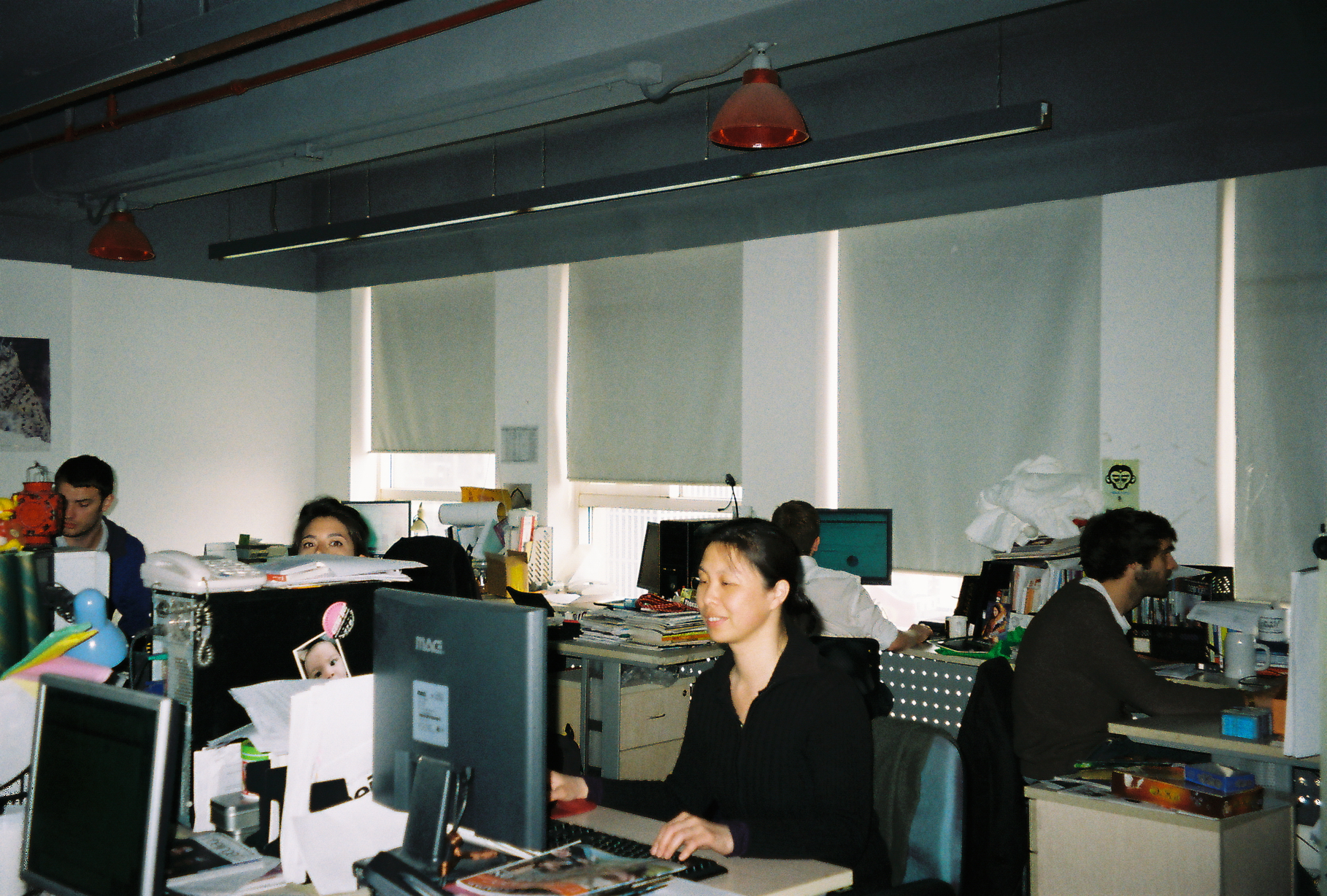
The Beijinger office.


 Lu-Hai Liang