Archive for the ‘Life as a foreign reporter’ Category
An update on North Korea: the costs of freelancing from the Hermit Kingdom
So I traveled in late April to North Korea for a week. I wrote about it on this blog here. The trip, all inclusive, was through a Beijing-based tour company (tourism to NK is only permissible via these tour operators), and it cost me 1100 euros.
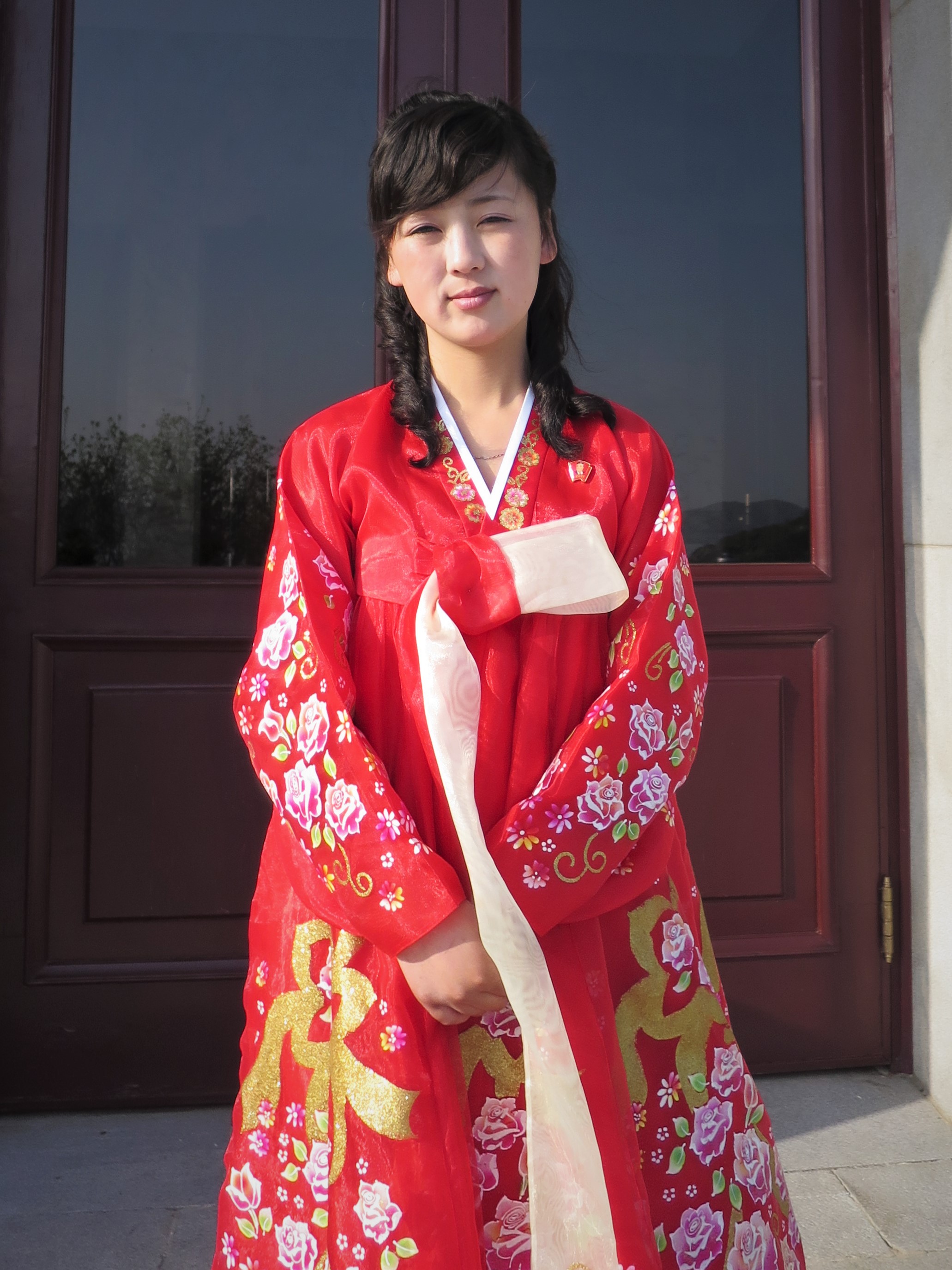
A North Korean greeter from the port of Nampo. Copyright: Lu-Hai Liang (2014).
It was a significant outlay. 1100 euros (875 British pounds or 1448 US dollars) is a lot of money and I dug into my overdraft to stump up the cash. Yes, I did want to go anyway, but I knew I would have to find ways to recoup the costs. How would I do that? By selling stories based on my trip of course. I am a freelance foreign correspondent after all.
However, at the time, I hadn’t been commissioned for anything. No editor at any newspaper, website or magazine was expecting Korea-related copy from me. This is, in short, not the way to do things.
A freelance should really have stories already booked in before s/he travels. And then he does more research and maybe pitches one or two more. After he comes back from said travel and has filed his commissioned stories, he digs around his head and thinks up further angles.
At the least, you should recoup what it cost; all the expenses that it took to go. For North Korea, I have not yet done that. I have in fact paid off 79% of the 1100 euros I spent.
This comes from three sources: a profile of a manager of one of these NK tour companies; an investigative feature on the growth of North Korean tourism; and a photo gallery.
The profile was published online by The Telegraph, and fetched me 150 pounds. Al Jazeera published both the feature and photo gallery, and the two together was worth $900 (both items each making up half that number).
The photo gallery was a useful reminder of how to diversify. If you have video or photos, it always pays to ask your editor if they want an edited together video or a photo gallery. Always ask if they’ll pay for it though – never believe your stuff should be free!
I haven’t yet pitched anything revolving around something like a travel narrative on my experiences traveling in North Korea, but that’s quite hard. It’s already been done quite a bit, so I’ll have to come up with a unique angle. But it’s good practice for next time, and for future trips. Travel + journalism is fun, yo.
Links:
Is North Korea On Your Tourism Bucket List? – Aljazeera (includes photo gallery)
Movin’ up: from poor freelancer to slightly rich writer
I’ve written about being a poverty-stricken writer before. Tales of squalor and survival. On having to eat street-cooked sweet potatoes for a week because I was waiting to be paid. On readjusting attitudes toward money, or rather the accumulation of it, beliefs which I still hold. But now the going should be easier.
I recently moved into a new apartment. It’s in a nice area of Beijing where rich couples stroll around in the evenings. It’s like a little community, a more cosmopolitan part of a city that’s usually gritty – Beijing is perhaps one of the more squalid capital cities of the world.
My old room cost me RMB 1200 a month, or £120. It was a tiny little place, where I could almost touch the walls, just big enough for a single bed, a desk, a sink and a wardrobe. My girlfriend commented that it was the smallest and horriblest place she’d ever seen someone living in (thanks!) and that the bathroom was like the setting for the movie SAW.
The new place is RMB 2400 a month, or £240. I will go to a Beijing IKEA in the near future to furnish the place. I’ve taken on a part-time tutoring job for an eight-year-old Chinese girl. The monthly fee from this pays the rent. I get RMB 10,000 a month (£1000) from my full-time job at the TV company. My freelance journalism pays around £300-500 monthly, depending on my own productivity.
In total then, my monthly salary is around £1600, or 16,000 Chinese RenMinBi. In the UK, £1600 to live on per month is not too bad although this would depend on where you lived. In London I can imagine, after rent, bills, transport and food, it would not stretch very far.
But in China, even in Beijing, this is quite a comfortable salary, what a 35-year-old manager might earn at a medium-sized media company so I’ve been told.
It has taken me seven months to reach this stage. For about seven months now, my UK bank account has been in the red, where I’ve made fervent use of my bank overdraft to finance rent deposits and visa runs to Hong Kong. It is just now back in the black.
The Chinese bank account, after paying for three months rent in advance and a deposit, still has left a sizable residue that will easily tide me over until my next paycheck. Which I will use for a 20-day vacation in Thailand. Life is alright, for now…
What should a freelance journalist do in the summer?
My productivity lately has nosedived. Temperatures in Beijing meanwhile peaked – last week it hit 41 Celsius. Summer in general is a difficult time for me. I find it harder to concentrate on work.
It feels perverse to be indoors hunched over staring at a computer screen when people are doing summery things. Hormones also go through the roof (or is that just me?) and the mind drifts toward an addled state fixated on hedonism, idleness and pleasures.
I’ve got a couple of commissioned pieces on the go. My day job (at the TV company) has been more demanding of late, requiring more energy but really that’s an excuse. Another disruption is that I’ve been homeless for about three weeks now. I’ve been staying (and overstaying) on friends’ couches around Beijing, after me and other tenants were kicked out of our rooms by the landlord. Landlords have far too much power.
I finally found a new place I was happy with but can’t move in until June 11th, so tonight I will be sleeping on a couch at my workplace. I’m writing this post now at my office’s desk at 11pm Beijing time.
So what should a freelancer do during this season? I’d like to know what other freelancers do, so please do leave a comment. I guess many cannot really afford to take much time off if their livelihood depend on the income, and they don’t live in a cheaper location such as China. Summer is often a dry period for news and contracted freelancers for newspapers often take time off.
I guess summer is a time for reading, relaxing, doing what humans like to do, traveling, swimming, eating, drinking, lounging, sexing, snorkeling in sapphire waters on a James Bond beach, taking time off and making memories that when the cold and drab colours of winter come back will offer some reserve of sun.
Soon I’ll be reunited with my half Japanese, half Ukrainian Canadian girlfriend in Thailand for 10 days. It’s going to be awesome. In the meantime I will work on two 5000-word essays on the freelancing life in Beijing and my Chinese political heritage for two editors that might one day be powerful champions. I will try to write but I guess I will mostly read. And that is just as important.
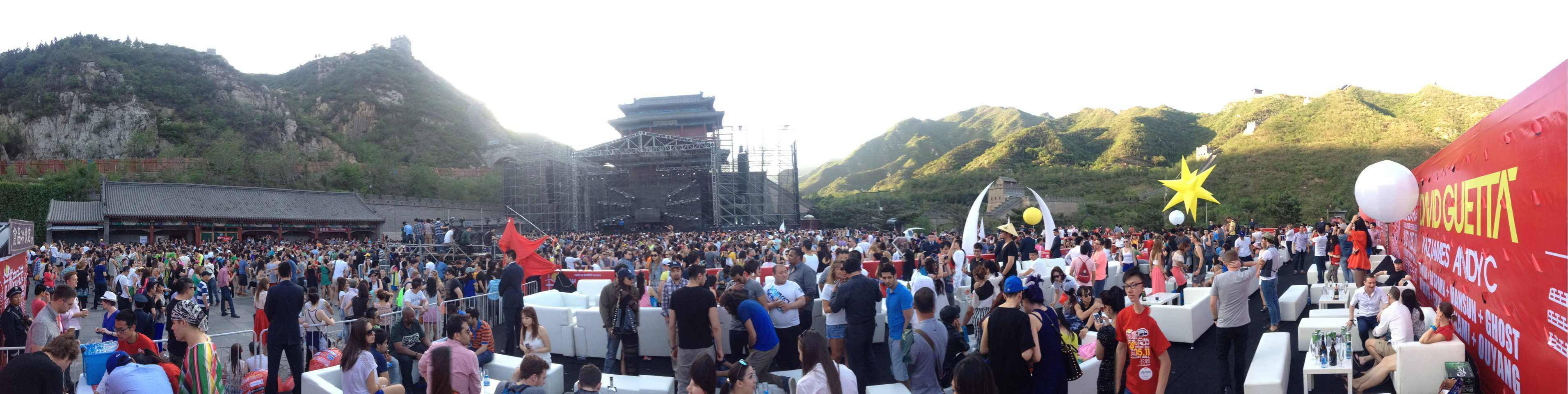
The Great Wall Music Festival, May, 2013. It was fun.
Freelancing in Beijing: 6 month update

I am going to North Korea at the end of this week. I’m very excited because it’s a country not many can say they’ve been to; one of the most unusual nations on the planet.
I will be going partly for journalistic reasons. It’s a gamble – although the travel company taking me says my safety is ensured – as the trip is expensive and I’m pretty sure I won’t earn it all back by selling off the related stories.
But hey, I’m young, without responsibilities and it’s a once-in-a-lifetime sorta thing. I’ve got several commissioned articles in the pipeline, with the potential for travel. I am fulfilling one of the aims I had for this year which was to combine freelancing and travel.
I am more or less financially stable now, with an increased salary from the TV company where I work. This month and the next I have more freelance work too. The freelance work does seem to come in batches; I’ll have periods where it’s bit of a desert, and then come sudden oases of plentiful commissions. I will resolve to try and make £300, at least, a month from freelancing. But what’s nice about having the other job is that I can do it for my own benefit rather than purely for financial survival.
As for my non-professional life, Beijing is starting to feel like my new home. I enjoy the social scene and the ease of going for lunch or dinner. It’s affordable and so very tasty. Let me emphasise again: the ability to eat out and hang out is unrivaled by what I could afford back in England.
It’s much warmer now. Winter is long and harsh here and the warming days changes drastically the atmosphere of the city. I will be soon be moving out of my tiny, tiny rented room into something bigger. Upwards!
The next three months – May, June, July – I will lay down more plans for travel. And I guess I’ll continue writing and selling. I am itching to do something big and to really venture beyond my comfort level, to tackle a large project or subject. I haven’t decided exactly what yet (I have a few ideas) but before this year is out I definitely want to try.
In my experience, taking a calculated risk in the creative field usually pays off – whether it’s professionally funded or led by personal motivation, the profit of the experience is invaluable. In my view, creativity is defined by passionate risks.
Traveling + Writing
China is big. Very big. Asia – or East Asia to be more precise, is bigger still. It includes the economic powerhouses of Japan and South Korea. It includes the cultural stew and rapid developments of south-east Asia, of which Indonesia is the most feted. It includes the basket case of North Korea and the fortress of Burma.
One of the draws of being based in Beijing was the relative ease of traveling to all these exciting locations. In the reality, the distances and airfares involved in flying around Asia is not so convenient. But still, I have spent the past week in the idylls that are Thailand’s islands.
Originally my plans were to incorporate travel & journalism – to go somewhere and experience the country while digging up stories, interviewees and new angles. It was a very appealing idea.
This time I didn’t do that. I just wanted to relax. It was a very valuable vacation. I read, wrote and jotted down notes and ideas, scraps of articles and blogs while sipping on a coconut, mango and lassi shake. I wrote the intro for an article, this blog, and wrote down a couple of pitches in detail, and jotted down ideas for others.
Sometimes, a holiday is exactly what you need to refresh the freelancing imagination…

In Koh Lanta, Thailand.
Why I moved to Istanbul – by Samantha North
It was a wet and windy Saturday afternoon in Istanbul. Istiklal Caddesi (Independence Avenue), Istanbul’s main tourist artery, was crammed with people waving colourful flags, shouting and chanting.

Samantha North (pictured) tries freelancing in Turkey.
The police hovered close by with their riot shields and tear gas guns. Looming behind were the giant vehicles used in Gezi Park to water cannon protesters out of the way like rubble.
But this time everything stayed peaceful. The good-humoured crowd were yelling in Ukrainian and Russian for Putin’s exit from Crimea. They sang songs and posed for photos.
Some of them paused in their chanting for interviews with Turkish media. All the time the rain was lashing down on the crowds with their rumpled umbrellas.
Spending the weekend in the middle of a political protest is probably not everyone’s idea of a good time. But for me, a freelance journalist new to Istanbul, it was a timely reminder of why I’d moved here in the first place.
One might question why any newbie foreign journalist would move to a country notorious for jailing others in the same profession. Indeed, a recent Al Jazeera feature described Turkey as the “world’s biggest prison for media” – right up there with well-known offenders Iran and China.
Recent announcements from the government suggest that the the situation is only going to get worse. Parliament’s passing of a bill to tighten internet control has become the latest cause for concern.
From last month onwards, the authorities can now take down any ‘unsuitable’ website, without warning. There has even been talk of banning Facebook and YouTube, under claims of ‘immorality and espionage’. Clearly, this sets a worrying precedent and has sent many Turks back to the streets in protest.
Street protests are becoming a regular feature in Turkey these days. In fact they are becoming an integral part of the country’s national image. But protesting as a way to express discontent and cause social change appears to have lost much of the impact it had during last year’s Gezi events. It also seems to have little effect on government policy-making.
So why would a journalist head to a place like this? It’s pretty obvious really. Turkey is a key geopolitical player in the Middle East. It’s safe, stable and foreigner-friendly; especially when compared with neighbours like Iraq and Syria.
Those places are accessible from Turkey if the foreign journalist feels so inclined (I don’t, yet…). Iran is close by, as is Israel. Even the Crimean peninsula, where Russia’s latest power play is currently unfolding is just a short hop over the Black Sea. There are plenty of stories to be dug up by the bold and imaginative foreign journalist.
For a Brit, one big advantage is being an English speaker. If you’re a good writer and have some ability in editing, work with Turkish publications is out there. Opportunities can usually be found by doing a bit of strategic networking. And don’t forget to network with other journalists in town, especially the really experienced ones.
In a future post I’ll go into more depth about getting started in Turkey. It’s still very early days for me and my lofty dreams of writing for the Guardian, Independent and Daily Telegraph are yet to be made reality. But I’ve just started freelancing regularly for an international print magazine…so more news on that to follow.
*
Read Samantha North’s follow up: Freelancing in Istanbul: the breakthrough
Samantha North is a British freelance journalist currently based in Istanbul, where she writes for Time Out magazine. She is founder and editor of the website PlacesBrands, which specializes in issues concerning soft power, public diplomacy and country branding. Samantha has lived in Qatar, Belgium and China over the past eight years, before moving to Istanbul in February 2014. Her website is samanthanorth.com
Money: or rather the lack of it when you’re trying to freelance
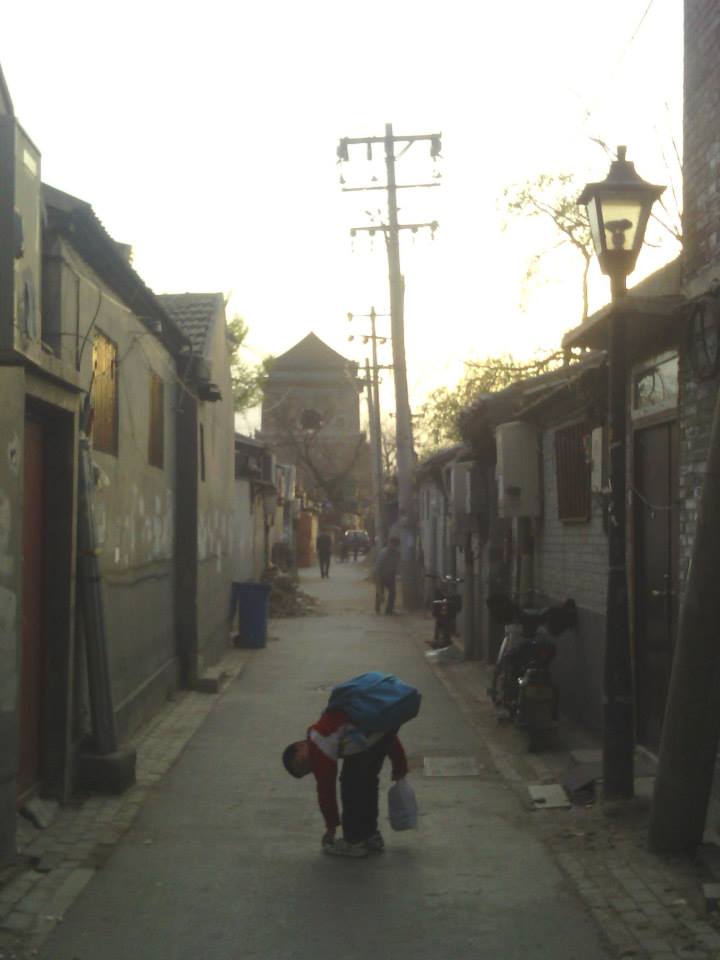
A Beijing hutong (alleyway). Copyright: Lu-Hai Liang.
Until very recently I did not have a regular income and though 2013 was marked by great experiences (some of the best ever in fact), it was not one that saw me in great wealth. I won’t go over the details but there were periods where I had to subsist on the cheapest foods and debt seemed unending.
Poverty. Not many of us actually know it and know it well, and I would not be one to claim expertise. But a couple of things I saw recently helped to reaffirm my position toward the accumulation of cash. The first was a quote I saw in Tom Bissell’s book Magic Hours. In an essay about writing and writers he quotes author Natalie Goldberg: “I feel very rich when I have time to write and very poor when I get a regular paycheck and no time to work at my real work”.
The second thing was a video of an interview with a musician who said: “If I have enough to pay rent, buy groceries then that’s cool – I can just concentrate on my music”.
Being ‘poor’ is relative. We live in an age of bounteous opportunity. Being so-called poor provides a clear set of options. How? Well, it frees you to concentrate on what most matters.
A month ago I published a post on WannabeHacks.co.uk, a website for aspiring journalists. There I set out the argument that in order to freelance, especially in the early stages of your career, one of the best things you can do is go and live in an emerging economy country.
In writing this blog, I have already made contacts with fellow freelancers who are doing what I am doing: taking a risk, moving to somewhere exciting where things are rapidly changing and kickstarting their journalism career. Someone I know (met via this blog) decided to relocate to Istanbul and has already been commissioned multiple times for a major magazine.
But it can be difficult, especially financially. It helps to have some money saved up. But one of the best things about living in a country like China or Turkey or Malaysia or Mexico is that although economies are growing things are still relatively cheap. In China I eat out almost everyday and party hard. If I were freelancing in London, I’d probably already be dead. Due to starvation and exposure (’cause I couldn’t afford a roof over my head).
Kate Hodal (Guardian) sold most of her possessions to finance a move to south-east Asia and was so hard-up on so many occasions that she almost went home. But she persevered and now has the envy-inducing job of being South-east Asia correspondent, meaning she gets paid to fly to places like Vietnam, Indonesia and the Philippines from her base in Thailand. Jonathan Kaiman (also Guardian) had to survive on a low-paid internship and a visa that forced him to take a bus full of Mongolian tradesman to Mongolia every month for almost a year, but he got bylines in the New York Times, LA Times, Foreign Policy and is now one of the most talented China correspondents around. Alec Ash, a Brit and correspondent for The Los Angeles Review of Books, wrote for four years for free on his blog about China from his home in Beijing. Now he’s living it up on an advance for a book he’s been signed to write.
Having the ability to purchase that new phone or buy that bag makes people happier. But it doesn’t, not really. You have to switch your mindset around to focus on what’s really going to drive you forward. Those shoes or that expensive meal might seem important but the enjoyment is absolutely inessential. You cannot, must not, think short-term material goals at this stage. What is important and infinitely more satisfying is recognition, appreciation of your work; the attainment of value.
To want more and more stuff is unerringly shallow. Invest in yourself. Buy what you need to hone your craft, no more. Spend on experiences…but spend wisely.
Being rich is meaningless if it doesn’t make you better at what you do.
3 month update: freelancing in Beijing

Moving somewhere new can take a lot out of you. Uncertainty rests sharply between your shoulders, and that’s just on the flight over. Once you arrive you have to go out and secure somewhere halfway decent to live; a job or some source of income; and local markers of routine.
Once you find those things you move upward into essential inessentials: regular people to hang out with, a good coffee shop, companionship, sex. And even once you settle (which can take longer than expected) loneliness and homesickness can still strike.
January is a tough month anyway, the cold and SAD creeps into the consciousness. I’m oscillating between feeling really motivated, for new projects, things that can be done in this bright new year, and extreme boredom, wondering at the general futility of it all.
Since I’ve been here, I’ve only freelanced ONE article: a long piece about entrepreneurship in Beijing for the New Statesman. I was commissioned for two last month, which is keeping me occupied currently – December and January are slow months for freelance anyway.
But I’ve had a full-time job so freelance has taken a backseat.
Pitching is like a video game. You win or you don’t. When you’re starting out, each commission feels like Christmas. It’s getting paid for an idea, for your writing. And you get bylines. It feels great. But once you pitch enough you realize you have to treasure each pitch. This year I want to throw out bigger hooks and catch bigger fish.
2014 needs to be the year where I do something big, risk more, settle into the journalism projects that I really want to do.
Write a book? Work on big articles? Make videos? A multimedia project? Start a business? Bigger projects can result in bigger returns, at least that’s the hypothesis I want to test.
The end of 2013 (October – December) has been mostly up. I got a job, fell into a couple of fast paced blaze & burn(ed) relationships, traveled with family, got new readers of this blog, made little progress with my Chinese, ended up with a good handful of bylines.
But there’s always a little rut from which you, and only you, can drive yourself out of. I will spend the next 6 weeks focused on that so in February I’ll be on upward momentum. Thanks to all those who have read and continue to read. Have an eventful 2014.
5 things to do upon arriving in a new country, as a foreign correspondent
Not as a traveler of course, but as a journalist, and maybe even to set yourself up as a freelance foreign correspondent.
Try to book in some stories
This is important. Some may find the prospect of traveling and going to a new locale stressful enough without having to think about reporting and deadlines to deliver on top of everything else. You’re a professional journalist, you need to be on stories 24/7. Having stories to do will give purpose and focus to your journey.
You should be pitching lots of ideas to a varied smorgasbord of publications well before your flight. A little research goes a long way – find out about new trends, in culture, society, business, look for the stories behind them, related to them, the human sides. You’re going to be a reporter on-the-ground, this gives you an advantage to staff reporters who are nowhere near the action, writing their stories about Columbia, Japan, etc on their London desks.
You could, for example, find expats. Many newspapers have a section devoted to expatriate life. But business editors, food, culture editors are also interested in Brits who are abroad doing interesting things. They have to be truly interesting though – are they an interesting person, in an interesting field, with a story that changes over time or demonstrates a trend? Look on websites, many countries have English-language publications for expats. Having a few stories to do when settling in somewhere forces you to make new connections, orientate yourself journalistically and establishes your presence in that country. Oh, and the moolah helps too.
Make contacts
But how? Well, go to events – gigs, lectures, art exhibitions, trade fairs, expat gatherings, open mic nights, hobby gatherings – you have to get yourself out there and start meeting as many new people as possible. And ask for business cards wherever appropriate. Ask for recommendations, maybe your new found friend knows someone with a business or is a musician, great – everything helps, to establish your feet and antennae for potential stories. Most locals, unlike reserved Brits, tend to be open and friendly toward foreigners so make best use of your exotic status.
Meet your fellow journalists
Find them on Twitter, LinkedIn – search out bylines and reach out to them. Most will gladly meet up for a coffee. Some may even share freelance and job opportunities down the line. You’re all in the same boat, so having that network can be invaluable. Having journalist friends opens a massive amount of routes and having people to bounce ideas around or to work on stories together is priceless. In Beijing, I’ve had the fortune to make several journalists’ acquaintances and it can be a true inspiration to hear their stories of how they got into journalism.
Attend talks, lectures, debates
I’ve found these events the single easiest way of making the best relevant contacts in one go. In Beijing there are two particular hot-spots and that’s at The Bookworm (a bookstore), and regular lecture events given by professors and intellectuals in Wudaokou, a student area in west Beijing. The Bookworm hosts regular cultural events and often feature eminent people. I’ve attended talks given by Mark Kitto, a former columnist for Prospect with a long and colourful history in China, and Martin Parr, a world-renowned British photographer.
What’s more important than the speakers themselves are the audience. After the speaker finishes, if you hang around or wait to speak to the speaker, you’ll find a lot of the audience can be just as interesting. I’ve met journalists from Chinese media in the audience who’ve subsequently become contacts. I’ve met scientists, academics, diplomats and trade officials. I often ask for business cards. An audience member I once met talked about doing her PhD in Beijing and told me, off the cuff, that China is the world leader in nanotechnology research – possible story and readymade contact there.
Start a blog, journal, diary
A blog can encourage writing and reporting, without the drain of thinking ‘Will it get commissioned?’ – you always have a back-up, and well written blog-posts are advertising for your work, and could lead to commissions. Even if you land one or two off the strength of your blog, that is reward enough, and it’ll strengthen your writing and research skills anyway. Also of course, book deals and invitations to give paid talks can arise, it happens – Adam Westbrook is prime example. Many a China writer’s career has been launched off the back of a blog, even media businesses have been bought and sold from blog-like beginnings. Danwei.org and Tea Leaf Nation were both humble online-only publications, with the latter recently bought by Foreign Policy for an undisclosed sum. Keeping a journal meanwhile will force you to seek out new experiences and will be a nostalgia-ridden chronicle of your hapless time spent trying to chase freelance and foreign dreams. Perfect material for a book…
Back in The Big Beige
My nickname for Beijing is The Beige, which is usually the colour of the sky, owing to the terrific pollution and smog. I’ve arrived in the city from my small hometown of Hastings and the first couple days I always find it a surrealist experience. It takes a little time to adapt to the ‘Chinese-ness’ of everything. Also Beijing is massive and colossal in many aspects, the size of everything, the number of people and cars, the dysfunction of blocky communist architecture with islands of modernity nestled between roads the size of Wales.
The pollution sucks. It’s not just the tiny particles which can have health-screwing effects in the long term, there’s also the dust. Oh the dust. Already my nose is perpetually blocked and every time I come home I feel like Han Solo; dusty and disheveled.
Still there are benefits, the cheap food (I almost never cook in China), the cheap beer and the opportunity of it all. It’s a city built on dreams: gaudy, grand governmental dreams, small and large foreigner dreams, and the many million migrant dreams which are invariably crushed by reality.
What will I do different this time? Hmmmm, lots of things I hope. Really try to completely fluent up my Chinese, try to actually get a steady paying, no screw that, a big paying job. Get a bike. Make more cool friends. Travel more. Write more. Essays.
I’ve already landed an apartment. 1200 Yuan a month. That’s about £120. Found it on a Chinese site – they’re cheaper than the expat sites. The place doesn’t have a kitchen and the room is small, but for that price, I cannot really complain. I’m also heavily cash-less, relying on my bank overdraft. And waiting on several hundreds of pounds from freelance clients. It’ll come.
So for now, I’m sitting pretty, soaking it up, keeping busy and sipping coffee. The Beige is a colour you get used to.


 Lu-Hai Liang