Archive for the ‘Features’ Category
What exactly is a freelance foreign correspondent?
Let me try and define it.
You go to a country. You might stay long. Or not for long before returning ‘home’.
You’re in China. In Beijing. And you explore the society and journalism topics about it all, and you pitch and write about them, about China. You grow your list of clients. But you’re also interested in South Korea. About their hi-tech but traditional society. So you read up about it. Maybe make some Korean friends. To ask questions.
Then maybe you hit on something you find fascinating. And salable. An idea you can sell. So you find contacts and maybe a Korean translator with journalism experience. You sell the idea. You book a ticket to Seoul. You find other ideas to make it worth your while. And you do your reporting while gazing at the skyscrapers and wacky advertisements and strutting South Korean girls in their converse shoes, miniskirts and perfectly arrayed hair.
Yes, you look a lot at those girls. Somehow exotic and yet familiar.
You do your reporting and you jet back ‘home’.
You become known for your interesting subjects and your unique take on China. You are also noted for your diversity (South Korea, maybe Japan and south-east Asia too).
You stay a year in China.
You become ‘famous’.
You decide to go to Brazil.
Because why not.
It’s lovely, the sand is warm. And heard you something about the…
For part two in this series go here
Welcome: misson statement
The idea of the foreign correspondent still holds a certain pull on the aspiring journalist’s imagination. If you’re of the literary persuasion, you’ll think of Graham Greene gallivanting among the exotica of south-east Asia, or of Ernest Hemingway filing his dispatches from Franco-ridden Spain, braving bullets and swigging Valdepeñas.
Or else you think of crusaders like John Pilger, the Aussie who brought the horrors of the Pol Pot regime to the attention of people around the world.
It’s the most adventurous, intrepid and romantic of journalism’s repertoire.

Hemingway and a small tiger.
Budgets are tight nowadays and newspapers can ill-afford to maintain many international bureaux and send reporters across the globe as they used to. But some enterprising people decide to head off pretty much on a whim, going it alone.
Deborah Bonello of MexicoReporter.com did it. Graham Holliday of Kigali Wire did it. And Kate Hodal, the Guardian’s south-east Asia correspondent did it.
So perhaps freelance is the best way to do it. You get the freedom to explore what you want to explore. Write what you want to write and travel wherever you want to go.
This blog will track a journey to be an in-demand freelance foreign correspondent. It will be a mixture of journalism tips and tricks, insights and news about the country I’m in and how you can make the most of it, as well as looking at the romance (both of life & love) of a foreign correspondent’s life. Because, let’s face it, that’s part of the fun.
About
Lu-Hai Liang is a multimedia journalist and writer.
- Video for The Press Association
- Words (& Photos) for Aljazeera, Business Insider, BBC Future, BBC Future Planet, BBC News, Inkstone, New Statesman, CNN, Forbes, The Guardian, The Independent, The Independent on Sunday, CNN Travel, The Cornell Enterprise, Wanderlust, Space, Nine MSN, Nikkei Asian Review, Marie Claire (Netherlands & South Africa), Attitude, Dazed & Confused, IGN, Paste, Eurogamer, TheGamer, GamingBible, Kotaku, The Daily Telegraph, Penguin, The Atlantic, Covert literary magazine, Los Angeles Review of Books, The Willowherb Review, The Wire China, The National, Foreign Policy, UnderPinned, BBC Worklife, and WIRED.
- Presenter for Tribal China – an international documentary
- Camera Assistant for Olympic Broadcasting Services at London 2012 Olympics.
Contact: luhai_liang@hotmail.com
Twitter: @LuHai_Liang
Short bio
Lu-Hai Liang is a British-Chinese journalist and writer. He was based in Beijing for six years. He has been published widely in international media.
These include The Guardian, BBC, CNN, Foreign Policy, Wired, The Atlantic, New Statesman, Aljazeera, Daily Telegraph, Dazed, Eurogamer, The Independent, and Nikkei Asian Review, among others.
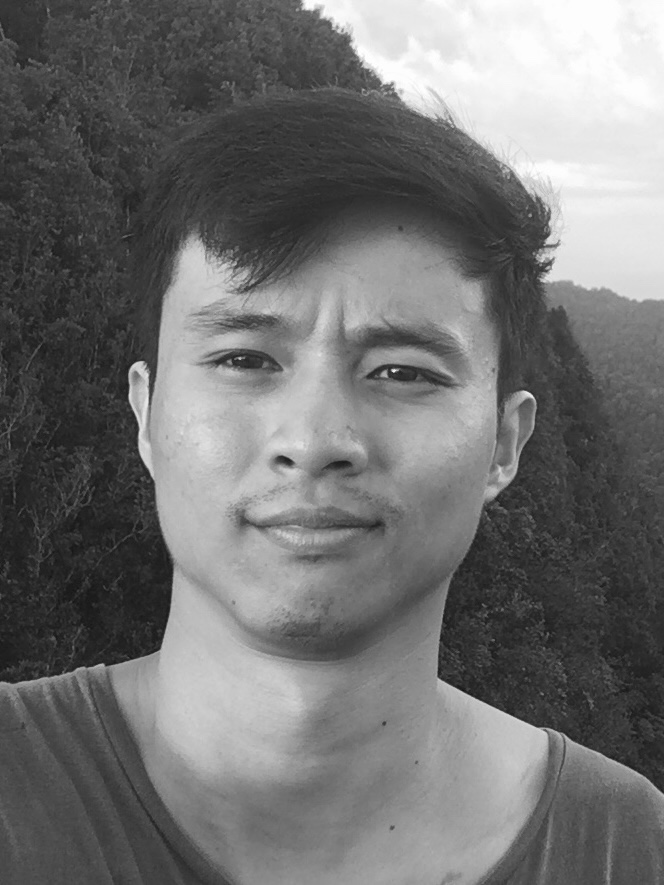
Longer bio
Liang was born in Guilin, China, and was moved to the United Kingdom aged five, and grew up in the seaside town of Hastings in southeast England.
Sorry, I’m going to switch to first-person.
I completed a bachelors degree in multimedia journalism at Bournemouth University in 2012. Following a summer working as a camera assistant for OBS at the London 2012 Olympic Games, I decided to move to Beijing.
My first job in the Chinese capital was listings editor at the magazine, The Beijinger, promoted from paid intern. After a summer break at home in England, I returned to Beijing in autumn 2013 and this blog was born, tracking my life and career as a journalist in Beijing.
I was based in Beijing from 2012 to 2018.
These six years were a heady, adventurous, difficult, lonely, rewarding, thrilling, impactful yet oddly unsatisfying time, like a tempestuous love affair.
I have visited Myanmar, Nepal, Thailand, Malaysia, Singapore, Vietnam, Philippines, Taiwan, Japan, South Korea, and North Korea. And I often wrote reports and features about my host countries.
From 2019 to September 2020, I was a roving, nomadic, freelance journalist endlessly criss-crossing southeast and east Asia, until the pandemic decided to end it.
These days I am trying to become a published author and I am a cohort of the 2021 HarperCollins author academy.

(Samples of my work)


 Lu-Hai Liang