Archive for the ‘Features’ Category
North Korea: a journey in 8 photos
I spent eight days in North Korea, so here are eight photos from each of the days…
Day one

With our North Korean guide Ms. Jong and the statues of Kim Il-Sung and Kim Jong-il at Munsudae Hill in Pyongyang.
Day two

A street scene taken from our tour bus. We were allowed at times to walk the streets but not often.
Day three
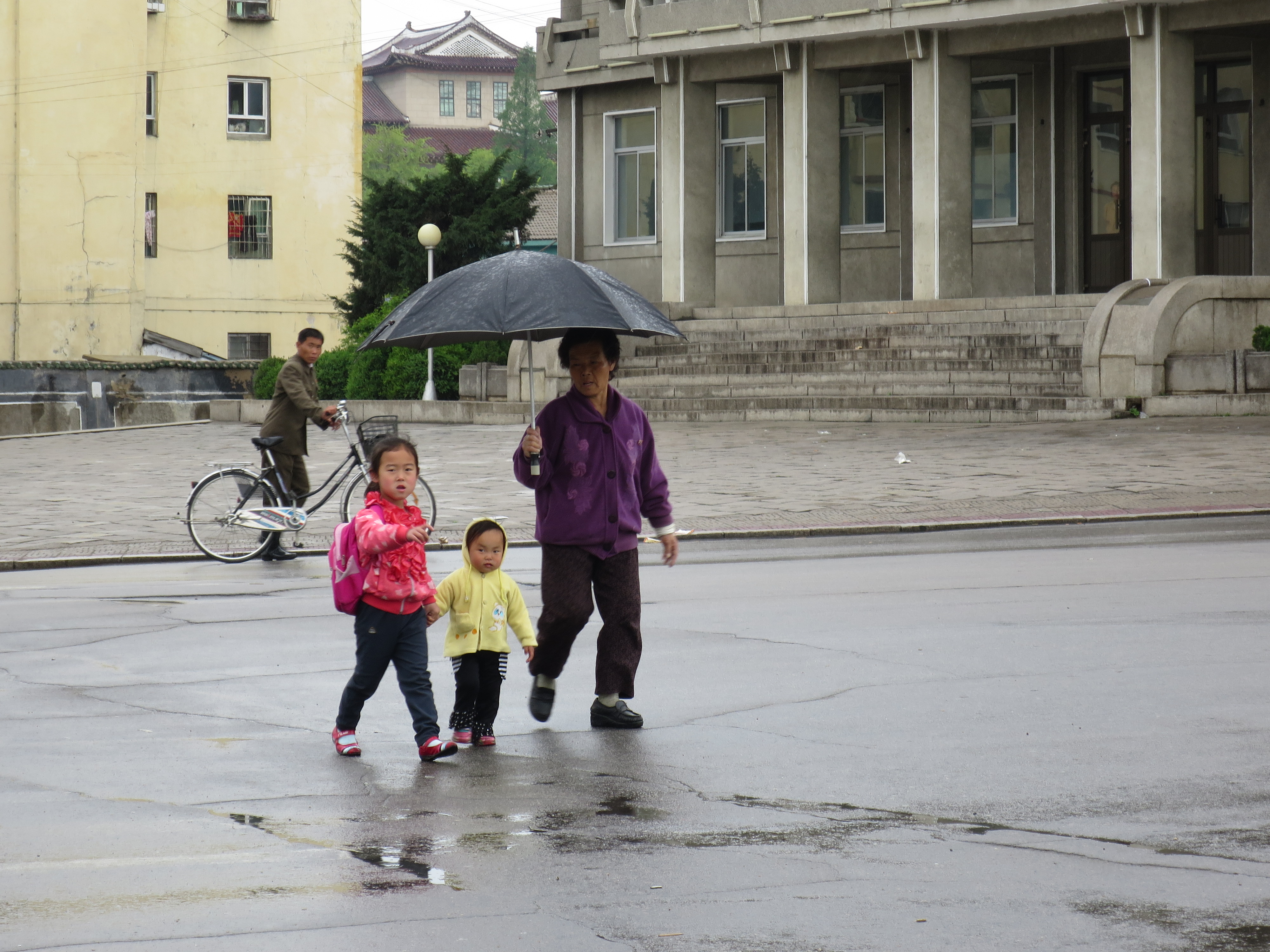
Another street scene. This was taken in Kaesong, a city close to the South Korean border.
Day four
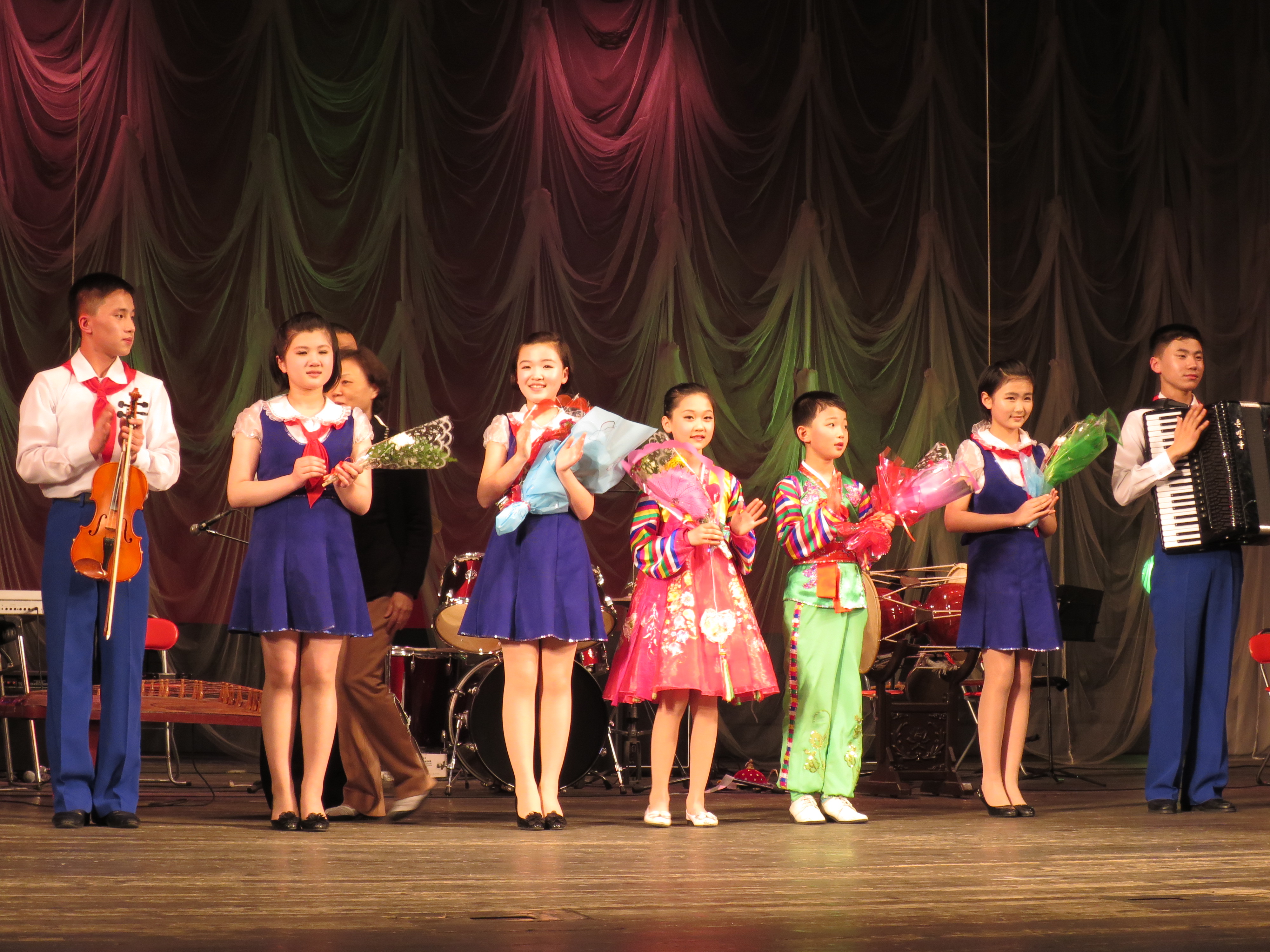
A performance by schoolchildren for tourists.
Day five

A photo taken while riding the Pyongyang metro. The North Koreans are flanked by my fellow tourists (19 of us in the tour group).
Day six
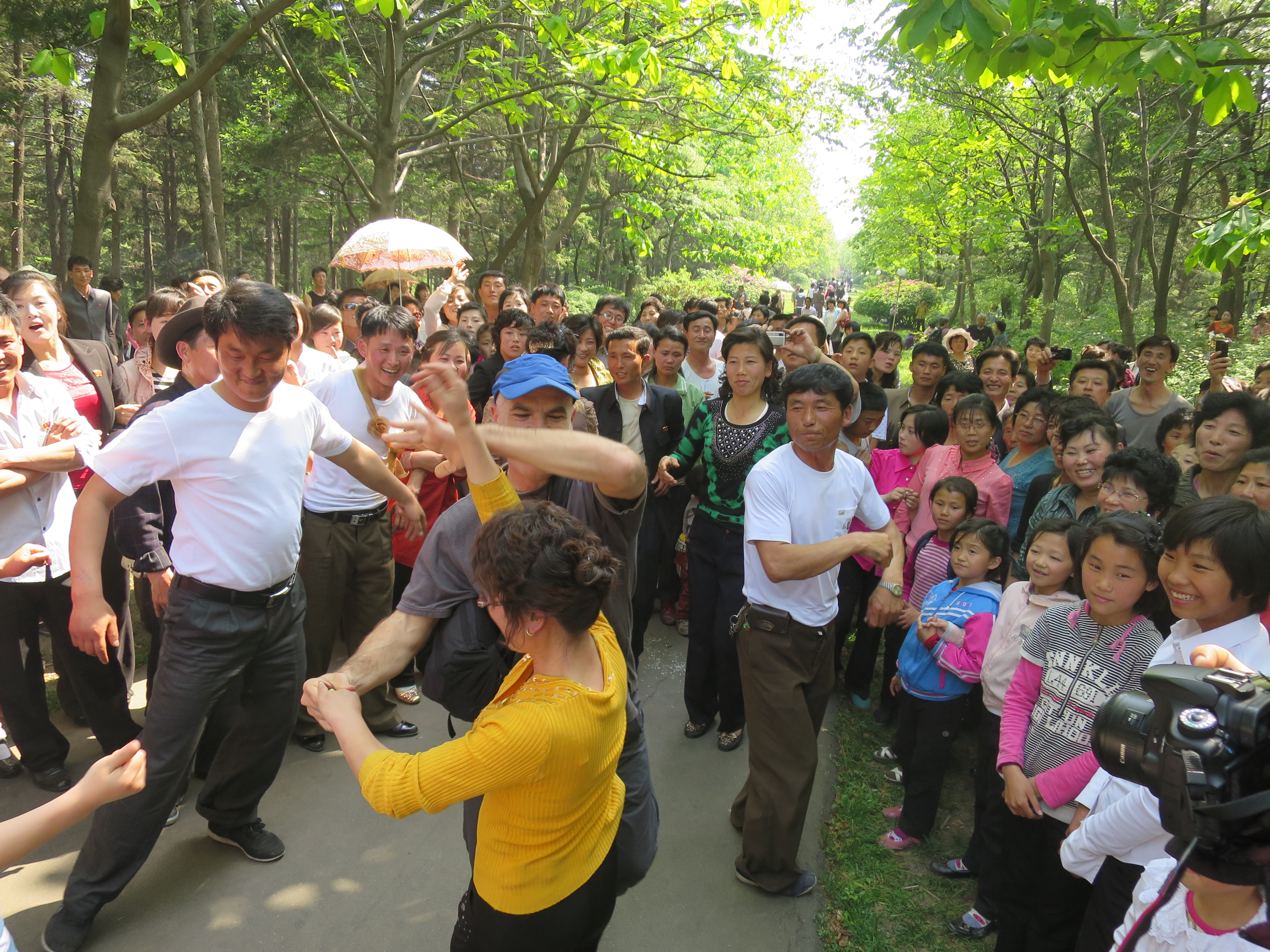
Dancing with the locals in a park in Pyongyang. It was a national holiday (May 1).
Day seven
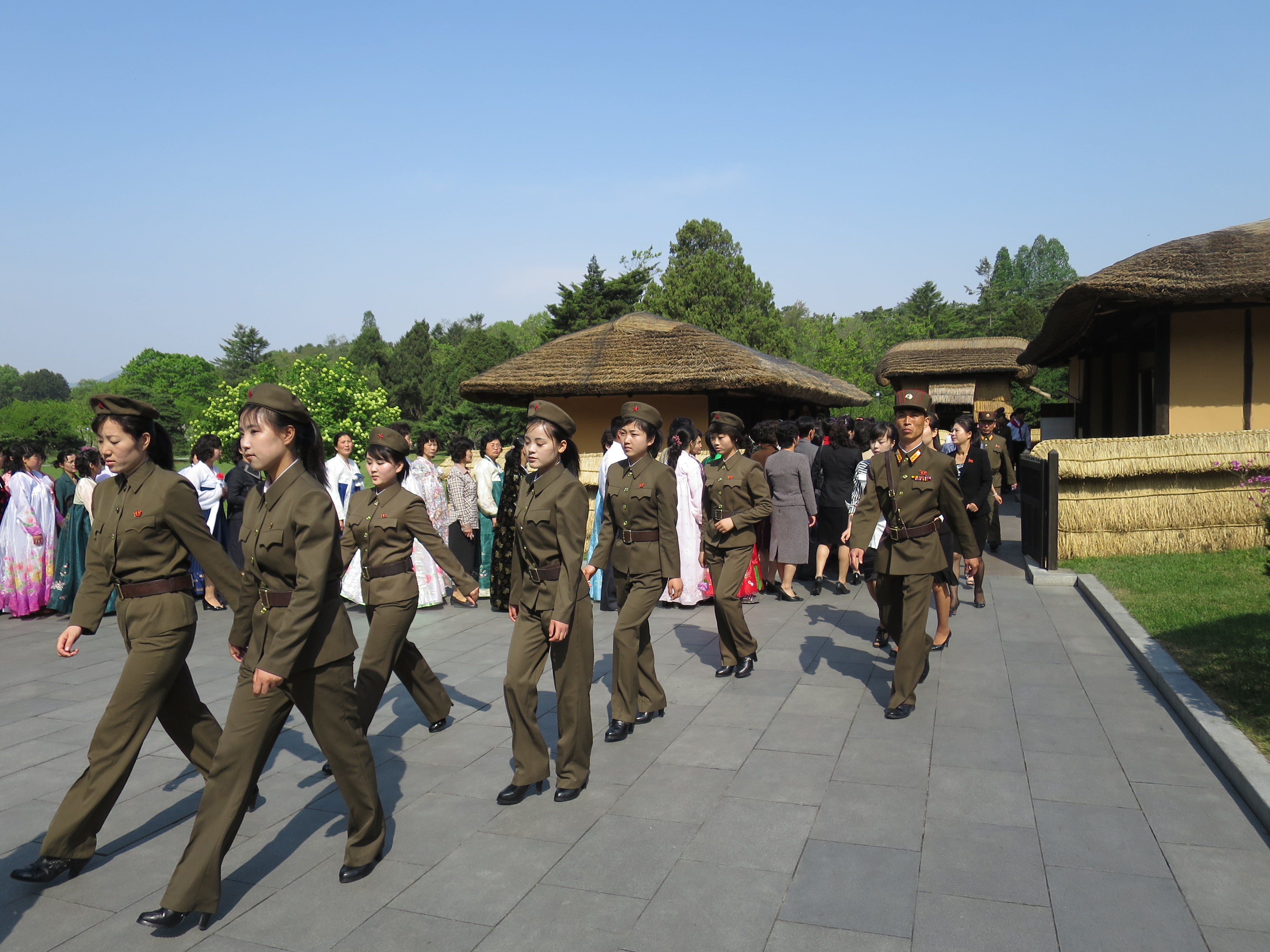
Women in military uniform – not an uncommon sight – at a tourist location.
Day eight

The view from my hotel (floor 39, room 19) at the Yanggakdo International Hotel, in the capital Pyongyang. The colour tint is due to the fact I used my sunglasses as a filter for my camera to cut down on the haze.
Apologies for not updating this blog for a while. I got back from a trip to North Korea last Sunday. The trip programme packed a tight schedule. I took hundreds of photos and made videos too. It was a great tour. I will write about it in time – sometimes a bit of distance helps. Hope you all enjoy the photos but please do ask permission should you want to re-post or use them, thanks – Lu-Hai Liang.
How to write an article you’ve never written before

Over the years I’ve written about various disparate subjects. They’ve ranged from 1500-word features on economics to interview-based features, short travel pieces and investigatory video game essays. Sometimes you’ll write pieces which you have no clue how to write, how to structure it, what to put in.
In these cases, what I do is very simple. I was reminded of this when I read an online article in The New Yorker. It is about author Akhil Sharma and the 12 years he spent producing a novel: “After writing seven thousand pages over twelve and a half years, I now have a novel, published this week, that is two hundred and twenty-four pages long”.
The piece focuses on the technical challenges that Sharma faced writing his novel. It deals with what I believe writing can tend to be – a series of technical puzzles.
In these instances, it’s best to follow Sharma’s method:
“When I run into technical challenges, I look to writers who are not only better than I am but better than I ever probably will be. All I needed to do, therefore, was find novels that shared some of the same DNA as my book”.
I’m not comparing my journalism to the art of his fiction making. But what he said rung true. When I am unsure of how to achieve something, whether it’s a sentence, a paragraph or an article, I’ll often find prior examples, articles with similar subjects, and read. I’ll read it closely, and I’ll read it to study.
New territory
Recently I have not been so focused on pure journalism. I have in fact focused more on nonfiction. It is a fine distinction. Nonfiction tend to be essays, first-person pieces, memoir and narratives that don’t have a solely journalistic focus. Trying to make it as a writer, I feel nonfiction offers some of the creative freedom of fiction and the possibility of some personal renown.
You always have to aim upwards. I published a piece of nonfiction, but it was unpaid, and am now looking for paying outlets. Bigger and better.
Writing is a craft. And people may think writing just happens. But they don’t see the years of reading, of the early amateur practice pieces and the careful note-taking of other people’s sentences, the visual diagramming of how to put together an article.
But at least in journalism, there’s no sacrifice as equal in measure as Sharma’s: “The book took twelve and a half years of my life and I am not sure if it was the right investment of my time”.
Traveling + Writing
China is big. Very big. Asia – or East Asia to be more precise, is bigger still. It includes the economic powerhouses of Japan and South Korea. It includes the cultural stew and rapid developments of south-east Asia, of which Indonesia is the most feted. It includes the basket case of North Korea and the fortress of Burma.
One of the draws of being based in Beijing was the relative ease of traveling to all these exciting locations. In the reality, the distances and airfares involved in flying around Asia is not so convenient. But still, I have spent the past week in the idylls that are Thailand’s islands.
Originally my plans were to incorporate travel & journalism – to go somewhere and experience the country while digging up stories, interviewees and new angles. It was a very appealing idea.
This time I didn’t do that. I just wanted to relax. It was a very valuable vacation. I read, wrote and jotted down notes and ideas, scraps of articles and blogs while sipping on a coconut, mango and lassi shake. I wrote the intro for an article, this blog, and wrote down a couple of pitches in detail, and jotted down ideas for others.
Sometimes, a holiday is exactly what you need to refresh the freelancing imagination…

In Koh Lanta, Thailand.
Why I moved to Istanbul – by Samantha North
It was a wet and windy Saturday afternoon in Istanbul. Istiklal Caddesi (Independence Avenue), Istanbul’s main tourist artery, was crammed with people waving colourful flags, shouting and chanting.

Samantha North (pictured) tries freelancing in Turkey.
The police hovered close by with their riot shields and tear gas guns. Looming behind were the giant vehicles used in Gezi Park to water cannon protesters out of the way like rubble.
But this time everything stayed peaceful. The good-humoured crowd were yelling in Ukrainian and Russian for Putin’s exit from Crimea. They sang songs and posed for photos.
Some of them paused in their chanting for interviews with Turkish media. All the time the rain was lashing down on the crowds with their rumpled umbrellas.
Spending the weekend in the middle of a political protest is probably not everyone’s idea of a good time. But for me, a freelance journalist new to Istanbul, it was a timely reminder of why I’d moved here in the first place.
One might question why any newbie foreign journalist would move to a country notorious for jailing others in the same profession. Indeed, a recent Al Jazeera feature described Turkey as the “world’s biggest prison for media” – right up there with well-known offenders Iran and China.
Recent announcements from the government suggest that the the situation is only going to get worse. Parliament’s passing of a bill to tighten internet control has become the latest cause for concern.
From last month onwards, the authorities can now take down any ‘unsuitable’ website, without warning. There has even been talk of banning Facebook and YouTube, under claims of ‘immorality and espionage’. Clearly, this sets a worrying precedent and has sent many Turks back to the streets in protest.
Street protests are becoming a regular feature in Turkey these days. In fact they are becoming an integral part of the country’s national image. But protesting as a way to express discontent and cause social change appears to have lost much of the impact it had during last year’s Gezi events. It also seems to have little effect on government policy-making.
So why would a journalist head to a place like this? It’s pretty obvious really. Turkey is a key geopolitical player in the Middle East. It’s safe, stable and foreigner-friendly; especially when compared with neighbours like Iraq and Syria.
Those places are accessible from Turkey if the foreign journalist feels so inclined (I don’t, yet…). Iran is close by, as is Israel. Even the Crimean peninsula, where Russia’s latest power play is currently unfolding is just a short hop over the Black Sea. There are plenty of stories to be dug up by the bold and imaginative foreign journalist.
For a Brit, one big advantage is being an English speaker. If you’re a good writer and have some ability in editing, work with Turkish publications is out there. Opportunities can usually be found by doing a bit of strategic networking. And don’t forget to network with other journalists in town, especially the really experienced ones.
In a future post I’ll go into more depth about getting started in Turkey. It’s still very early days for me and my lofty dreams of writing for the Guardian, Independent and Daily Telegraph are yet to be made reality. But I’ve just started freelancing regularly for an international print magazine…so more news on that to follow.
*
Read Samantha North’s follow up: Freelancing in Istanbul: the breakthrough
Samantha North is a British freelance journalist currently based in Istanbul, where she writes for Time Out magazine. She is founder and editor of the website PlacesBrands, which specializes in issues concerning soft power, public diplomacy and country branding. Samantha has lived in Qatar, Belgium and China over the past eight years, before moving to Istanbul in February 2014. Her website is samanthanorth.com
30th blog post anniversary: The Top Seven Posts
Hello all! This post marks the 30th post on this blog (not including the ‘About’ post). So I thought now would be a good time to mark the seven most popular posts in this blog’s existence.
Before that, a brief history: this site was originally created as a simple holding page for my portfolio and bio – an online CV basically. But it soon morphed into an idea – I was going off to China soon, to once again grind at the freelance coal pit, an addictive and unhealthy pursuit with world-beating highs and irredeemable, squalid lows.
I thought I should also write a blog on my experience of trying to make it overseas, as a ‘freelance foreign correspondent’ as I termed it. I started blogging at the end of September, 2013. The first post on this site is ‘Welcome: mission statement’. Since then I’ve made new contacts, people who are on a similar journey to me, deciding to up sticks, move to a new country and try their hand in journalism in a foreign land. There are new plans developing for this site, with writers from other countries who I hope will become regular contributors. There might even be a redesign and rebranding at some point. But anyway, I waffle. Without further ado, these are the top seven most popular posts.
The seven most popular posts on this site to date:
7. How I Got My First Ever Paid Freelance Gig
This post tells, in detail, the story of how I got my first ever byline in The Guardian when I was a first year student at university. It took me two years before I got in that newspaper again…
6. The Illusion of Journalistic Success
One of my personal favourites.
5. Life in Beijing as a Journalist – Retrospective
An instructive lesson in how someone without journalism experience got to be The Guardian’s China correspondent.
4. How does a journalist make a name for him/herself? Part 1.
I analyze what ingredients make up successful journalists who are not only professionally successful, but also lauded, renowned and can claim some degree of fame. There is also a Part 2. Other parts have yet to be published.
And here are the Top 3 posts in ascending order.
3. Wishlist: 4 gadgets I’d love to do journalism with
One of the earliest posts on this site, this has been a perennial favourite.
2. What happened last time I tried to be a freelance foreign correspondent
Another early one, this post is highly recommended to those new to the site. It relates my adventures and mishaps of the time when I decided to move to a new city, where I knew virtually nobody, had no job and no accommodation planned, but wanted to do something vaguely journalism related. It was one of the most exhilarating experiences of my life (although it often didn’t feel that way, but I learnt a lot in that short space of time).
And the number one most clicked on, most visited post on this site since it began, but may change in the future, the most popular post so far is………
1. So I got a job with a Chinese TV company
Thanks to those reading! And if anyone is out there who wants to contribute, please hit me up – my email can be found here.
Why I blog – by Alec Ash

This is a guest post by Alec Ash, a young British writer who came to Beijing in 2008. He studied Mandarin and started a blog about Chinese youth. He has been published in The Economist, Prospect, Salon, Literary Review, and is a correspondent for The Los Angeles Review of Books. He is currently working on a book for Picador.
George Orwell, in his essay Why I Write, said there are four motives for writing of any kind: (i) Sheer egoism, (ii) Aesthetic enthusiasm, (iii) Historical impulse, and (iv) Political purpose. I figured I’d do the same kind of list for why I blog.
I’ll keep this short and pithy, imitating Orwell with four bullet points based on his above motives (he was a born blogger). Part of the point of this is to try and tease out if there’s a difference between writers (i.e. authors, columnists), journalists and bloggers, when it comes to why we put pen to paper, finger to laptop, in the first place. So…why do I blog?
(i) Sheer egoism. That’s right, no need to change the first and most powerful motive for any writer. Anyone who deludes themselves that what they have to say is of such interest to the world that they simply must put it down permanently is more than a touch vainglorious. When it comes to blogging, even more so – no one invited you to write, and likely no one’s paying you to do it. Hardly anyone will be reading it either, to begin with. Why bother? Because deep down you think you’re shit hot, and want other people to know that.
Blogging in China adds the extra incentive of expat status – something to set you apart, so you can show you’re not just another English teacher, that you know China, that you’re following the latest news everyone’s talking about, and you’ve met all the big name expats, and know all the cool bars, and your Chinese is crazy good. I should add that journalists, especially news reporters, who blog as part of their job are less vain and egotistical than your average garden blogger.
(ii) Community enthusiasm. Did I just make China bloggers out to be a pack of vain pricks? I apologise. That’s not what I think at all. The English language China “blogosphere” (how I loath that term) is one of the most vibrant out there, full of people who are contributing to our collective understanding of China in a very meaningful way. In that sense it’s a community effort, with blogs linking to and building on each other’s research and analysis in a form of crowd-sourced journalism. Whether that’s a productive conversation or a “circle jerk”, as some would have it, it’s something that writers want to be part of.
(iii) Journalistic impulse. Anyone living in China is confronted every day with things that just beg to be written about. It might be a conversation with a Chinese friend or stranger, a new piece of information that nuances your understanding of an issue, or something you found on the Chinese internet and want to share. One way to tell if you’re a writer at heart, for better or worse, is if when you see or think of something interesting, you feel a need to set it down in words for others – that somehow the experience or thought is incomplete until you put it into language.
In China, those interesting things are hitting you in the face every day. What’s more, most of them won’t get written if you don’t write them, especially if you’re somewhere other than Beijing or Shanghai. The country’s just too big, and professional journalists can’t be everywhere at once. So the journalistic impulse to record your impressions on a blog is especially strong here.
(iv) Corrective purpose. A lot of China blogs, I feel, exist in part to correct or add nuance to what mainstream opinion gets wrong. Maybe the press have gotten their facts mixed up, but you’re there on the ground with access and time to pick at the details. Maybe the mainstream narrative is over-simplified or single-sided, and you have something to say about that. Maybe, God forbid, Tom Friedman (a columnist for The New York Times) has written about China again. Whatever the spur, correcting the generalisations and misconceptions about China that are so legion is an important reason why we do this.
**
There you have it. My changes from Orwell’s wording are small. “Historical impulse” becomes journalistic impulse, because bloggers know they’re not recording for posterity, only for the moment. “Political purpose” turns into corrective purpose, because we also know we won’t make a difference, and are often only talking among ourselves. “Aesthetic enthusiasm”, i.e. the joy of crafted writing, plays less of a part in blogging, which is more conversational and hastily knocked out – but bloggers enjoy the act of writing, too. In fact, another big motive for keeping a blog, myself included, is to galvanise yourself to write regularly, and to write better and faster.
Alec Ash will be speaking at The Bookworm Literary Festival (2014) for “Blogging China”, a panel discussion featuring notable Beijing blog founders. More info can be found here. His website The Anthill is an online publication for China-based writers.
I got hypnotized, literally, in Beijing
“There are three ducks in a lake”, says a soft voice and I duly imagine three fluffy yellow ducks paddling in a lake. “Ducks don’t get wet. They have a special coating on their feathers. But if it was a chicken, if you threw a chicken into a bath, it would sink”. I cannot help but smile at this visual but there is a point to this somewhat surreal exercise. It’s the first image or series of stories designed to achieve goals I had written down, something every person undergoing hypnotherapy is encouraged to do.
It’s a surprising and stimulating experience, and whether you choose to embrace or reject the concept, it’s a powerful way of seeing one’s own mind once you realise what it’s trying to do. Its success rate in dealing with problems ranging from weight loss to depression, confidence issues, aiding recovery from illness and changing habits, is debated. But by the end of the session I am stunned to learn something about myself that I had not considered.
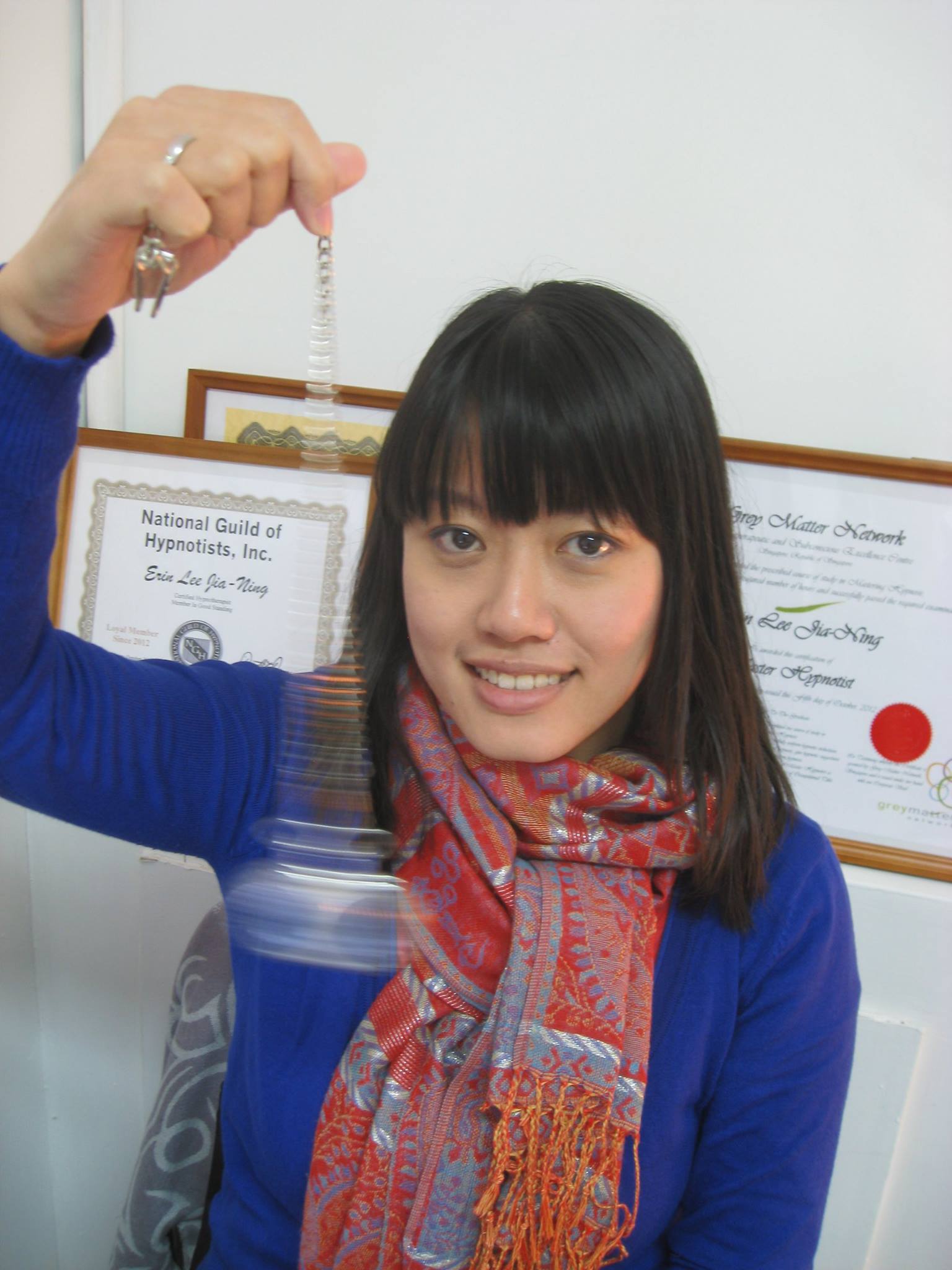
Erin Lee, hypnotherapist.
Like a lot of people I had thought of myself as impervious to hypnosis. That I, an independent, strong-willed individual, would not be susceptible to such gullible mind tricks. But Erin Lee, the certified hypnotherapist whose voice starts this article, is quick to dispel this idea.
“That’s one of the common misconceptions”, says Lee. “Some people are more susceptible to hypnosis than others. Some people believe they can’t be hypnotized. But, in fact, you can. Hypnosis is an everyday, natural occurrence. Everyone can go in or out of hypnosis. For example, when you’re daydreaming or absorbed in a book or movie and you can’t hear your mum calling out to you. That is a form of self-hypnosis”.
I mention the instance of when I’m driving or playing a video game of periods in time when I don’t realise what I’m doing, that, after, I had no memory of doing something seemingly quite complicated.
“Yes, that’s called ‘highway hypnosis’. It’s a natural state of mind. But these forms of self-hypnosis they don’t usually come with therapeutic goals, which is the difference with hypnotherapy. It’s to work towards a specific, positive goal”.
Erin Lee, 30, is from Singapore and has been in Beijing for two years. Before that she worked in the communications industry for almost a decade. She still does PR work but four years ago she discovered hypnotherapy. “I was at a low period in my life and had really low confidence. I had a great job, a lot of achievements in my work, but I was basically unhappy. I had long hours and I didn’t know what I was slogging so hard for”.
She then went through hypnotherapy herself and took an active interest in it, consuming books on the subject. She started official training last year and has since become certified by the American National Guild of Hypnotists, among other bodies.
Lee’s small office holds a green therapy chair that she invites me to lie on. I slouch back, take off my shoes, and get comfortable. There follows repetitive instructions to descend into deeper and deeper levels of relaxation. She puts on calming music, speaks softly but insistently, and counts: “five, four, and you’re falling deeper and deeper…”
I come into a state where my eyes rest behind my eyelids and my mind is in that pleasant place where it’s unselfconscious. I am aware but tranquil. My mind is calm when it is usually overactive. It’s a nice sensation. I could open my eyes and stop all of this at once – but I don’t want to.
Next, it’s the visualization – “imagine a nice place”, and I imagine a field of golden wheat softly blowing in the breeze. Before the session I had written down my goals for Erin. I had wanted to have better self-esteem, be less self-conscious and to be in a better position to deal with hurtful things said by people in the past. Standard-issue issues.
I wander around my ‘nice place’ and then there’s a lake. Cue the ducks. There is a leaf, a perfectly-shaped green leaf, on which is a droplet of water. Ducks don’t get wet, even in the rain. The droplet of water is like a bad word. It falls on the duck and it rolls right off. The bad things people say is like water off a duck’s back.
Another scene: there’s a girl in a class. This metaphor deals with how you deal with people’s judgments and perceptions of you. It’s interesting that Erin uses a girl. In the form I had filled in it asked to list some of my favourite things. I had mentioned one of my best female buddies and my sister. Perhaps I find it easier to empathize with girls.
The end comes in the form of a pebble that encapsulates all the messages that were communicated. When the pebble hits the bottom of the lake, the messages will have been taken in. She anchors the feeling to the colour red. When I see red colours, she says, I will remember these feelings. When I ‘wake’, I feel a rare calmness. Lee asks me about the experience.
I tell her that at times I couldn’t hear what she was saying, that I was ‘somewhere else’ (it felt a little like dozing off), but that I would…’come back’ (eyes still closed). She tells me that that was hypnosis. I had been hypnotized. In those moments when I couldn’t hear. My subconscious mind, she says, however, was taking it in. That’s how hypnosis works.
I am surprised.
After the official session, she shows me a pendulum; yes it’s not a myth, they are still used, although mostly for children, who can find it difficult to concentrate. I hold the pendulum and she asks me to move it with my mind. It does, and it genuinely feels like I am controlling it with my mind. But, alas, I know how it works and I tell her: “It’s just suggestion, isn’t it? I suppose once you know how it works, it loses some of the magic”.
“Yes”, she replies, “a popular saying among hypnotists is: ‘All forms of hypnosis are self-hypnosis'”.
I realise I am just as susceptible as everyone else. Of course, I could choose not to be suggestible. But that choice, an active, almost willful exercise in mind management is not something we do all the time, perhaps not even often. Whether it’s an advertisement, social media, or a passing comment made by a friend or relative, we are all prone to external influences.
Hypnosis could strengthen the subconscious to be stronger against the negative feedback, to fortify the mental walls. But I have a hunch that its greater power, its true effect, is in training and exercising the conscious mind to be more disciplined; to be better stewards of our own thoughts and feelings.
When I return home I always pass a stallholder that I usually stop to chat to. She’s just dyed a streak of her hair a lovely shade of red. It looks nice, and I smile.
**
Disclosure: I went to get hypnotized in December 2012, to tie in with World Hypnosis Day (4th January). This article was originally filed for a local Beijing magazine. No money exchanged hands between Erin, the magazine or I.
Smog’s lesson in reselling freelance stories
That time I spent every week going to London to practice pitching
One reason you shouldn’t study a journalism degree is to learn how to freelance. J-school is woeful at teaching the mechanics, processes and techniques of successful freelance journalism. A much better way of learning is to buy a couple of books on it, practice what they teach and start doing it. Freelancing workshops can be pricey but worthwhile.
In the second year of my journalism degree I spent a couple days every week, for 12 weeks, attending another journalism course in London (which is three hours away from my university).
On this course, at the start of every class, we were asked to pitch ideas for magazine stories. To begin with our ideas were plagiaristic, rudimentary and not much different than the headlines we’d noted on the various news websites we checked.
Over the duration of the program however, as the weeks wore on, and we became used to the habit of pitching and coming up with ideas for stories our skills noticeably improved. The slant of our headlines steadily grew more sophisticated, our angles more acute, our ideas more original.
Who knows what quantifiable difference it made to our progression but I do believe that that weekly exercise irrevocably strengthened mine and my cohort’s ability to think up story ideas and to think in such a way that allowed us to be creative in a strict form – that of the story pitch.

In the classroom in London. For more on my time on this course, you can read this: http://wannabehacks.co.uk/2011/07/13/lu-hai-liang-catch-22-review-the-social-enterprise-journalism-placement/
That time my journalism tutor said something profound about freelancing
Back at university, we were given a couple of lessons in freelancing, which were superficial and lackluster, but one thing a tutor said stuck with me.
“The trick”, he would say, on more than one occasion, “is not to sell 17 ideas to one publication. The trick is to sell one idea 17 times”.
It has taken me some time to fully understand what that meant, and just how you do that.
Along the way I listened to an editor talk about a friend who was brilliant at selling off different parts of an interview to different publications: “He’d interview Nick Cohen and he’d ask him some questions about being Jewish and sell that to The Jewish Chronicle; he’d ask him about the war [Iraq] and sell that to a political magazine”, and so on…
The point
What is missing in these lessons is how to repackage and resell an existing idea. It is what one freelance I heard refer to as ‘re-nosing’.
The fact is you cannot re-pitch the exact same idea again – you have to adapt it, change it up, modify, refocus the angle, sell in in a different format…there are lots of ways you can mine existing ideas or articles you’ve written to make more business.
In my experience, what I’ve done on Beijing’s air pollution problem – described sometimes as ‘smog’ – is a clear example. It all started as an article about how Asia can be a job opportunity for graduates. One of the sources for that story became a profile feature for a business magazine. I adapted the angle so that it became a news feature when the smog got bad again…and so on. Below are the headlines and stand-firsts of the different stories which hopefully demonstrates what I mean more clearly:
Does Asia hold the answer to your graduate career hunt? [link]
Doing business in China: Lu-Hai Liang speaks to the founder of a successful Beijing-based startup about what it’s like running a company there [link]
The expats offering a breath of fresh air in polluted Beijing [link]
Related –
Why is China such fertile ground for young, ambitious Brits? Young British people are choosing to emigrate to China, armed with strategies for chasing success. Why? [link]
The other Jamie on a food mission: Meet the chef teaching people in the East to love Western food [link]
Flying the flag for the best of British in China: A young English woman who forged a successful career in China after moving there as a teenage is now promoting British brands to wealthy shoppers in Beijing [link]
Getting into Video Storytelling – using a cheap compact camera
I’ve been pretty inspired recently. And have become obsessed with a YouTuber named Casey Neistat. He’s a 32-year-old filmmaker who advocates limited resources film making. I stumbled upon his videos, and more importantly the story behind his ascent, from this Guardian article: Ten tools for digital and citizen journalists on the go. Specifically this video:
Casey likes to use a digital compact camera to make his videos.
After making videos that went viral, using basic equipment, he was tapped by Nike to make a commercial.
“Nike asked me to make a movie about what it means to #makeitcount. Instead of making their movie I spent the entire budget traveling around the world with my friend Max. We’d keep going until the money ran out. It took 10 days.”
The ad-hoc video he made from that trip, entirely shot on a point-and-shoot camera (Canon S120), was accepted by Nike and the ‘commercial’ has now over 10 million hits on YouTube.
So I read everything I could about Casey Neistat (I often do this when I find someone I can potentially learn from), and realized three things:
1. The camera you use is not important, and actually using ‘crappy’ equipment might work to your advantage.
2. Having limitations can create awesome things and can cultivate a unique style.
3. It’s all about the story. Story telling. Telling stories. The STORY.
People like to be engaged and a video with a strong hook will pull in audiences even if it’s shot on a crappy camera phone compared to expensive DSLR footage that’s only about scenery that admittedly looks incredible.
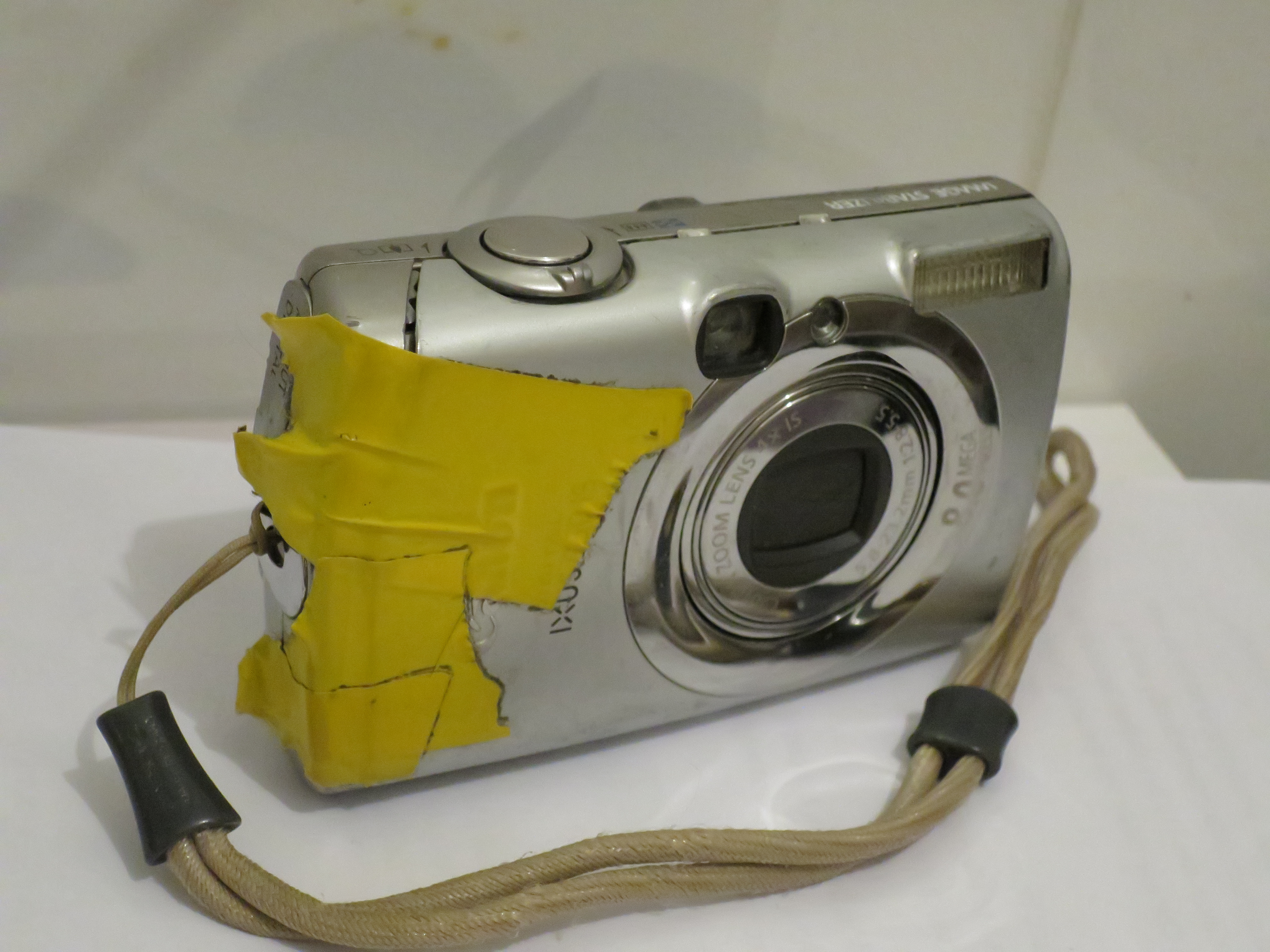
My seven-year-old compact digital camera which I have now replaced. It still works though – the three pictures below were all taken with this camera over the past two years.
So I’m going to start doing that then. I bought a Canon S120 (for £270 ’cause my old compact camera is literally falling apart) and downloaded Windows Movie Maker. That’s right, the free-to-download most basic video editing software available. It might sound amusing, but hey at least I’ve started. I’ll keep you updated when my first video hits and where it may end up.
Money: or rather the lack of it when you’re trying to freelance
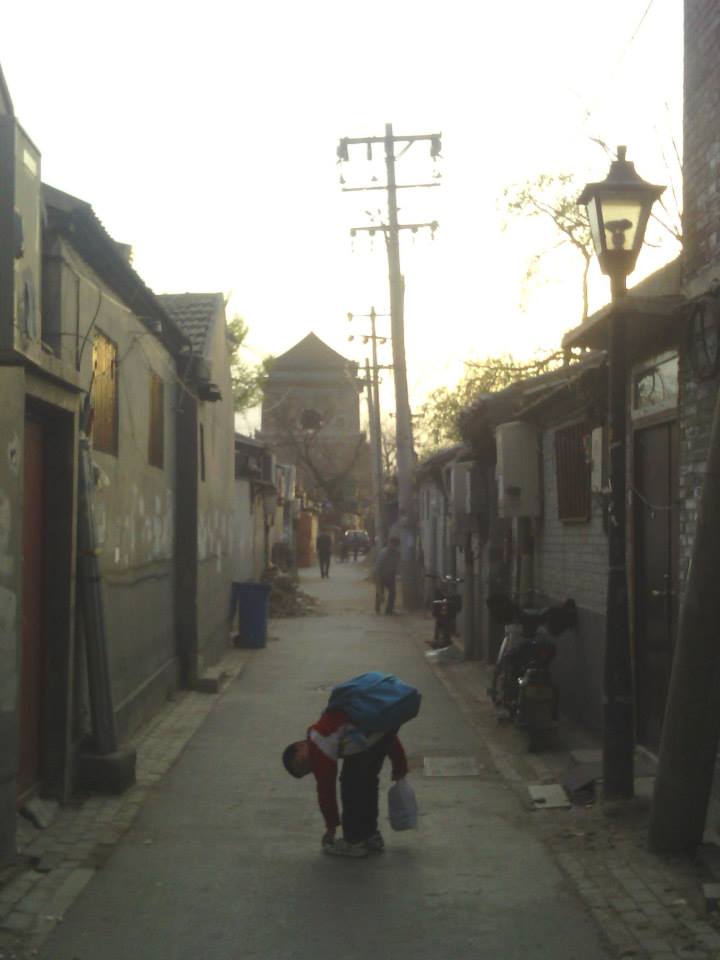
A Beijing hutong (alleyway). Copyright: Lu-Hai Liang.
Until very recently I did not have a regular income and though 2013 was marked by great experiences (some of the best ever in fact), it was not one that saw me in great wealth. I won’t go over the details but there were periods where I had to subsist on the cheapest foods and debt seemed unending.
Poverty. Not many of us actually know it and know it well, and I would not be one to claim expertise. But a couple of things I saw recently helped to reaffirm my position toward the accumulation of cash. The first was a quote I saw in Tom Bissell’s book Magic Hours. In an essay about writing and writers he quotes author Natalie Goldberg: “I feel very rich when I have time to write and very poor when I get a regular paycheck and no time to work at my real work”.
The second thing was a video of an interview with a musician who said: “If I have enough to pay rent, buy groceries then that’s cool – I can just concentrate on my music”.
Being ‘poor’ is relative. We live in an age of bounteous opportunity. Being so-called poor provides a clear set of options. How? Well, it frees you to concentrate on what most matters.
A month ago I published a post on WannabeHacks.co.uk, a website for aspiring journalists. There I set out the argument that in order to freelance, especially in the early stages of your career, one of the best things you can do is go and live in an emerging economy country.
In writing this blog, I have already made contacts with fellow freelancers who are doing what I am doing: taking a risk, moving to somewhere exciting where things are rapidly changing and kickstarting their journalism career. Someone I know (met via this blog) decided to relocate to Istanbul and has already been commissioned multiple times for a major magazine.
But it can be difficult, especially financially. It helps to have some money saved up. But one of the best things about living in a country like China or Turkey or Malaysia or Mexico is that although economies are growing things are still relatively cheap. In China I eat out almost everyday and party hard. If I were freelancing in London, I’d probably already be dead. Due to starvation and exposure (’cause I couldn’t afford a roof over my head).
Kate Hodal (Guardian) sold most of her possessions to finance a move to south-east Asia and was so hard-up on so many occasions that she almost went home. But she persevered and now has the envy-inducing job of being South-east Asia correspondent, meaning she gets paid to fly to places like Vietnam, Indonesia and the Philippines from her base in Thailand. Jonathan Kaiman (also Guardian) had to survive on a low-paid internship and a visa that forced him to take a bus full of Mongolian tradesman to Mongolia every month for almost a year, but he got bylines in the New York Times, LA Times, Foreign Policy and is now one of the most talented China correspondents around. Alec Ash, a Brit and correspondent for The Los Angeles Review of Books, wrote for four years for free on his blog about China from his home in Beijing. Now he’s living it up on an advance for a book he’s been signed to write.
Having the ability to purchase that new phone or buy that bag makes people happier. But it doesn’t, not really. You have to switch your mindset around to focus on what’s really going to drive you forward. Those shoes or that expensive meal might seem important but the enjoyment is absolutely inessential. You cannot, must not, think short-term material goals at this stage. What is important and infinitely more satisfying is recognition, appreciation of your work; the attainment of value.
To want more and more stuff is unerringly shallow. Invest in yourself. Buy what you need to hone your craft, no more. Spend on experiences…but spend wisely.
Being rich is meaningless if it doesn’t make you better at what you do.


 Lu-Hai Liang